Aspen Snowmass Wraps Snow in Blankets to Beat Warming
Aspen Snowmass adopts Finnish Snow Secure technology to wrap snow in blankets, aiming to retain 80% of stored snow-water equivalent to ensure reliable early-season coverage amid warming trends.
Aspen —Aspen Snowmass is betting that wrapping snow in blankets is the smartest way to survive a warming world.
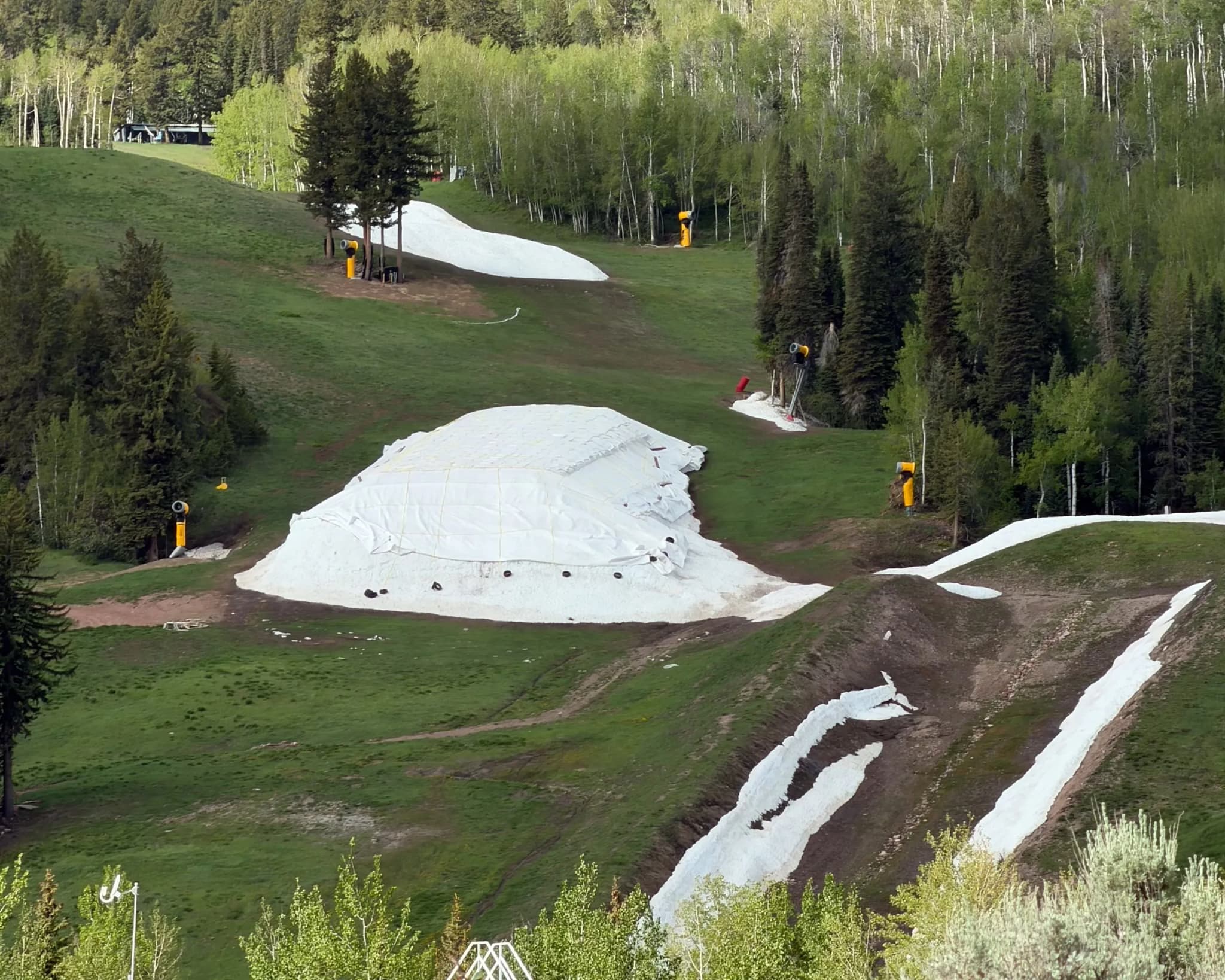
It sounds like a gimmick. A pile of ice covered in plastic, sitting on a green mountain in June. But the logic is stark: if the winter gets shorter and warmer, you can’t just wait for the snow to fall. You have to save it.
The resort has become the first in Colorado to adopt Snow Secure, a Finnish system designed to keep snow from melting all summer long. They’ve got roughly 10 acre-feet of snow-water equivalent wrapped up across Buttermilk and Snowmass. That’s 3.5 million gallons of water, sitting there, waiting for the first flakes of next season.
The goal is simple. Keep 80% of that snow by fall.
Officials say this isn’t just about keeping terrain parks open for the locals. It’s about guaranteeing early-season coverage when autumn weather refuses to cooperate. Following one of the leanest winters in recent memory — a season that forced Buttermilk to close a week and a half early — the margin for error is gone. The snow is gone. But the pile near the base area suggests they’re trying to hold the line.
Aspen One, which manages the four Roaring Fork Valley mountains, isn’t doing this alone. They’re part of a broader shift. Ski areas across North America are moving away from relying solely on snowmaking or hoping for early storms. They’re building a toolkit. Snow storage. Automated snowmaking. Technology designed to cut water and energy use while keeping the lifts running.
Snow Secure CEO Antti Lauslahti says the company has talked to more than 80 resorts across North America. More than 50 of those are in the United States. Interest spiked after they finished their first North American installations last year and got named one of Time magazine’s Best Inventions of 2025.
The question is whether this scales.
Europe has used snow storage for decades. Canada is testing it. Now Aspen is trying it on a larger, more complex mountain. If it works here, where the sun is fierce and the elevation changes are steep, it could change how every ski resort in the state plans for the next decade.
But there’s a catch. The blankets cover a specific area. They don’t cover the whole mountain. And they don’t fix the fact that the water itself is getting more expensive and harder to pump.
Aspen One estimates the current setup covers roughly 10 acre-feet. That’s a lot of water. But it’s a drop in the bucket compared to what the entire valley needs. Still, for a resort trying to keep its terrain parks open in October, it’s a start.
The broader context matters here. Colorado is in historic drought. Interstate conflicts over river supplies are unprecedented. The question of where to find the water to thrive is urgent. This isn’t just about skiing. It’s about water security.
Aspen is trying to answer that question by storing the snow they already have.
If the blankets hold, and the snow survives the summer heat, Aspen Snowmass will have proven that you can buy time. You can’t stop the warming, but you can slow the melt.
"We hope to retain roughly 80% of that snow by fall," an official noted, pointing to the results from Europe and Canada.
It’s a gamble. But in a valley where a late spring can mean early closure, it’s a bet worth making.
Keep up with Aspen
The day's Western Slope news, one email each morning. Free.