Abelardo de la Espriella Poised to Become Colombia's Next President
Businessman Abelardo de la Espriella leads Colombia's presidential runoff by a single percentage point, positioning himself as a disruptive outsider against outgoing President Gustavo Petro.
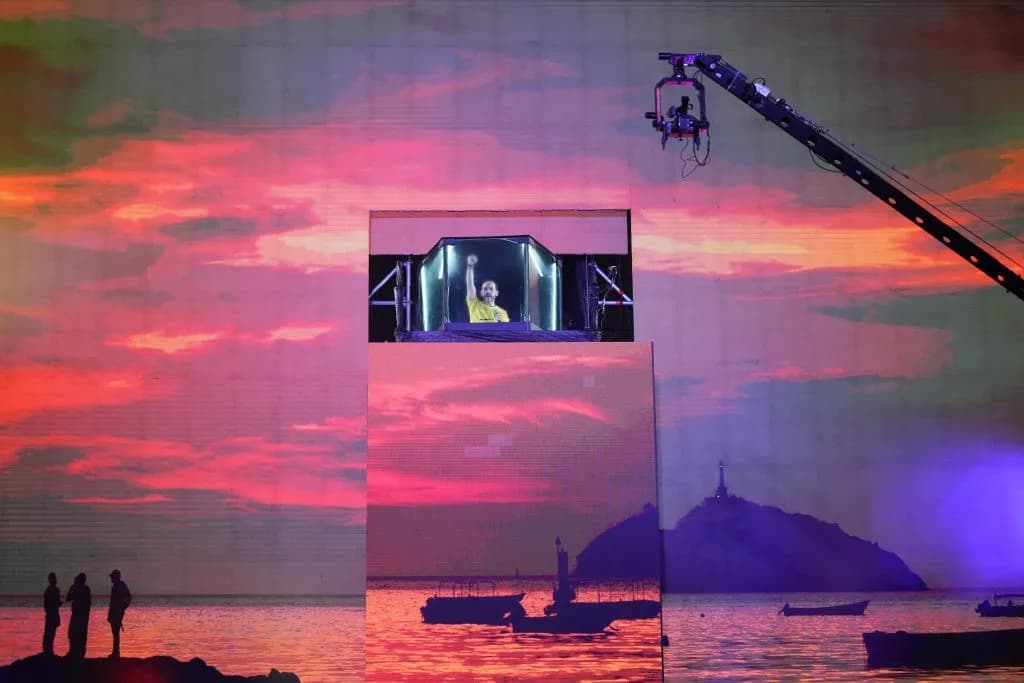
Aspen —The humid air in Bogotá clings to your skin, thick with the scent of exhaust and roasted coffee beans. Inside the convention center, the roar of fifty thousand supporters drowns out the city’s usual chaos. Abelardo de la Espriella stands behind bulletproof glass. He looks less like a statesman and more like a showman in a tailored suit.
He is winning.
Abelardo de la Espriella is poised to become Colombia’s next president. The businessman, lawyer, and owner of wine and rum brands leads the presidential runoff by a single percentage point. That is nearly 251,000 votes. Electoral authorities will likely declare the victory this week.
Make no mistake. This is not a close race anymore. It is a mandate for disruption.
The "Tiger" leaned into his eccentricity. He is a political neophyte. He has never run for office. Yet he secured the endorsement of U.S. President Donald Trump. He won over voters tired of the status quo by promising an iron fist on violent crime. He wants to end outgoing President Gustavo Petro’s dialogue with armed groups. He wants to build mega-prisons, copying the model of Salvadoran President Nayib Bukele.
The result adds Colombia to a growing list of countries turning to political outsiders. Voters are betting on novelty over experience to solve complex social and economic challenges.
More than 26 million people voted in the runoff. Over 426,000 cast a third, no-name option. They didn’t hate both candidates. They just didn’t love either. Another 29,000 cast blank ballots. The message was clear: the establishment failed.
Iván Cepeda, Petro’s protégé and the progressive candidate, is challenging the results. But the momentum has shifted. De la Espriella told his supporters Sunday night he would "govern for all Colombians." He turned to Petro’s camp and said, "Pack your bags and prepare to become the opposition."
Maria del Rosario Villaveces, a 66-year-old retiree, voted Sunday. She doesn’t like either candidate. She is terrified of continuity. She worries the Tiger "has no idea about politics." But she finds comfort in his running mate, former finance minister José Manuel Restrepo. Restrepo is well-organized. He knows the system. Villaveces hopes that stability will offset her leader’s inexperience.
Will Freeman, a fellow for Latin American Studies at the Council on Foreign Relations, says voters don’t see the lack of experience as a risk. Plenty of outsiders have failed to get much done. But voters wanted a decisive break with Petro and the left. They associated the left with erosion of security and economic stagnation. Whether that association is fair doesn’t matter. The anger is real.
De la Espriella’s ventures include a clothing line, a restaurant, and various brands. He is ostentatious. He is artistic. He is different. That difference is his currency.
Petro remains a candidate in this race, even as he steps aside. His policies are the backdrop against which de la Espriella is running. The outgoing president’s attempts to establish dialogue with multiple armed groups have largely failed. The Tiger promises to scrap that approach. He promises force.
Read that again. The man who owns a rum brand is promising to jail millions.
Cepeda responded on Monday. He has the institutional weight of Petro behind him. But the voters have spoken. The tiger is roaring. The question now is whether the roar is enough to tame the country’s deep-seated fears, or if the lack of political experience will bite harder than expected.
Keep up with Aspen
The day's Western Slope news, one email each morning. Free.

Aspen Housing Authority Seeks $590K Office Upgrade Amid Cramped Conditions

Vail Secures Water Rights for 37-Unit Montelisse Condo Project
Moffat County Commissioners Weigh Data Center Moratorium Amid Transparency Claims

Aspen Skiing Company hosts 10th annual Stars Above astronomy night
Aspen Animal Hospital Clinical Leader Dr. Anne Cooley Navigates WellHaven Ownership Shift