Aspen Commissioners Race Nears Finish as Doyle and Ittner Clash on Environment
John Doyle and Rob Ittner face off in a razor-thin Aspen District 1 race, united by airport modernization but divided by their approach to environmental activism and growth.
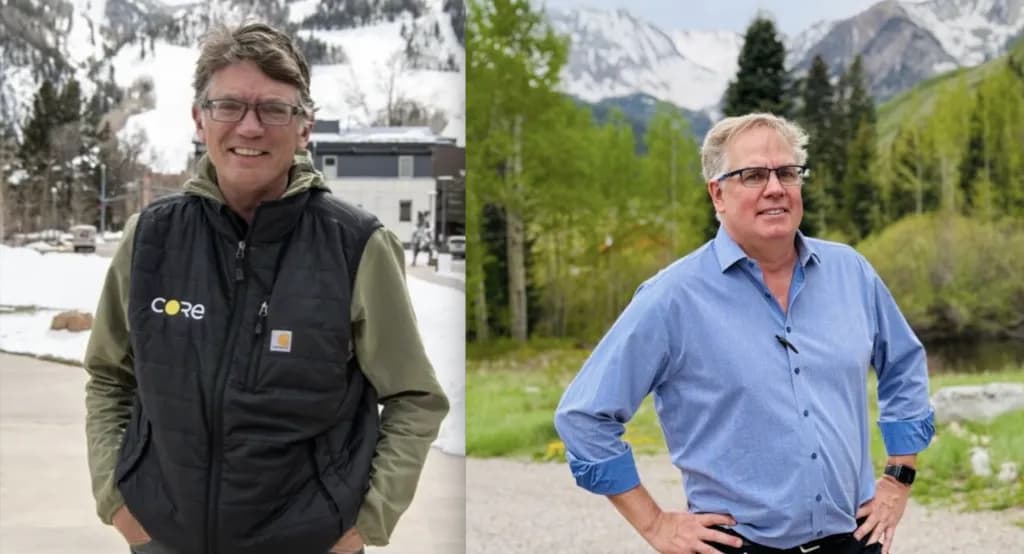
Gunnison —The air in Aspen still carries the faint, metallic tang of the Willow Fire’s ash, a reminder that the climate crisis isn’t a distant threat but a local reality settling on the town’s rooftops. John Doyle and Rob Ittner are already knee-deep in the campaign trail, fighting for the same District 1 Pitkin County Commissioner seat that incumbent Patti Clapper is vacating.
It’s a tight race. Doyle took the unofficial lead with 1,910 votes, edging out Ittner’s 1,844. Together, they captured nearly 80% of the vote, leaving third-place finisher Torre with just under 20%. But the margin between first and second is razor-thin — fewer than 70 votes separate the two men who will likely face off in the general election on November 3.
Here’s the thing though: both candidates are betting their campaigns on the same horse. Airport modernization is the shared priority, the logistical backbone of Pitkin County’s economy. But Doyle is leaning harder into the environmental angle, using the recent winter’s weather and the lingering ash from the Leadville fire as proof that action can’t wait.
“The time is now,” Doyle said. “We’re not moving fast enough on environmental causes, all of them.”
It’s a sentiment Ittner echoes, though his pitch is built on a record of stability rather than urgency. He’s pointing to his past service as commissioner, framing his experience in water preservation and land protection as the safer, proven path. He wants to limit excess growth and protect the natural resources that define the valley’s identity.
“My efforts and the record that I have put out there... is proven,” Ittner said.
That proof includes his opposition to the Pandora’s Lift expansion and the Lift One redevelopment. Doyle isn’t far behind him on that front, arguing that limiting development is an environmental imperative, not just a zoning dispute. He’s positioning himself as an activist who’s been fighting the good fight before he ever held office, and he’s using the current weather events to validate that stance.
“I’ve been fighting the environmental cause even before I got into office, and that’s going to be how I move forward,” Doyle said.
The strategy for the next few months is less about policy debates and more about visibility. Ittner is doubling down on sidewalk campaigning, believing that direct, face-to-face interaction is where votes are won.
“You have to be willing to put yourself out there, and you can’t do these campaigns behind closed doors,” Ittner said.
Doyle is taking a different approach to outreach. He’s planning to expand his footprint beyond the core Aspen neighborhoods, pushing into Redstone and areas like Burlingame. He wants to hear from constituents who might not usually engage with the political process, ensuring that his environmental message resonates across the broader county, not just in the downtown bubble.
“I’m definitely looking forward to meeting more voters and getting more voters behind the environmental cause,” Doyle said.
Torre, who won’t be advancing to the general election, has already stepped back from the primary fray but confirmed he’ll stay civically involved. He’s keeping an eye on the winners, promising to hold them accountable to the voters who backed him.
The race is shaping up to be a referendum on how Pitkin County handles its growth and its environment. It’s not just about who wins the seat; it’s about which philosophy — the urgent activism of Doyle or the steady stewardship of Ittner, will define the county’s response to the changing landscape.
As the campaign season heats up, the two candidates will be knocking on doors, walking sidewalks, and trying to convince neighbors that their vision for the future is the right one. The ash may settle, but the debate over what to do with the land it covers is just beginning.
Keep up with Gunnison
The day's Western Slope news, one email each morning. Free.