How Vail Hill Climb Honored Olympic Legend Frank Shorter
Explore the rich history of the Vail Hill Climb through the stories of legends like Frank Shorter and John Swartz, revealing how this annual race serves as a prestigious ritual for endurance athletes.
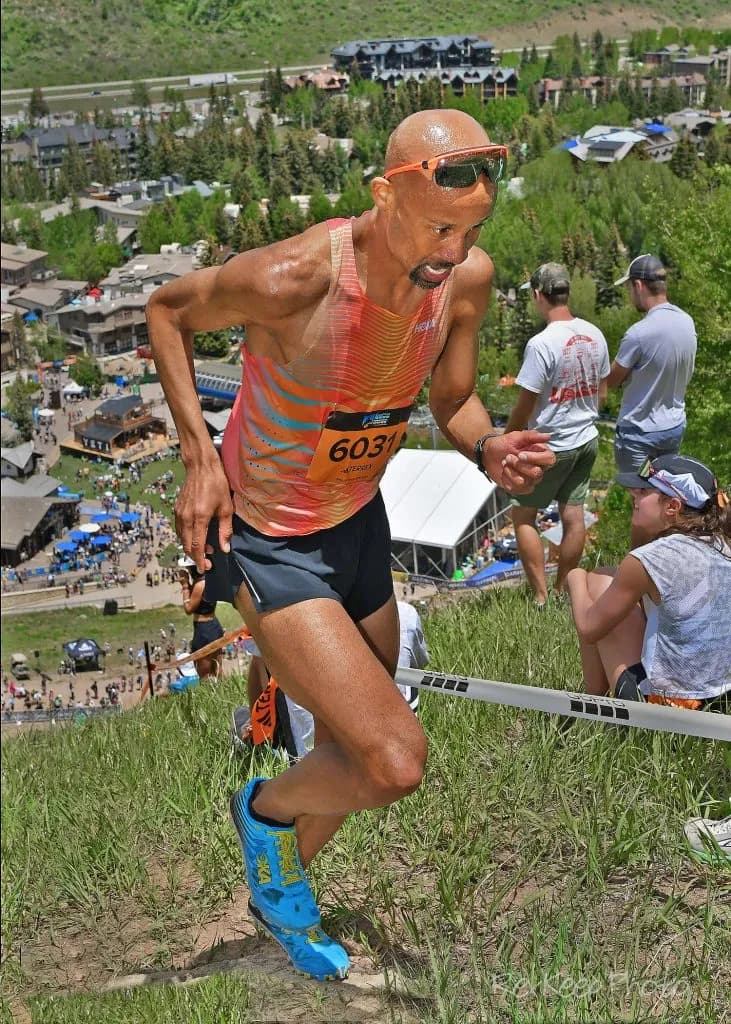
Aspen —The coffee is still warm in the cup, but the memory of the hill is etched into the muscle memory of the people who’ve conquered it. Picture John Swartz, back when he was a Breckenridge resident and not just a name in a history book, cutting a thick milkshake straw from McDonald’s in half. He didn’t just drink at aid stations; he slurped. It was a hack, a tiny, absurd innovation that saved him minutes in the brutal ascent up Vail Hill.
“He was always such a strong finisher at the top,” says Greg Birk, a lifelong friend who finished runner-up to Swartz in 1981. “I think every time I ran with him, I was ahead of him early, but then obviously he beat me by the end.”
Swartz, who won the race in 1980, 1981, and 1983, viewed the event as the “kick off of summer.” That’s what he told race directors in a phone call this week. And for the folks who live here, who watch the peloton snake up the mountain every September, that definition still holds. It’s not just a race. It’s a ritual. But the history of that ritual is heavier, and more prestigious, than most locals realize.
The winners list reads like a who’s who of endurance sports. You’ve got Frank Shorter, the Olympic marathon gold medalist, who didn’t just train here — he raced here. Shorter prepared for the 1972 Olympics in Vail, going on to win gold in Munich and silver in 1976. But his victory here wasn’t always a calculated strategic move. Sometimes, it was a whim.
“I said, ‘what the heck,’” Shorter said in a phone call last weekend. “I drove into town and entered the race.”
He was eating a waffle breakfast, reading the paper, when he decided to show up. He finished fourth in 1988. That matters because it reminds us that this hill has chewed up the best of the best, not just the local heroes. Shorter’s silver in ’76 came behind Waldemar Cierpinski, whose victory was later implicated in East Germany’s state-sponsored doping scheme, a detail uncovered in the late 1990s in Leipzig. The history here is layered. It’s not just about who crosses the line first; it’s about the era, the politics, and the sheer will required to keep going when your lungs are burning.
Then there’s Sally Clair. She’s run every single Vail Hill Climb except one. And even when she missed it, she made it count, doing a time trial the day before to honor a prior commitment. She’s run with a sling after rotator cuff surgery. She’s used poles after ACL surgery when her doctor advised against full participation. “It is my favorite race because it’s the one I’ve always done and make a point of doing it every year,” she said.
Clair’s consistency mirrors the reliability of the hill itself. It’s a fixed point in a changing landscape. While the town grows, while the traffic on I-70 gets worse, while the property taxes creep up, the hill remains. It’s the same climb. The same steep grades. The same brutal finish.
Matt Carpenter dominated this course. He won eight times between 1986 and 2000. He still holds the old course record, set in 1993 — the same year he set the still-standing Pikes Peak Marathon record. Carpenter is perhaps the greatest mountain runner in history, a fact that underscores the difficulty of what these athletes do. They aren’t just running; they’re climbing. They’re fighting gravity and altitude and fatigue all at once.
Ruth Hamilton, mother of three-time Olympic cross-country skier Simi Hamilton, took the win in 1982. Her legacy lives on in the valley, with Ruthie’s Run on Aspen Mountain named for her mother, Ruth Humphreys Brown, and Baby Ruth at Snowmass named for Ruth herself. The names are everywhere. The history is embedded in the geography.
And that matters because it changes how you see the race when you’re standing on the sidelines. You’re not just watching neighbors compete for a ribbon. You’re watching a lineage. You’re watching people who have beaten the world’s best, who have adapted to injuries and age and time, and who still show up. Swartz with his straw. Shorter with his waffles. Clair with her sling. They’re all still here, in spirit, every time the gun goes off.
The hill doesn’t care who you are. It only cares if you can climb. And for the winners, the climb is a conversation they’ve been having for decades.
Keep up with Aspen
The day's Western Slope news, one email each morning. Free.
Aspen's ACES Returns Annual Harvest Party to Rock Bottom Ranch
Glenwood Ghostwalk Brings Frontier History to Life in Linwood Cemetery