Colorado's 150th Anniversary Reflects Bureaucratic Struggle for Statehood
Examining the 150th anniversary of Colorado's statehood, this article contrasts the celebratory milestone with the historical friction of lobbying, vetoes, and exclusion that defined the path to statehood.

Colorado —What does it cost to be a Coloradan when the state’s birthday is just one of two major anniversaries looming?
It costs you a lot of patience. And not just because you’re stuck in traffic on I-70 while construction crews figure out where to put the next lane. It costs you the illusion that progress is linear. This year, we’re celebrating the nation’s 250th and the state’s 150th. On paper, that sounds like a party. In practice, it’s a reminder that Colorado’s path to relevance was anything but smooth.
Let’s look at the numbers. When Colorado finally got its statehood proclamation from Ulysses S. Grant in 1876, the population was 40,000. Forty thousand. Compare that to today’s population exceeding 5.8 million. The scale has shifted, but the friction hasn’t disappeared. It just changed form.
The article notes that President Abraham Lincoln favored statehood, but his assassination stalled the momentum. Then came Andrew Johnson, who vetoed Colorado’s request twice. Why? Johnson didn’t just dislike the political makeup of the territory. He argued the population was too small. He also forced equal rights suffrage into the 1867 bill, a move Coloradoans opposed. It’s a classic bureaucratic tug-of-war: the federal government wants to impose conditions; the territory wants autonomy. Sound familiar?
History Colorado’s Katherine Mercier, who developed the “38th Star: Colorado Becomes the Centennial State” exhibit, puts it bluntly: statehood “wasn’t inevitable.” It took five attempts. It took 17 years of lobbying, vetoing, and drafting. The early push didn’t include Indigenous tribes, Hispanic residents of southern Colorado, Black Coloradans, or women. The narrative we sell tourists is a sanitized version of a messy, exclusionary process.
Politically, the parallels are uncomfortable. President Donald Trump remains unpopular by historical standards. Gov. Jared Polis was recently censured by the Colorado Democratic Party’s central committee. High marks for unity, right? Economically, we’re staring down budgetary pressures, inflation, and gas prices that make a road trip to Moab a financial gamble.
So, what are we supposed to do during a celebratory period? The article suggests turning to history. Not to romanticize it, but to understand the mechanics of it. The territory wanted to avoid state taxes. They preferred federal funding. Sound like locals arguing over whether to pay for a new bridge or keep their property taxes flat? It’s the same debate, just with different currency.
The current environment feels peculiar. We’re celebrating a birthday while our leaders are being criticized and our wallets are feeling the pinch. The article argues that history doesn’t repeat itself, but it rhymes. The rhyme here is clear: Colorado is always negotiating its worth. Sometimes it’s negotiating with Andrew Johnson over population counts. Sometimes it’s negotiating with the state legislature over infrastructure funding. Sometimes it’s negotiating with Washington over water rights.
The 150th anniversary isn’t just a date on a calendar. It’s a mirror. It shows us that being a Coloradan has always meant dealing with the gap between what we want and what we get. The 40,000 people of 1876 didn’t have to worry about housing density or commute times. They had to worry about whether the federal government would recognize them at all.
We have it easier in some ways. We have more roads. We have more water. We have more power. But we also have more expectations. The article doesn’t offer a solution. It offers a perspective. The struggle for recognition, for funding, for identity, is the constant. The celebration is just the excuse to talk about it.
The bottom line? You’re paying for the privilege of living in a state that took 17 years to get its name on the map. That’s the cost of admission.
Keep up with Colorado
The day's Western Slope news, one email each morning. Free.
Aspen's ACES Returns Annual Harvest Party to Rock Bottom Ranch
Glenwood Ghostwalk Brings Frontier History to Life in Linwood Cemetery

Georgie White’s Wild Legacy Challenges Outdoor Superwoman Myth
Federal Report Sets 200,000 Acre-Foot Water Conservation Target for Upper Basin
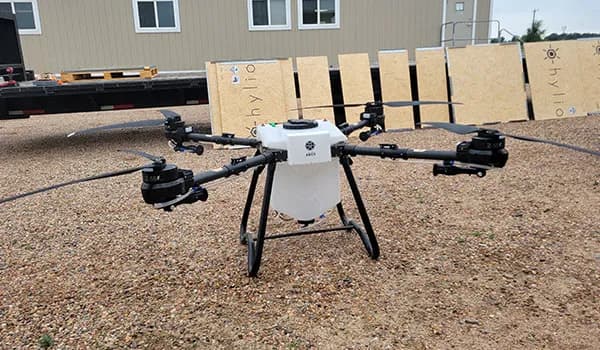
Colorado Parks and Wildlife Deploys Precision Drones for Weed Control