Vail Daily and Vail Trail history highlights local press survival
A look back at the competitive history between the Vail Daily and the Vail Trail, exploring how local journalism has evolved from physical presses to digital challenges while maintaining press freedom.
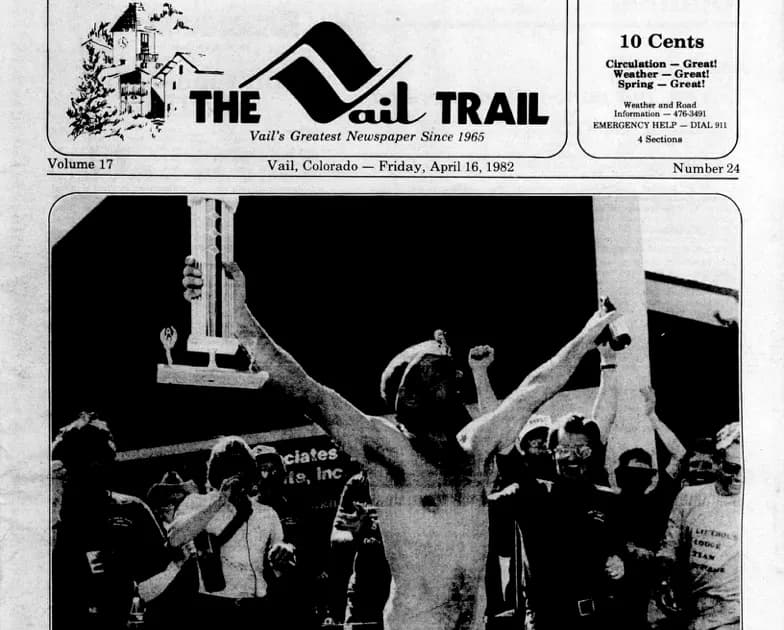
Aspen —The attic of the old Crossroads building smelled of stale coffee and ambition. It was 1991. You could hear the hum of the Vail Daily’s presses downstairs, a rhythmic thumping that signaled a challenger had finally arrived to knock on the Vail Trail’s door.
That paper was only a decade old. The Vail Trail, started by the Knox family in 1965, was the established giant in Minturn. It was a "weekly beast," according to the oral histories collected by the Vail Public Library. The Daily Daily reporters — feisty, overconfident, and convinced they were "God’s gift to journalism" — had to scramble just to keep up with the experienced editors and photographers who had been covering the Eagle River Valley for decades.
This history isn’t just nostalgia. It’s a case study in what happens when local media survives, and what happens when it doesn’t.
We are marking the nation’s 250th birthday. The Constitution’s First Amendment enshrined freedom of the press right after free speech for a reason: to guard against an overreaching government. In 1791, that meant keeping the King’s taxes in check. Today, it means keeping the federal government from labeling the press the "enemy of the American people."
I went into journalism in the 1980s thinking the worst attacks on press freedom were behind us. We’d survived Watergate. We thought newspapers would forever serve as a check on unbridled power. I was wrong.
Now, thousands of us are fighting for the same right, but the landscape has shifted. The economic model that allowed the Vail Trail to dominate for decades is gone. The Vail Daily had to evolve or die. The Vail Trail had to adapt or fade.
Let’s look at the data. The Vail Trail started in 1965. That’s 59 years of continuous publication. The Vail Daily started in 1981. That’s 43 years. The Daily Daily, a short-lived spinoff, tried to split the difference and failed. The lesson? You can’t just print news. You have to print news that matters to the people who live here.
The oral histories from the Vail Valley Voices Collection tell the story. Allen Best. Joe Donnelly. Tara Flanagan. Scott Kersgaard. Scott Willoughby. Scott Miller. Jim Schnebly. These names aren’t just bylines. They are the people who made the news meaningful in the Eagle River Valley. They tackled issues large and small. They were serious, yet irreverent.
The Vail Daily reporters, Andy Hood, Greg Kail, Cara DeGette, Scott Taylor, Kristin Kenney; were the upstarts. They were in the attic. They were hungry. They had to be. If they didn’t outperform the Trail, they didn’t get the ad revenue. They didn’t get the readers. They didn’t survive.
Today, the threat isn’t just political. It’s economic. It’s the collapse of the local ad market. It’s the rise of digital giants who don’t care if your pothole gets filled. It’s the consolidation of media ownership that turns local news into content for national consumption.
The First Amendment protects us from Congress. It doesn’t protect us from bankruptcy. It doesn’t protect us from a community that stops reading.
The Vail Trail is still here. The Vail Daily is still here. But the dynamic has changed. The "beast" in Minturn isn’t the only option anymore. The attic in the Crossroads building is just a memory. The news is everywhere. It’s also nowhere.
This is the context for the 250th birthday. We celebrate a republic built on informed citizens. But an informed citizen requires a functioning press. Not just any press. A local press. A press that knows the difference between a pothole on U.S. 6 and a pothole on State Highway 82. A press that knows who the county commissioner is and why their budget matters.
The Vail Daily’s oral history project is a reminder. The Vail Trail’s legacy is a warning. If you stop paying attention, the news stops being news. It becomes noise.
The cost of ignoring this isn’t just a subscription fee. It’s the erosion of local accountability. It’s the loss of the "check" in "check and balance." It’s the silence that follows when the last local reporter goes home for the final time.
We’re celebrating the Constitution. We’re celebrating the press. But we’re also celebrating the people who kept it alive in the valley. Allen Best. Joe Donnelly. Tara Flanagan. The Knox family. The Daily Daily.
They didn’t just print papers. They built a community. That’s what’s at stake.
Keep up with Aspen
The day's Western Slope news, one email each morning. Free.
Aspen's ACES Returns Annual Harvest Party to Rock Bottom Ranch
Glenwood Ghostwalk Brings Frontier History to Life in Linwood Cemetery