Fort Garland Center Highlights Adobe History in New Cross-Border Exhibition
Eric Carpio discusses how adobe structures in Fort Garland tell a deeper history of the San Luis Valley, highlighted by a new joint exhibition with Taos, New Mexico.
Colorado —“Adobe is a beautiful metaphor for that.”
Eric Carpio, director of the Fort Garland Cultural and Historic Center, isn’t just talking about mud bricks. He’s talking about survival. He’s talking about a region where floods shift towns and brutal winters turn populations into seasonal nomads. In a place defined by violent flux, building with earth, water, and fiber dried in the sun is an act of defiance. It’s slow work. It’s subtle work. And it’s the only thing that keeps you steady.
This year marks Colorado’s 150th anniversary as a state and the nation’s 250th. Carpio argues that focusing solely on 1876 or 1776 ignores the deeper, more complex history of the San Luis Valley. The adobe structures standing on the eastern edge of the valley tell a different story. Five of Fort Garland’s original buildings, constructed in 1858, still stand. They are tangible proof that the history here extends far beyond the standard American narrative.
The effort to highlight this isn’t happening in a vacuum. It’s part of a joint exhibition titled “Unearthing Futures/Desenterrando Futuras,” running at the Fort Garland Cultural Center and the Harwood Museum in Taos, New Mexico. This isn’t a local curiosity; it’s a cross-border cultural push. The exhibition features new installations by contemporary adobe artists at both venues, including works by rafa esparza, Christine Howard Sandoval, Ronald Rael, Santino Gonzales, Joanna Keane Lopez, and Gabriel Chaile. Locals can follow the thread via a new app that maps road trips to significant adobe sites across southern Colorado and northern New Mexico.
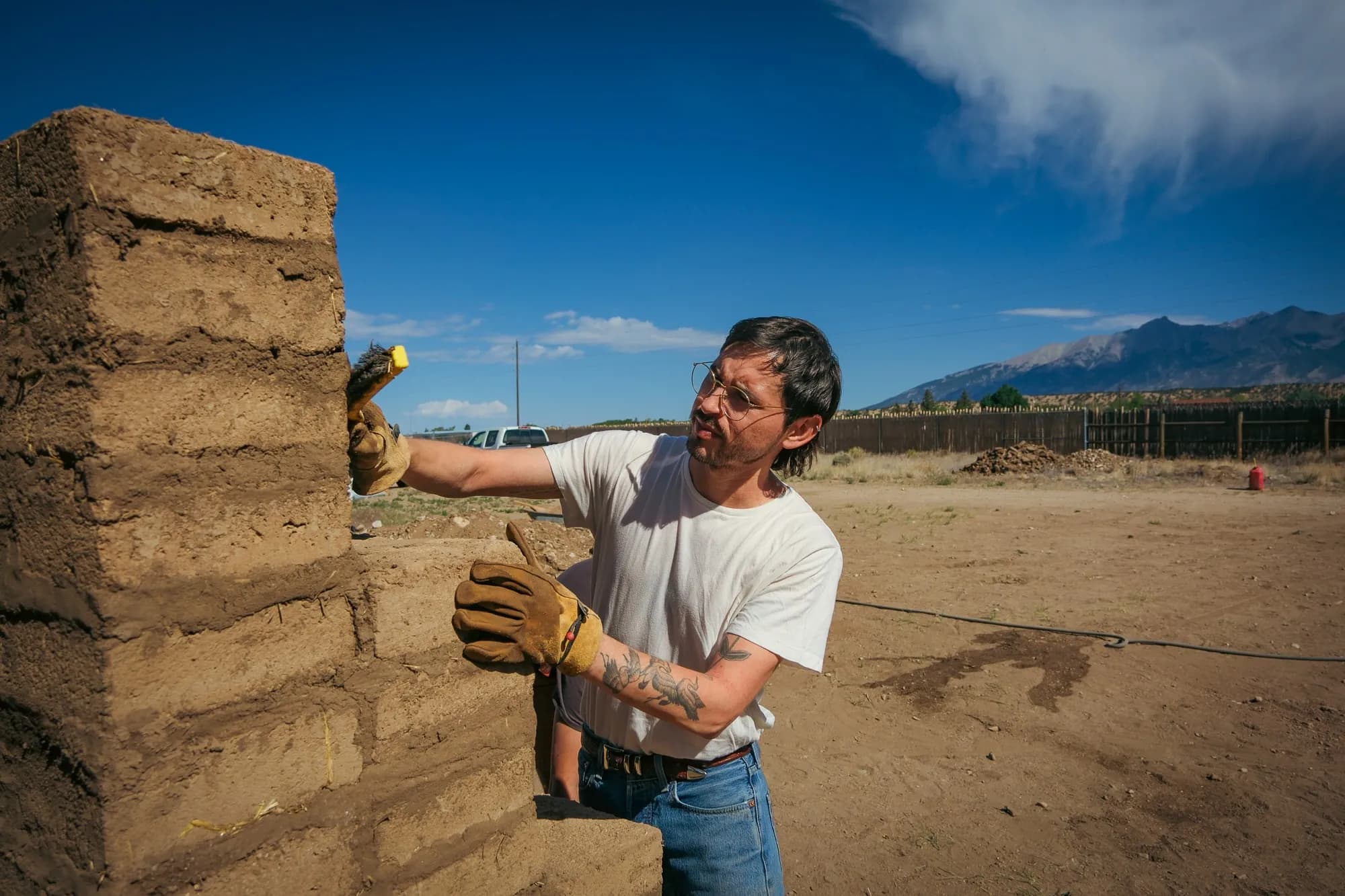
Let’s look at the material itself. On paper, adobe is simple: earth, water, fiber. You mix it, shape it into bricks using hand molds or wooden forms, stack them, and seal them with earth-based mortar. It’s abundant. It’s environmentally friendly. But as a metaphor? It’s complicated. It represents the churning cultures of the region — sometimes a practical necessity, other times exalted for its “authenticity,” and at other times criticized for not being “American” enough.
The real test of adobe isn’t just in its construction, but in its maintenance. It reveals the physical health of a community because it requires constant care. It crumbles if left alone. It needs many hands over many years. If the community doesn’t show up, the history falls down.
Carpio is holding an adobe brick inside an exhibit under construction at Fort Garland Museum. He’s using it to remind visitors that the foundation of this valley isn’t just in the flags that have flown over it, but in the mud beneath their feet. The exhibition spans the region, connecting Fort Garland to Taos through a shared material history that predates statehood by centuries.
For the folks in the San Luis Valley, this is more than a museum display. It’s a reminder that the infrastructure of their lives — their homes, their history, their identity, is built on a material that demands attention. You don’t just build adobe and walk away. You care for it. You maintain it. You acknowledge that the past is still standing right in front of you, whether you’re looking at a fort from 1858 or a contemporary art installation.
The bottom line? The history of this valley isn’t a footnote to American expansion. It’s the foundation. And it’s made of dirt, water, and time.
Keep up with Colorado
The day's Western Slope news, one email each morning. Free.
Aspen's ACES Returns Annual Harvest Party to Rock Bottom Ranch
Glenwood Ghostwalk Brings Frontier History to Life in Linwood Cemetery

Georgie White’s Wild Legacy Challenges Outdoor Superwoman Myth
Federal Report Sets 200,000 Acre-Foot Water Conservation Target for Upper Basin
Colorado Parks and Wildlife Deploys Precision Drones for Weed Control