Hayden Heritage Center Museum Struggles with Funding and Space
The Hayden Heritage Center Museum, housed in a historic 1918 railroad station, faces a storage crisis and funding shortfalls despite community support and mill levies.
Steamboat Springs —What happens to a town’s soul when the last train stops running?
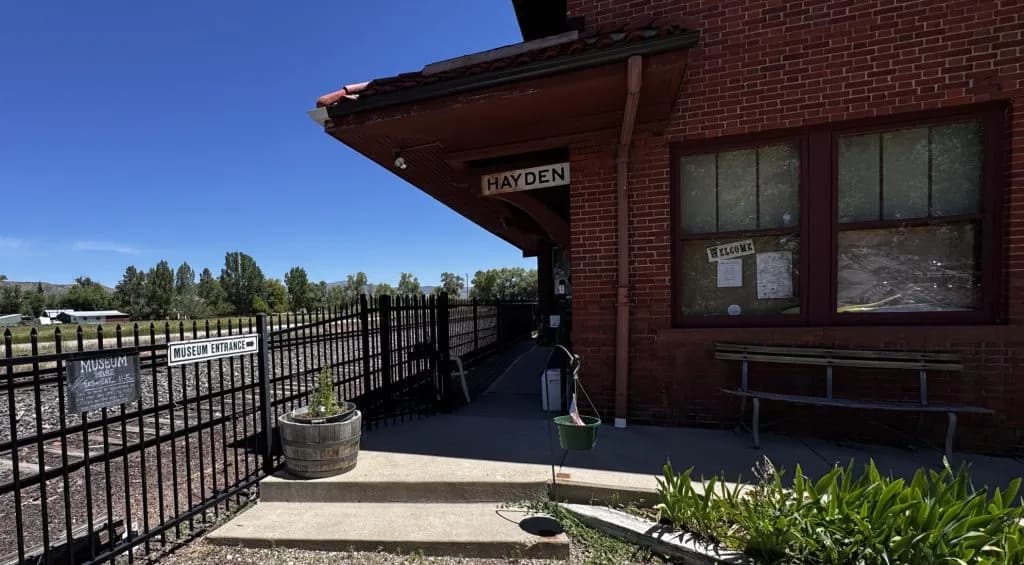
For Hayden, the answer is sitting right in the center of town. It’s a 1918 brick building. It used to be a railroad station. Now, it’s the Hayden Heritage Center Museum. And it’s failing.
Not because people don’t care. They do. Laurel Watson, the executive director and curator, says you can feel the history in the walls. That’s not poetic fluff. It’s structural reality. The building itself is an artifact. It’s the largest object in the collection.
But preserving history costs money. And right now, the museum is running on fumes.
The story starts in the 1960s. Locals realized their past was rotting in basements and attics. Early supporters like the Carpenter and Bailey families pushed for a permanent home. There wasn’t one. So they improvised.
The Sullivan family donated a massive rock and fossil collection. They let schoolkids tour their home. Eventually, the town took over. The collection moved to a small room in the old town hall. It was cramped. It was chaotic.
By the late 1960s, the collection outgrew the space. The Denver and Rio Grande Western Railroad shut down in 1968. The station sat empty. In 1972, the town bought the building from the railroad. It was a practical solution for a practical problem.
The museum opened with bake sales and volunteer sweat equity. Watson notes the upstairs apartment — once the station master’s home — was rented out in the 1980s for about $500 a month. The catch? The tenant had to open the museum and accept donations. It was a barter system for preservation.
“A major step came in 2005, when voters approved a mill levy,” Watson said.
That mill levy covers wages. It covers utilities. It covers the everyday costs of keeping the doors open. It’s the financial backbone. But it’s not a silver bullet.
Watson works part time. Her hours have increased since she started in 2010, after earning her master’s degree in American history. She’s doing more with less. Money, space, and volunteers are constant concerns. The facility is near capacity. Large agricultural pieces are stored across town because they can’t fit in the station.
“The building itself is really part of the collection,” Watson said.
That history includes an 1870s wedding dress behind glass. Homesteader maps. Saddles. Schoolroom artifacts. Photographs that carry pieces of the town forward. It’s a visual history of local brands, focusing on the deep roots of ranching and agriculture in Hayden.
But the physical space is straining. The mill levy helps, but it doesn’t solve the storage crisis. It doesn’t bring in enough volunteers to handle the sheer volume of artifacts waiting to be cataloged.
Watson is skeptical of press releases that claim preservation is a done deal. It’s not. It’s a daily grind. The institution consumes resources. If the mill levy doesn’t increase, or if the town doesn’t find new revenue streams, the collection will stagnate. Or worse, it will be forced to discard items just to make room for new ones.
The railroad left. The station stood empty. The town bought it. Now the town has to keep it alive.
Read that again. The town bought the station. The town maintains the station. The town preserves the station. It’s a loop with no exit.
The short version? Hayden’s history is safe for now. But it’s crowded. It’s underfunded. And it’s waiting for the next big decision.
Watson doesn’t sugarcoat it. “It really kind of slowly progressed,” she said. That progress has a ceiling. The question isn’t whether the museum will survive. It’s whether it can thrive without burning out its staff and volunteers.
The history is there. You can feel it. The question is who’s paying to keep the lights on.
Keep up with Steamboat Springs
The day's Western Slope news, one email each morning. Free.
Aspen's ACES Returns Annual Harvest Party to Rock Bottom Ranch
Glenwood Ghostwalk Brings Frontier History to Life in Linwood Cemetery