Steamboat Resident Tracks St. Mary’s Glacier Shrinking Before Summer Ends
St. Mary’s Glacier shrinks to record lows in late July, threatening local skiing traditions as warming temperatures erode the historic snowfield near Interstate 70.
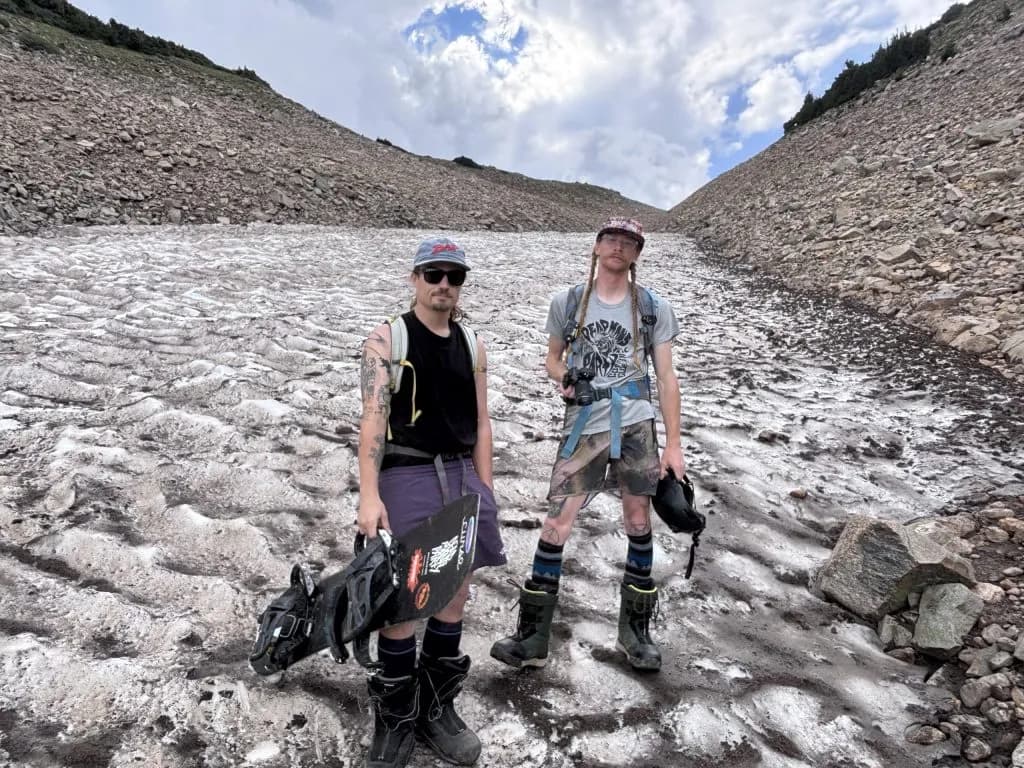
Steamboat Springs —The mud on St. Mary’s Glacier isn’t just dirt; it’s a geological confession, a thick, sucking slurry of suncups and silt that clings to the bottom of a snowboard, reminding you that the ice is not just melting, it is retreating. Kevin Hawley slipped over that bumpy, uneven terrain on July 31, carving short, tentative turns down a strip of snow so thin it felt less like a glacier and more like a memory of one, before coming to a halt where the white ended and a pile of rocks began.
Hawley, a Steamboat Springs resident who has kept up the tradition of skiing or snowboarding at least once a month for his 70th consecutive month, has visited this specific patch of perennial snowfield at least ten times in the last six years. He’s seen it better in September. He’s seen it better in August. But this year, midway through the summer, the snowfield is lower than he has ever seen it, prompting his worry that this might be the first year it becomes truly un-skiable before the next winter snowstorm arrives.
It is a counterintuitive anxiety for a place that has been a summer staple for over a century. For decades, the narrative around St. Mary’s Glacier was one of permanence, or at least, enduring resilience. Historians note that when miners formed the nearby town of Alice in the late 1800s, the snowfield was already there, a constant witness to the boom and bust of the mining era. By the 1920s, newspaper accounts described summer ski competitions drawing crowds of thousands, turning the snowfield into a public spectacle. An 1869 article in the Arvada Citizen called it a “three-fourths mile long and 110 foot deep natural wonder,” while a 1985 outdoors columnist confidently wrote that St. Mary’s “has been around much longer than Colorado and isn’t likely to melt away soon.”
But if you look closely at the trailhead today, just 30 minutes off Interstate 70 with a 1.5-mile hike to the snowfield, the confidence of those earlier columns feels fragile. Scientists classify St. Mary’s not as a true glacier, but as a perennial snowfield — a remnant of the ice that carved the Rocky Mountains thousands of years ago. It has persisted through centuries, replenished by winter storms, yet the 21st century has brought a slow, visible erosion. At the end of July, the main stretch was only a couple of hundred feet long, buried under just a few feet of snow, with water flowing beneath it in cavernous tunnels, eating the ice from the bottom up.
Hawley’s experience is not an isolated incident of bad luck; it is a symptom of a warming planet. The shrinking of St. Mary’s mirrors a global trend of glaciers and snowfields disappearing due to human-caused climate change. The warmth is tangible in the mud, in the exposed rocks, and in the anxiety of locals who drive two hours from Steamboat Springs to check the thermometer of the Rockies.
There’s a warmth to the air that feels different this year, heavier, as if the mountain is exhaling its last bit of winter breath. Hawley’s concern — that this could be the first year the tradition ends before the snow even falls, hangs in the thin air above the Alpine lake. It’s not just about losing a place to ride a board; it’s about watching a landmark that has defined the summer landscape for generations simply vanish, leaving behind only the mud and the memory of the ice.
Keep up with Steamboat Springs
The day's Western Slope news, one email each morning. Free.



Steamboat Chamber Awards Honor Nonprofit Leaders and 20 Under 40

Colorado Background Checks Surge 300 Percent Before New Semiautomatic Law