Missoula Children’s Theatre Brings Rapunzel to Craig Kids
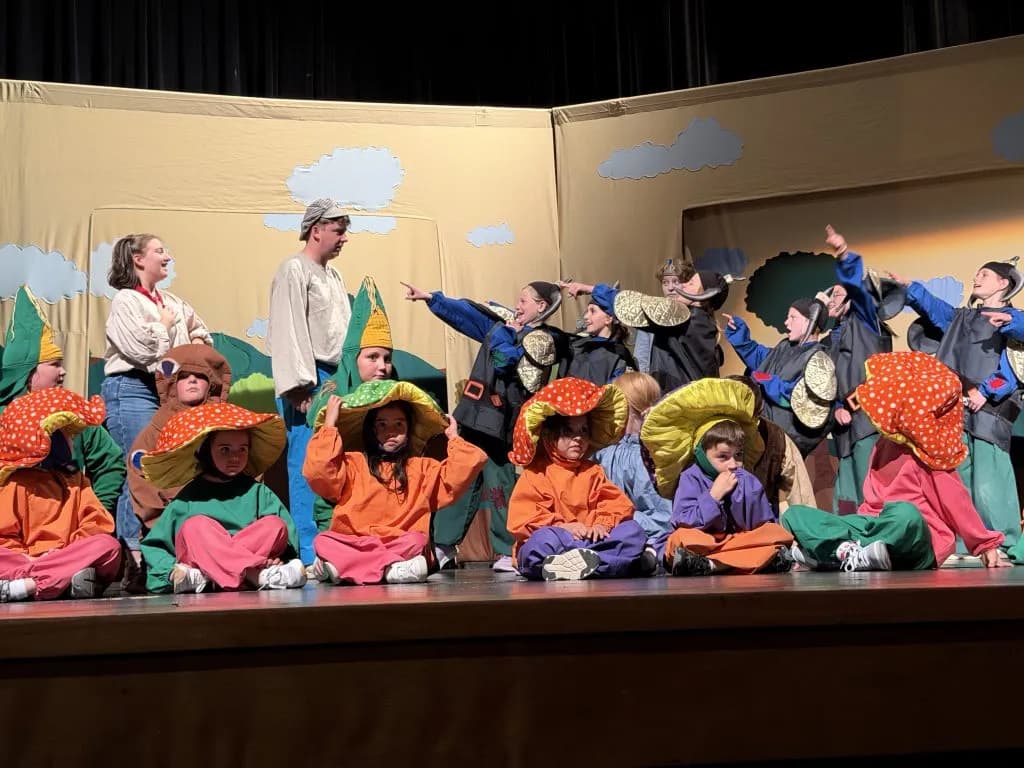
Missoula Children’s Theatre returned to Craig, guiding 32 local children through a week-long residency that culminated in two public performances of Rapunzel at the high school.
Steamboat Springs —Thirty-two kids. One week. Two shows.
That is the arithmetic behind the return of Missoula Children’s Theatre to Craig, a program that had been absent from Moffat County for years. The question on the table isn’t just about whether the play was good — it’s about what it costs a small community to bring big-city arts programming home, and whether the investment pays off in anything more tangible than applause.
Ashley Dishman, who founded Craig Community Works specifically to funnel these kinds of resources into the valley, framed the event as a full-circle moment. Growing up in Wyoming, she performed in The Wizard of Oz alongside professional actors. Now, she is the one making the phone calls. In March 2025, she initiated talks with Missoula Children’s Theatre, a traveling organization that deploys two professional directors into a community to guide children through a complete production cycle in seven days.
For context, the scale of this effort is significant for a town of Craig’s size. The program didn’t just drop in for a single assembly. It ran a full audition process on Monday, followed by daily rehearsals. The output was two public performances of Rapunzel at the high school, staged by directors Hannah Moss and Dakota Wayne. These weren’t just observers; they acted alongside the students, handling the technical and emotional load of a live stage.
Let’s do the math on the participant side. Approximately 32 local children were involved. For many, this was their first exposure to live theater. The curriculum covered dialogue, choreography, and stage directions. The workload was stratified by age: younger children took on simpler roles, while older students handled more demanding parts. This tiered approach ensures that the experience is accessible without diluting the professional standard of the production.
In practice, the value proposition extends beyond the final show. Dishman noted that the "immersion" in the creation process is often more impactful than the performance itself. Elementary students in Moffat County have limited access to live theatrical productions. By filling this gap, the program targets a specific demographic — children who might not otherwise discover an interest in acting. Some participants even surprised their own families by auditioning and committing to the schedule.
The financial and logistical burden falls on the organizing entity. While the exact dollar amount of the sponsorship or grant isn’t itemized in the press coverage, the operational cost includes travel, lodging, and compensation for the two professional directors, plus venue preparation at the high school. For a community organization like Craig Community Works, this represents a concentrated allocation of funds toward youth development rather than permanent infrastructure.
There is a distinct difference between a one-off field trip and a residency-style program. Missoula Children’s Theatre functions as a short-term residency. The directors embed themselves in the local school system for a week. This creates a temporary ecosystem where professional standards intersect with amateur enthusiasm. The result is a product, a play - that serves as both a showcase and a teaching tool.
Dishman emphasized the confidence-building aspect. Watching a child step onto a stage, speak lines they memorized, and move through choreography is a visible marker of growth. The "shine" she observed in the performers is a direct result of the structured support provided by the professionals. The directors provided reassurance and guidance, managing the anxiety that typically accompanies live performance.
The choice of Rapunzel is strategic. It is a familiar narrative with clear character archetypes, making it accessible to a young cast and audience. The story allows for visual spectacle and musical elements, which are key components of the Missoula Children’s Theatre model. The production quality relies heavily on the directors’ ability to manage a large group of children while maintaining artistic coherence.
The local context matters. Craig is a hub for energy and government, but it is also a small town with a tight-knit community. The high school serves as a central gathering place. Using this venue for the performances leverages existing infrastructure. It reduces the need for separate rental spaces. The familiarity of the location for the students also helps reduce performance anxiety. They are in a space they know, even if they are on a stage they haven’t used before.
The integration of the program into the local school calendar is another factor. Aligning the rehearsal weeks with the academic schedule minimizes disruption. This coordination requires buy-in from school administrators. The fact that this cooperation was achieved suggests a strong alignment of interests between the community organization and the school district. Both parties benefit from the enhanced cultural offerings for students. Seeing students perform on a professional stage is a source of collective achievement. This intangible benefit contributes to the overall success of the program.
Looking at the broader picture, the return of Missoula Children’s Theatre is part of a larger trend of bringing specialized programs to rural areas. It is a counter-narrative to the idea that small towns lack access to high-quality arts education. The program demonstrates that with the right partnerships and funding, even remote communities can host professional-grade productions. The key is to identify the gaps and fill them with targeted interventions.
The role of Craig Community Works in this equation is pivotal. As the intermediary, they bridge the gap between the national organization and the local community. They handle the local logistics, marketing, and participant recruitment. This division of labor allows each party to focus on their core competencies. The national organization provides the artistic vision and professional staff, while the local organization provides the ground-level support and community connections.
This model is replicable. Other small towns could adopt a similar approach by partnering with traveling arts organizations. The success in Craig serves as a case study. It proves that the concept works. The variables that contributed to the success include strong leadership, adequate funding, community support, and professional execution. Replicating this success requires attention to all these factors.
One area for future development is the sustainability of the program. Will it become an annual event? If so, what is the long-term funding plan? The current model relies on grants and sponsorships. Securing consistent funding is a challenge for any non-profit. Building a diversified revenue stream is essential for longevity. This could include individual donations, corporate sponsorships, and ticket sales.
Another consideration is the expansion of the program. Could it include other age groups? Currently, it focuses on children. Extending it to teens or adults could broaden the reach. Each demographic has different needs and expectations. Tailoring the content and delivery to each group requires additional resources. However, it also increases the potential impact.
The digital footprint of the event is another aspect. Social media posts, photos, and videos help document the experience. This content serves multiple purposes. It provides a record for participants and families. It showcases the program to the wider community. It aids in future marketing efforts. A robust digital presence enhances the visibility of the program. It makes it easier to attract new participants and supporters.
The feedback from participants and families is a valuable resource. Positive testimonials help build credibility. They provide social proof that the program delivers value. Collecting and sharing this feedback is a simple but effective strategy. It turns satisfied customers into advocates. Word-of-mouth is powerful, especially in small communities. Personal recommendations carry weight. Leveraging this organic promotion can reduce marketing costs.
The partnership with the high school is also worth noting. The venue provided the necessary space and facilities. The school likely benefited from the cultural enrichment for its students. The event may have boosted morale and pride within the school community. Seeing students perform on a professional stage is a source of collective achievement. This intangible benefit contributes to the overall success of the program.
In summary, the return of Missoula Children’s Theatre to Craig is a success story driven by dedicated local leadership and professional execution. It provided 32 children with a transformative experience in just one week. The program filled a critical gap in local arts education. It demonstrated that small towns can host high-quality cultural events. The key to its success was the seamless collaboration between the national organization and the local community. The result was a memorable performance and a lasting impact on the participants. The bottom line is that investing in short-term, high-impact arts programs yields significant returns in youth development and community cohesion, proving that even a little stage can create lasting memories.
Keep up with Steamboat Springs
The day's Western Slope news, one email each morning. Free.