Wild Horse Story Challenges Local Development Cost Metrics
Sarah V. Barnes’s excerpt argues that human-animal bonds provide structural community stability, challenging traditional development metrics focused solely on cost-benefit analysis and tax revenue.
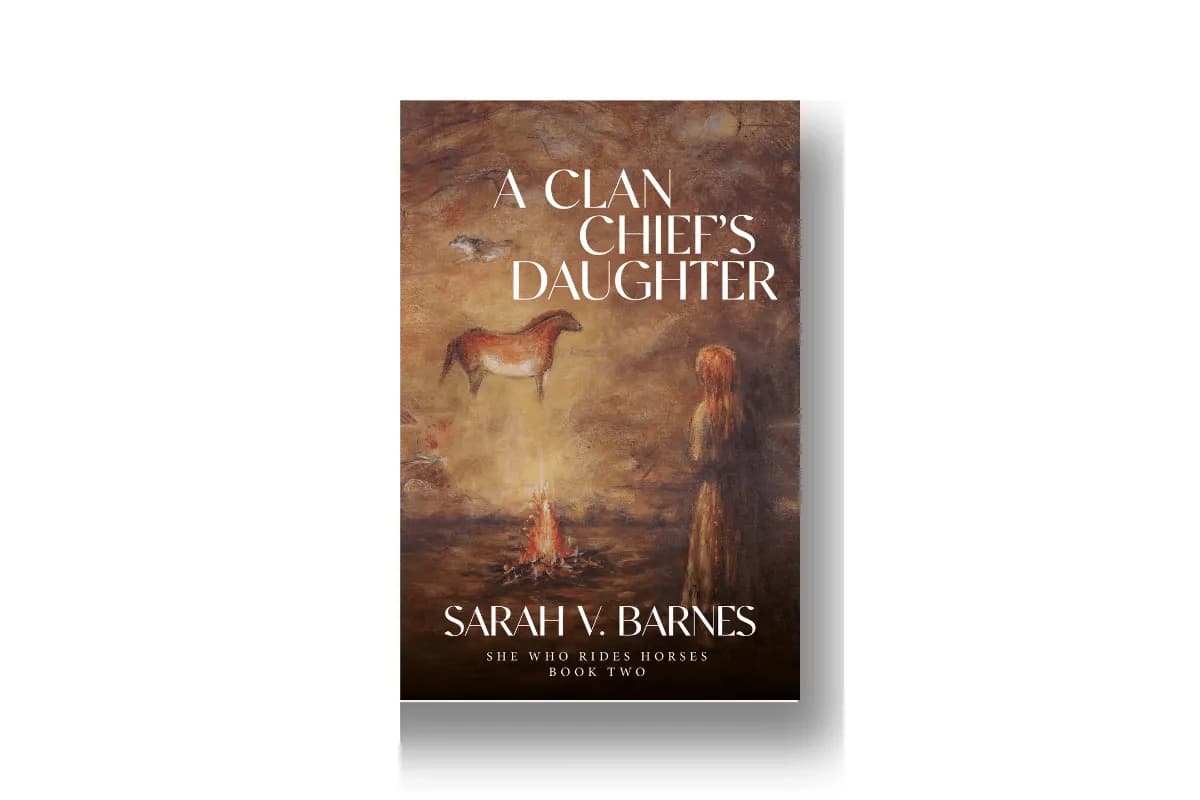
A $14 million project. Twelve units. That’s the standard metric for local development, but it misses a more fundamental point about how we value space. We treat land as a commodity to be zoned, paved, or fenced off. The story of Naya and the wild horses challenges that assumption entirely. It suggests that the bond between a human and an animal is not just a sentimental attachment, but a structural element of community stability.
The Colorado Sun published an excerpt from Sarah V. Barnes’s book, “A Clan Chief’s Daughter,” set on the Pontic-Caspian Steppe around 4,000 BCE. The narrative centers on Naya, a girl who has returned to her clan’s settlement after being away for the winter. Her father, the clan chief, has issued strict orders: stay away from the corrals. Naya ignores him. She is lying on a bluff top, sharp rocks biting into her hips, watching the herd below.
The horses are trapped in a corral after their stallion, BeHregs, was cut down by spears during a stampede. The mares and yearlings are exhausted, pacing in the rain-soaked earth. One mare, Rebhjo, is particularly agitated, calling for the dead stallion and threatening to kick her herd mates. Naya watches from a distance, testing the limits of her father’s orders. She feels a constant buzz of anxiety coming from the horses. They are not just livestock; they are her friends.
This is a contrarian take on the usual development story. We usually talk about infrastructure in terms of cost-benefit analysis. How many people does this housing unit serve? What is the tax revenue per square foot? Barnes’s story offers a different metric: resilience. The horses are panicked because their leader is gone. They need someone to calm them, to understand their fear, to provide the stability that the stallion used to offer. Naya provides that. She is not a developer with a blueprint; she is a caretaker with an intuition for the herd’s emotional state.
In practice, this translates to how we manage shared resources today. When a community loses its anchor — whether that’s a long-standing business, a public park, or a cultural institution — the remaining elements of the community become agitated. They circle, they pace, they churn the ground into a quagmire. We need people who understand that agitation, not just people who want to fence it off and sell the tickets.
Barnes writes that Naya sees the mares’ desperate cries as futile because the stallion can no longer answer. But Naya’s presence changes the dynamic. She is the new anchor. Her father wants order; he wants the horses contained, managed, and predictable. Naya offers something else: connection. She understands that the herd’s behavior is a response to loss, not just a mechanical reaction to confinement.
For context, this isn’t just ancient history. It’s a model for how we should think about our own communities. We build projects to solve problems, but often we create new ones by ignoring the human and animal bonds that hold a place together. A corral is just a fence until someone understands what’s inside it.
The practical bottom line for locals is this: we spend millions on infrastructure that looks good on a spreadsheet but fails to account for the social and emotional fabric of a place. Naya’s quiet observation from a bluff top costs nothing in dollars, but it offers something money can’t buy: the calm that comes from being understood. If we only measure success by square footage and tax revenue, we’re missing the point. We need to invest in the people who can read the room, or rather, the herd. That’s where real stability comes from.
Keep up with the Western Slope
The day's Western Slope news, one email each morning. Free.
Aspen's 1886 Halloween Was About Broken Gates, Not Trick-or-Treating
Mitchell's Aspen Scraps Reveal the Vanishing Horse Culture