Snyder Fire Kills Three Federal Crew Members in Mesa County Burnover
Three federal firefighters died in a burnover incident as the 28,200-acre Snyder fire exploded across the Utah border, impacting Grand Junction and Fruita with high winds and air quality concerns.
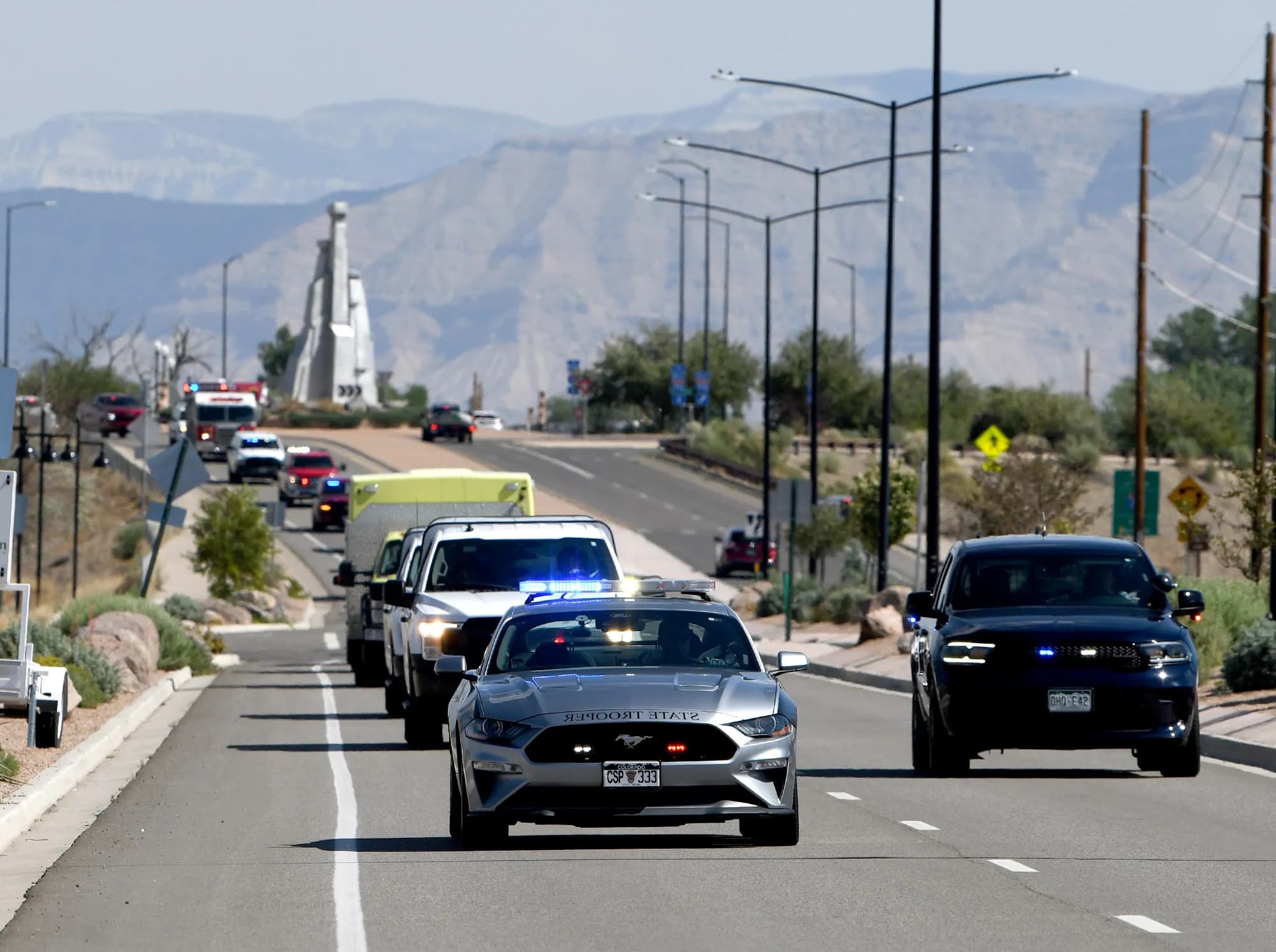
Grand Junction —Three federal firefighters died. One helicopter. Twelve mourning crew members.
That’s the scale of the immediate aftermath in Mesa County, but let’s look at the bigger picture before you get lost in the flags and the solemn processions. The Snyder fire isn’t just a local blip. It’s a 28,200-acre monster that swallowed the Utah border and pushed hard into western Colorado, fueled by high winds that turned a manageable lightning strike into a regional crisis.
The obvious take is that high winds killed these firefighters. That’s true. But the context matters more than the headline. This wasn’t a random accident in a vacuum. It was an explosive night of fire activity across the region. Fires erupted near Dolores and Ouray. A merging of fires spanned more than 28,000 acres southwest of Fruita and Grand Junction. The Snyder complex started with the Knowles and Gore fires near the border, then exploded.
The Interior Department and Forest Service reported the burnover shortly after midnight on Saturday. They didn’t name the dead. They didn’t need to for the initial report. They said they were “focused on supporting the firefighters’ family, friends and colleagues.” That’s bureaucratic language for “we’re handling the logistics, you handle the grief.”
The two injured crew members were transported to a hospital. Gov. Jared Polis confirmed Sunday morning that a Division of Fire Prevention and Control helicopter got them out. Polis called them the “men and women who serve on the front lines,” which is accurate, but it’s also a polite way of saying they’re the ones getting burned when the wind shifts.
Let’s do the math on the logistics. The bodies were moved from a helicopter to Mesa County Coroner’s Office trucks at the Grand Junction airport. A dozen firefighters stood watch. Then a long procession of fire, rescue, and law enforcement vehicles followed them down 24 Road to Community Hospital. That’s a lot of resources pulled from active duty to move three bodies.
On paper, this is a tragedy. In practice, it’s a reminder of how fragile the line between containment and chaos really is. The firefighters deployed their shelters. The fire overtook their position. That’s the definition of a burnover incident. It’s not that they failed; it’s that the wind won.
The Snyder fire is now a complex, not just a single fire. It’s a merging of forces. It’s 28,200 acres of burnt land and active flame. That’s a lot of acreage to manage, and it’s spreading. Farther south, wind-whipped fires are erupting near Dolores and Ouray. The pattern is clear: high winds, dry conditions, and lightning strikes are creating a regional firestorm that doesn’t care about county lines.
For the folks in Grand Junction and Fruita, this isn’t just a story about three federal employees. It’s about the air quality. It’s about the potential for more evacuations. It’s about the strain on local EMS and fire departments who are already stretched thin. The procession down 24 Road was a visual of the response, but the real cost is in the ongoing battle to keep the 28,200-acre complex from expanding further into populated areas.
The state mourns. The federal agencies report. But the wind keeps blowing. And the fire keeps growing. That’s the bottom line.
Keep up with Grand Junction
The day's Western Slope news, one email each morning. Free.


Canadian Tariffs Force Grand Junction Startup To Triple Bike Rack Price

Vail Musician James Carstensen Dies After Choosing Hospice Care