M.S. Rau Gallery Displays Paul Revere Coffee Pot for $1.28 Million
M.S. Rau Gallery showcases a rare 1775 Paul Revere coffee pot weighing 40.1 troy ounces, priced at $1.28 million, as part of its 'From Court to Cocktail' exhibition running through July 6.
Aspen —The coffee pot sits in the gallery, heavy and silent, but it carries the weight of a revolution. It weighs 40.1 troy ounces, a massive amount for the era, and it was handcrafted around 1775 by Paul Revere.
Most people think of Revere as the guy who shouted, “The British are coming.” He didn’t. He quietly warned that the redcoats planned to ransack military supplies. But the man who delivered that warning was also an expert silversmith, capable of turning raw ingots into finished treasures all by himself.
This specific pot is one of only six armorial coffee pots made before the Revolutionary War. Two are in museums. Four are in private collections. This one is for sale.
It currently costs $1.28 million.
“In terms of maker, quality and provenance, this coffee pot is the most significant American silver object available today,” the gallery’s press release states.
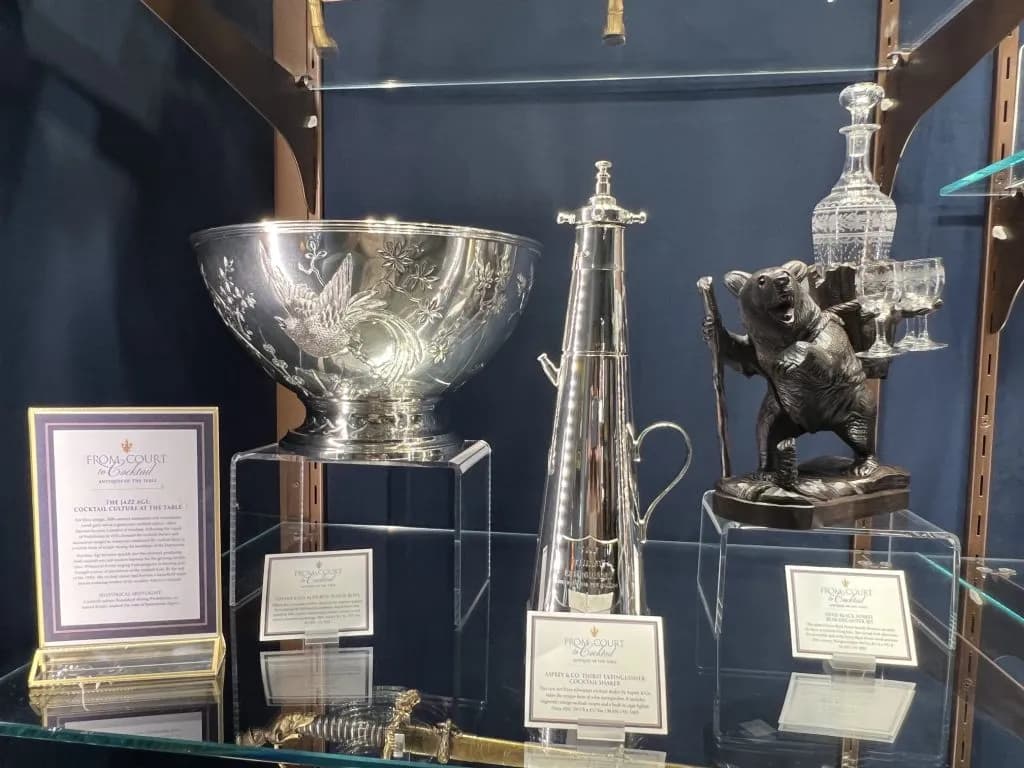
The object is part of M.S. Rau’s extended mini-exhibition, “From Court to Cocktail,” which runs through July 6. The timing isn’t accidental. The gallery is using the Fourth of July weekend to showcase dining items from the 16th century and beyond, tying the history of American independence to the history of what Americans actually drank.
John Rawley, a sales consultant at M.S. Rau, points out that the shift from tea to coffee was a political statement as much as a culinary one. New Americans drank coffee in mismatched cups, rejecting the matching tea sets of the British elite.
But the exhibition isn’t just about coffee. It’s about wealth storage. Before banks existed, people stored their wealth in household items. One of the oldest relics in the collection is a 1589 silver and coconut goblet.
“A coconut, at this time, would’ve been seen as totally exotic,” Rawley said. “It would’ve been like me showing you a moon rock. This would’ve been a status symbol.”
The goblet’s rarity comes from two sources: the 16th-century silver and the coconut itself. Coconuts were so rare in England that people believed they held magical properties. They could detect, and even neutralize, poison.
“Your drink might be poisoned, especially if you were a member of nobility or the court,” Rawley explained. That’s why those in power highly regarded coconuts.
Much of the silver from that early period didn’t survive. Warfare in England forced officials to melt down precious metal to pay for troops. Oliver Cromwell demanded people surrender all their silver objects after discovering his opposition financed their efforts largely with silver. The Great Fire of 1666 destroyed more.
Yet, this coffee pot remained. It depicts Revere’s stamped maker’s mark. Its weight far exceeded the average silver objects he made, which usually weighed about 5 troy ounces.
The exhibition also includes a collection titled American Icons, honoring America’s 250th anniversary. It features paintings, medallions, and a diamond ring. But the coffee pot remains the centerpiece, a tangible link to a time when a single object could represent both political allegiance and personal fortune.
As Rawley puts it, the object isn’t just silver. It’s a record of who held power, what they feared, and how they chose to display it. The question is whether locals will see it as a piece of history or a piece of real estate. At $1.28 million, it’s both.
“The numbers back that up,” Rawley noted, referring to the pot’s value relative to its rarity and the skill required to create it. “He was the only silversmith in the colonies capable of crafting a finished product from the silver ingot to a finished engraved treasure all by himself.”
The verdict hangs in the balance on whether museum crowds return in force before the July 6 deadline. For now, the pot sits there, waiting for someone willing to pay for the privilege of owning a fragment of the American story.
Keep up with Aspen
The day's Western Slope news, one email each morning. Free.
Aspen's ACES Returns Annual Harvest Party to Rock Bottom Ranch
Glenwood Ghostwalk Brings Frontier History to Life in Linwood Cemetery