Collbran Resident Fills State Wolf Rider Gap in Mesa County
Collbran resident Christina Vander Berg contracts with Defenders of Wildlife to monitor 50,000 acres for wolves, filling the void left by CPW's exclusion of Mesa County from its state-funded range rider program.
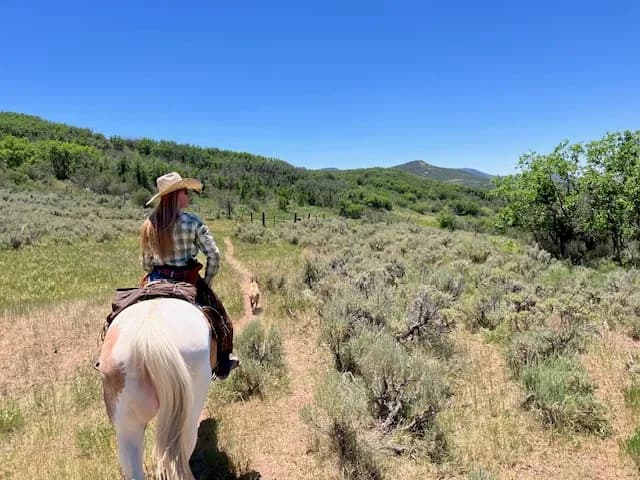
Grand Junction —Christina Vander Berg covers 50,000 acres. That’s a lot of ground to scan for wolves when the state’s official range rider program ignores your county.
Vander Berg, a Collbran resident, isn’t waiting for Colorado Parks and Wildlife (CPW) to assign a rider to Mesa County. They didn’t. Instead, she’s operating as one of three range riders contracted by the nonprofit Defenders of Wildlife, filling the void left by a state program that has yet to prioritize this specific stretch of Western Slope.
The state’s approach is data-driven, but it’s also reactive. CPW and the Colorado Department of Agriculture contracted 11 riders for the 2025 season. Only eight finished the five-month stint. Those riders were deployed across nine northwest counties identified as having the “greatest need.” This year, the state has expanded to 15 riders under a five-year contract, covering similar northwest areas plus the southwest. Deployment depends on producer requests, conflict reports, wolf collar data, pack localization, and rider availability.
Mesa County isn’t on that list. Not officially.
“Wolves don’t know boundary lines,” Vander Berg said. Her county is surrounded by release areas. If the state’s logic is that wolves follow the map, they’re wrong. If they follow the cattle, Mesa County is in the crossfire.
Vander Berg, 50, spent 25 years investigating fires before becoming a cattle producer and rodeo judge. She’s also survived a second battle with breast cancer. This job lets her stay on her horses. It lets her use her analytical skills. It lets her mute the noise.
“I’m coming to the table with an analytical, problem-solving skill set,” she said. “As somebody who can read the landscape, read cattle behavior, read wildlife behavior — and see the impact that all of that is having on the landscape and be prepared for conflict with the right tools.”
She didn’t just guess the funding would appear. She hunted it. CPW pointed her toward Defenders of Wildlife, which had grant money from donors and family foundations specifically earmarked for riders. Vander Berg put the puzzle pieces together. She tapped into resources that needed allocation.
Last summer, she rode out for the first time. She supported producers and over 2,000 head of cattle on that 50,000-acre allotment. Her work wasn’t glamorous. It was putting up game cameras. Scanning the horizon. Learning the land. Identifying when things went wrong. Helping producers move herds. Doctoring cattle.
The producers were willing. They just didn’t know how to be part of the conversation. Vander Berg stepped in.
“Somebody needed to be the person,” she said. “I came in willing to mute out all the noise, controversy and chaos, find the facts and be the calm in the storm between all of the different sides.”
Let’s look at the numbers. The state has 15 riders. Defenders of Wildlife has three. Vander Berg is one of them. She’s covering ground that the state’s 15 riders are currently ignoring. That’s a gap. It’s a logistical blind spot.
The state’s program is built on a five-year contract. It’s built on data. It’s built on the assumption that if you put enough riders in the “greatest need” counties, the wolves will stay there. But wolves move. Cattle move. And Mesa County is stuck in the middle, waiting for a state rider who might never show up if the data doesn’t shift.
Vander Berg is betting on the reality of the landscape, not the bureaucracy of the map. She’s using grant money to do the work the state hasn’t prioritized. It’s a stopgap. It’s a bridge. It’s also a warning sign that the state’s current deployment strategy might be missing the actual conflict zones.
For the neighbors in Collbran, this means they have a rider. It means they have someone putting cameras in the brush. It doesn’t mean the state is paying for it. It means a nonprofit is. It means donors are. It means the cost is being shifted from the taxpayer to the private sector.
That’s the practical bottom line. We’re getting range riding. We’re just not getting it from the state. And until CPW changes its deployment logic to account for wolves that ignore county lines, that’s the deal.
Keep up with Grand Junction
The day's Western Slope news, one email each morning. Free.


Canadian Tariffs Force Grand Junction Startup To Triple Bike Rack Price

Vail Musician James Carstensen Dies After Choosing Hospice Care