Aspen Music Festival pairs Slatkin and Denève for Mahler and Schubert concerts
The Aspen Music Festival presents Leonard Slatkin and Stéphane Denève conducting Mahler and Schubert, exploring how formative childhood memories shaped their distinct musical trajectories.
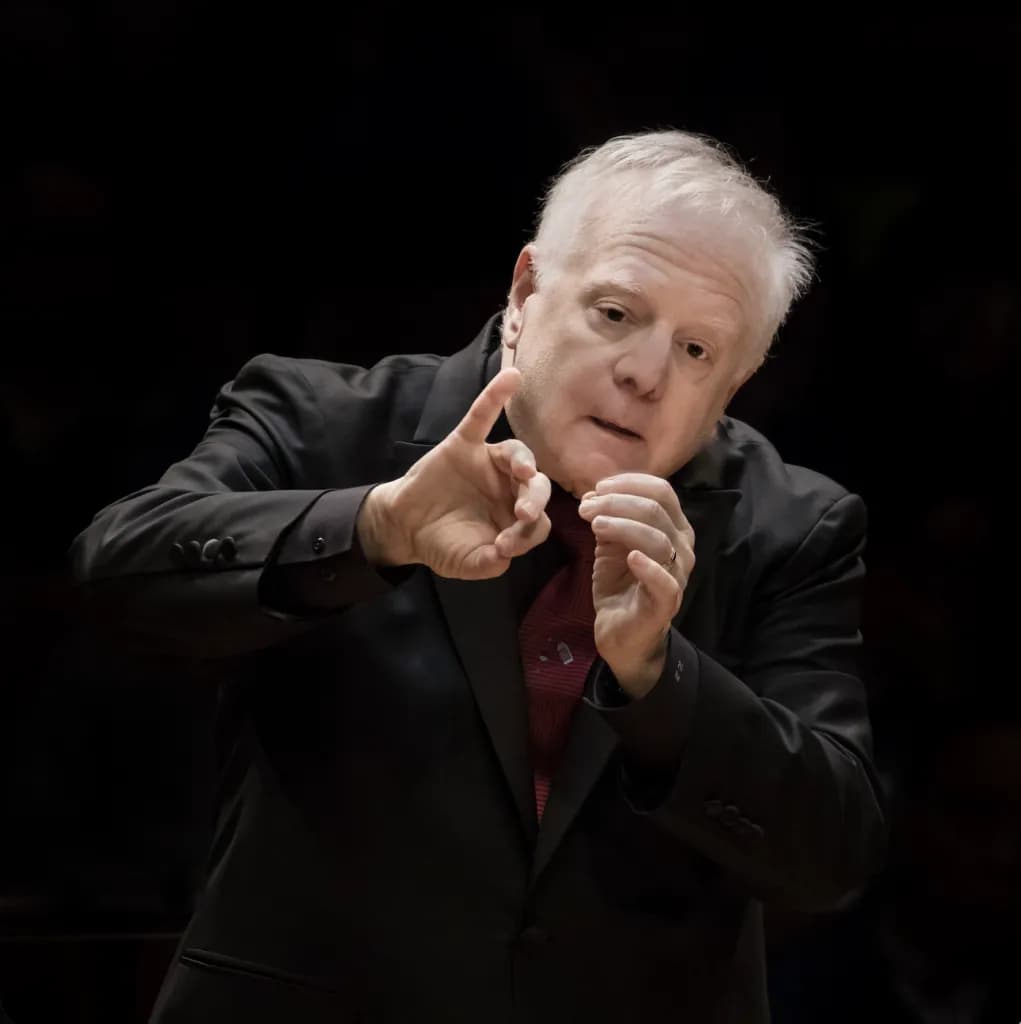
Aspen —Leonard Slatkin remembers being eight years old, falling asleep on the stairs after his bedtime, listening to his parents’ Hollywood String Quartet rehearse Schubert’s C major cello quintet in the living room. That slow movement hooked him. It’s a specific, tactile memory of how classical music can physically alter a person’s trajectory.
That’s the hook for this week’s Aspen Music Festival programming. On Friday, Aug. 7, Slatkin conducts one of his own compositions, “Schubertiade,” a piece delivered with a wink. On Sunday, Stéphane Denève takes the podium for Mahler’s “First Symphony.”
It’s not just a concert schedule. It’s a map of how two distinct lives — one rooted in the Hollywood elite, the other in the Shrine Auditorium — intersected at Los Angeles High School. They played in orchestras together. They struggled in French classes. They bonded over music. Today, one is a top-tier conductor; the other, a journalist who detoured away from a hoped-for music career.
Let’s look at the Mahler side first. The writer of this column helped his mother run a classical music series at the Shrine Auditorium. As a teenager, he attended a performance by the Boston Symphony under Erich Leinsdorf. In the early 1960s, hearing Mahler live was rare. Most orchestras didn’t play it regularly. This performance changed everything.
The music did things no one expected. Woodwinds interrupted moody chords with cuckoo sounds. Muted brass fanfares erupted from nowhere. The slow movement varied on “Frère Jacques” in a minor key, channeling a Klezmer band in the refrain. It was a kaleidoscope of unexpected sounds that lifted him out of his seat. It showed him that classical music could stretch boundaries. It opened his ears to the unfamiliar.
Slatkin’s connection is different but equally formative. His parents founded the Hollywood String Quartet. He fell asleep on the steps listening to them rehearse. Schubert’s C major cello quintet was his first love. The slow movement got him. That familiarity with chamber music shaped his entire career.
Friday’s concert begins with Slatkin’s own piece, “Schubertiade.” It’s a salute to Franz Schubert, the great Romantic Era composer. It’s not just a tribute; it’s a personal artifact. Slatkin confirmed that Schubert had a special place in his musical journey, just as Mahler did for the journalist.
Sunday’s program broadens the scope. Denève, currently music director of the St. Louis Symphony (a position Slatkin held from 1979 to 1996), will conduct Mahler alongside works by Carlos Simon and Jessie Montgomery. These pieces bridge classical music, jazz, and other roots. Denève is expected to open up windows into their music as well as Mahler’s.
The Aspen Music Festival offers two or three Mahler performances most years. But the context matters. This isn’t just about hearing famous music. It’s about understanding how that music arrived at the stage. It’s about the eight-year-old on the stairs and the teenager at the Shrine Auditorium. It’s about how a single piece of music can define a life.
For locals, this means a weekend of high-caliber performance. It means Slathin and Denève, two figures who shaped the American classical landscape, are back in the valley. It means listening to Mahler not as a museum piece, but as a living, breathing force that once lifted a teenager out of his seat.
The cost of admission? The festival doesn’t list it here, but you know the price of entry for world-class talent. The value? Understanding the roots of the music you’re hearing. It’s rare to hear Mahler’s First with that kind of historical context. It’s rarer still to hear it conducted by someone who knows the composer’s soul.
This is what shaped them. This is what shapes us.
Keep up with Aspen
The day's Western Slope news, one email each morning. Free.