Aspen's Deteriorating Grey Ghost Yeti Climbers Eye Fall Repair
The 10-foot yeti statue clinging to Aspen's 'Grey Ghost' climbing route is losing its fur and facing deterioration; anonymous local climbers plan a risky fall refurbishment.
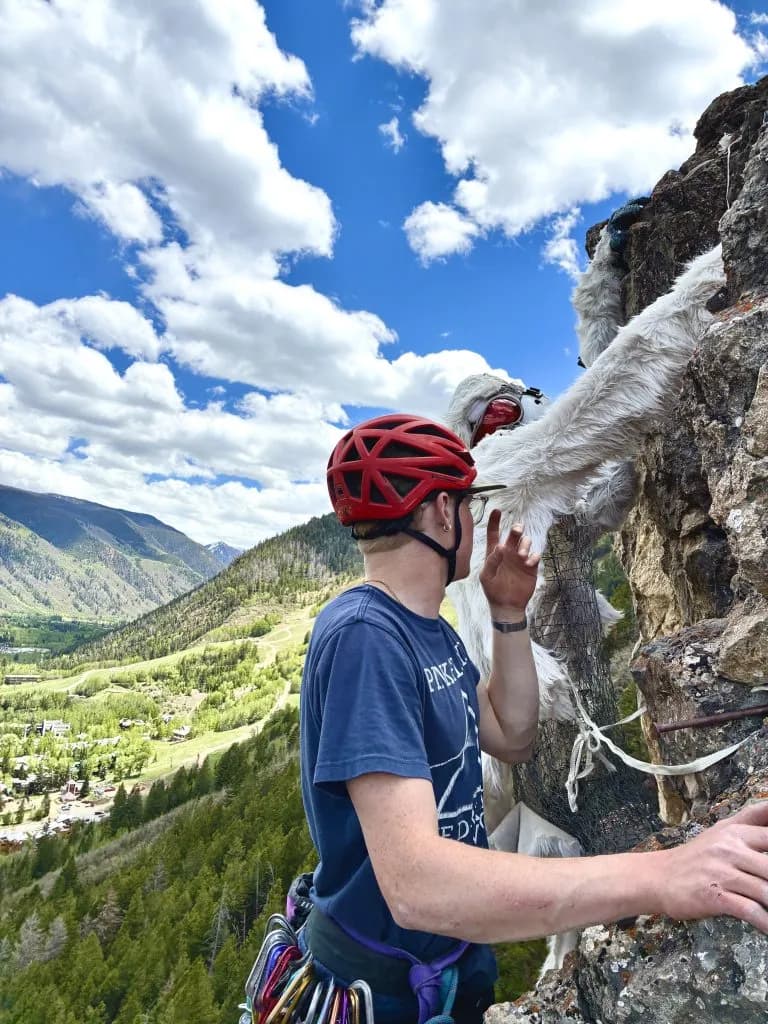
Aspen —“The Grey Ghost” is climbing its way into the history books, and right now, it’s losing its hair.
High on the limestone face overlooking Aspen, a 10-foot tall yeti clings to the rock, slowly deteriorating. It’s a scene that has become as much a part of the local landscape as the snow on Independence Pass or the traffic on U.S. Highway 82. The statue appeared right before Thanksgiving in the fall of 2020, dropped into place during the quiet, strange dog days of the pandemic.
“It was during COVID, during the slow dog days of COVID fall, and something needed a little action,” one of the anonymous artists told the Aspen Times.
These aren’t professional sculptors with city contracts. They identify themselves simply as “long-term locals.” And they’re worried. The yeti, perched atop a route first climbed by Harvey Carter — one of the first climbers on Independence Pass — is showing its age. The wire-frame body is losing its fur. The landscape spikes holding it to the rock are doing their job, but barely.
Here’s the thing though: getting back up there isn’t exactly a weekend hike.
The yeti sits on “The Grey Ghost,” a route that Colter Hinchliffe describes as moderately difficult but dangerous, graded around 5.8 R/X. That “R” stands for “serious,” and the “X” means the protection is marginal. You’re not clipping pre-drilled bolts here. You’re relying on traditional climbing gear, cams and nuts hammered into cracks that can be loose and unpredictable.
Hinchliffe remembers being on the route recently. He was treading lightly on the rock, careful not to dislodge a block. If he had kicked off a chunk of limestone, it would have killed Chris Davenport, who was belaying from below.
“Close to the most terrified I have ever been,” added local climber Sam Smith, who summited the route on a recent Thursday.
So, who put the beast there?
Aspen City Council Member John Doyle says he’s familiar with the crew. They’re rock climbers who knew the route well enough to navigate it while hauling up a massive, irregular statue. They chose a yeti because, Doyle notes, “they were just really fond of Yetis, and they believe (in them).”
It fits Aspen’s quirky tradition of anonymous, free-hanging public art. Think back to the mid-1990s. A local, name unknown, climbed a tree and hung a banner from the 8th Street bridge for Bill Clinton’s visit. The banner read “Inhale to the Chief.”
“It’s a really cool statement on public art and local character,” Doyle said.
But cool doesn’t mean durable. The yeti was installed using a top rope, with the climber dropping down from above, nailed into the mountain with landscape spikes. Now, at almost six years old, the fur is falling off. The artists don’t have a budget or a timeline for refurbishment. The access is tricky, the rock is unforgiving, and the danger is real.
“Going into the height of summer? Nothing will probably happen, but maybe in the fall,” one artist said.
That’s the plan. Wait for the snow to melt, wait for the crowds to thin, and hope the yeti holds on long enough for someone brave enough to climb “The Grey Ghost” to fix it. Until then, it’s just hanging there, a silent, furry reminder of a pandemic summer, slowly losing its grip on the mountain.
Keep up with Aspen
The day's Western Slope news, one email each morning. Free.
NWRM CASA Honors Judge O’Hara and Founders at 15th Anniversary

Craig Hosts Only Regional Special Olympics Bowling Competition