Boom Supersonic Hires 500 for New Centennial Data Center Turbine Plant
Boom Supersonic announced a $150 million expansion to hire 500 workers for its Centennial plant, shifting focus from supersonic jets to building natural gas turbines that power data centers without water.
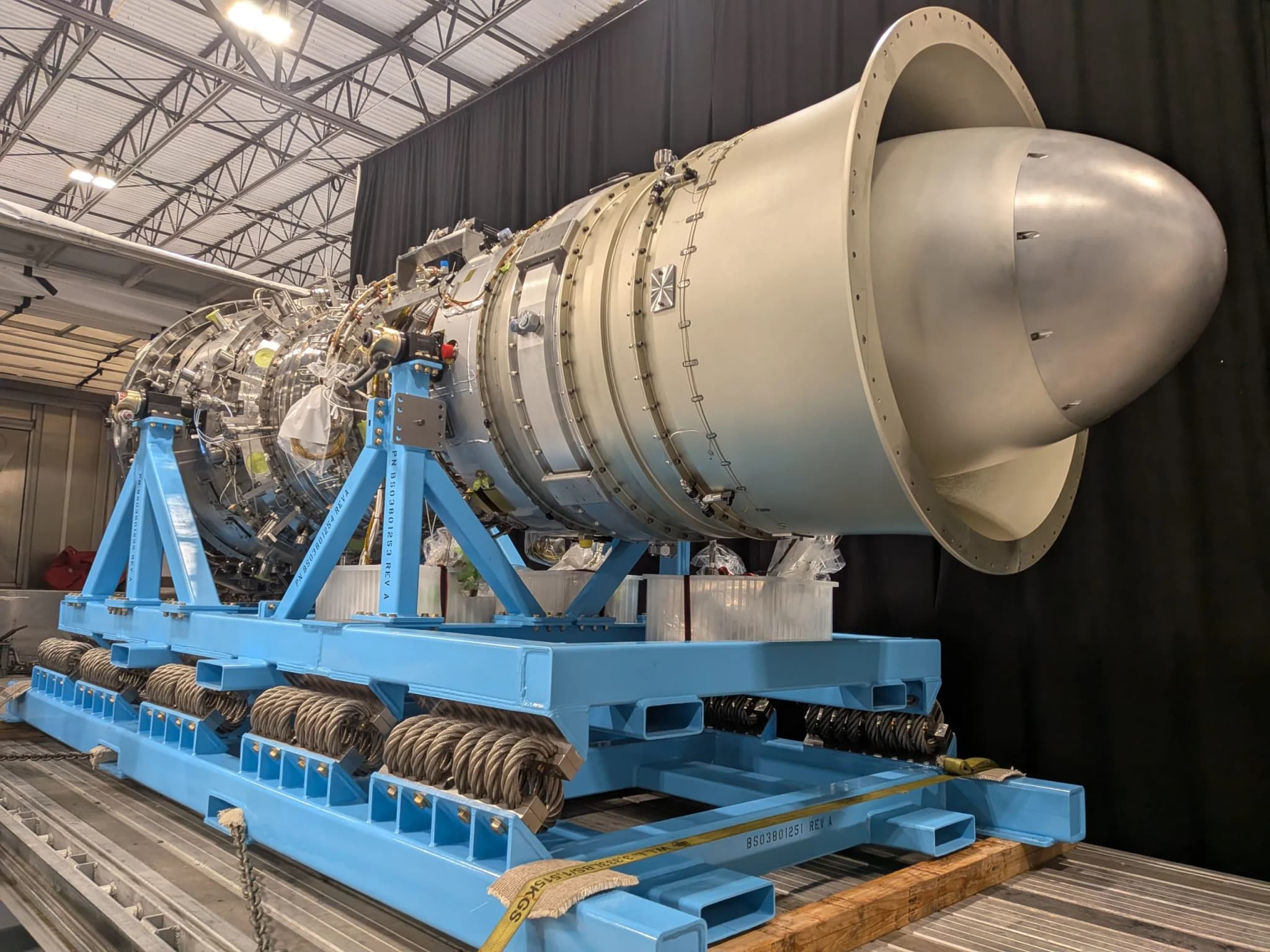
Boom Supersonic will hire 500 people to build natural gas turbines for data centers at a new plant near Centennial Airport.
The company announced the expansion Thursday. The factory is not for its supersonic jets. Those are slated for commercial flights in 2030. The engine is the product.
Boom calls the technology Superpower. It is a 42-megawatt natural gas turbine designed to power data centers off-grid. It requires no water for cooling.
Blake Scholl, Boom’s CEO and founder, made the pitch at a news conference at the company’s headquarters. “The easiest way to overcome those problems is to enable data centers to make their own electricity and do it without a drop of water,” Scholl said. “That is absolutely what Superpower is about.”
The turbine runs on the same technology developed for supersonic flight. That tech is built to handle extreme heat. It doesn’t need water for cooling. Not a drop.
Gov. Jared Polis joined Scholl for the announcement. He called the expansion a $150 million investment in Colorado. “We were thrilled that Colorado was able to be the most competitive,” Polis said. “We’re thrilled to keep you here, close to home, and be part of your success story.”
Boom has been headquartered near Centennial Airport since at least 2016. The company currently employs about 165 people. It has raised more than $700 million from investors.
The pivot to turbines comes after a rough stretch for the jet program. Boom’s first manufacturing and testing plant, a “superfactory” in North Carolina, has reportedly remained idle.
Scholl admitted the company is behind schedule on its aircraft. “We’re not exactly where we thought we would be by now,” he said Thursday.
The strategy is clear: ground power first, airplane second. Boom will expand turbine production in Colorado before turning its attention back to the jet and the North Carolina facility.
The timing is not accidental. Data centers are straining electrical grids across the country. They consume massive amounts of power and water for cooling. Boom’s turbine offers a self-contained solution. It generates electricity on-site without tapping the grid or using water for cooling.
The technology was shared publicly last year, but finding a location to manufacture it took time. Boom shopped around the U.S. before landing in Colorado.
The company’s presence here is not without friction. Earlier this year, Scholl told the Wall Street Journal that regulations from a looming Colorado artificial intelligence law would add compliance costs for businesses. He warned those rules could deter others from moving or expanding here, including Boom itself.
That tension sits awkwardly beside the $150 million investment announcement. The state wants Boom to stay. Boom is staying, but for a different product than the one that originally drew attention.
The supersonic jet remains a long-term goal. Boom touted a three-hour New York-to-London flight in earlier pitches, according to The Denver Post. That timeline has slipped. The 2030 target for commercial flights is the current benchmark.
For now, the money and jobs are tied to turbines, not planes. The 500 new hires will work on the Superpower engine line at the Centennial facility.
The data center boom is reshaping industrial real estate and energy policy across the West. Boom’s turbine offers a specific answer to that demand: local generation, no grid reliance, zero water usage.
Whether the turbine scales beyond the Centennial plant is an open question. But for now, the factory is built around the engine that powers data centers, not the one that breaks the sound barrier.
Keep up with the Western Slope
The day's Western Slope news, one email each morning. Free.