Boulder Man Spends $1M Challenging Senate Race Over Debt
Bob Chew invests over $1 million in his Forward Party U.S. Senate bid, targeting Colorado's 2 million unaffiliated voters to force a national debt debate ignored by major parties.
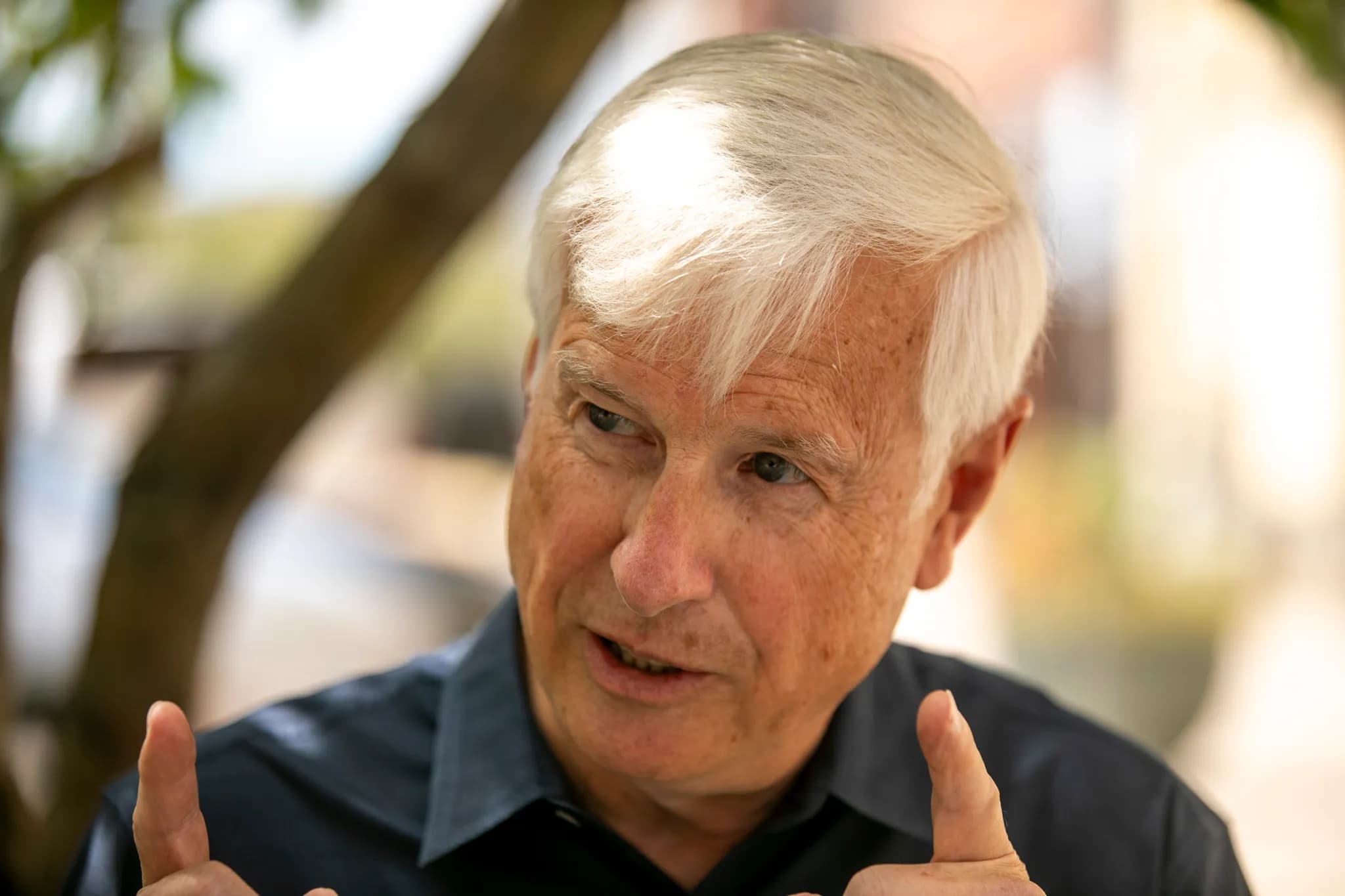
Bob Chew is sitting outside a coffee shop in north Boulder. He’s talking about the U.S. debt. It recently topped $40 trillion.
He says that number is why he’s running for U.S. Senate on the Forward Party line.
“I knew that neither major party would talk about this issue,” Chew told CPR News, part of the Colorado Capitol News Alliance.
He’s a former registered Republican. He calls himself an independent now. He wants to force the Democrats and Republicans into an uncomfortable discussion. He claims to be giving moderate Republicans, moderate Democrats, and the vast number of independents a real option.
The math is stark. As of Aug. 1, the Secretary of State’s Office reported almost 4 million active registered voters in Colorado. Just over 985,000 are Democrats. 887,000 are Republicans. More than 2 million are unaffiliated. Just under 100,000 belong to minor parties.
Chew is betting on that unaffiliated block. He’s invested over a million dollars of his own money into the race. That cash secured $1.3 million in TV ads through September. Most minor party candidates don’t have that kind of war chest.
But money doesn’t guarantee traction.
Adam Withrow knows the reality of a third-party run. He’s from Walsenburg. Last cycle, he ran for Congress under the Unity Party line in the 3rd Congressional District. That district spans the Western Slope into southern Colorado.
He expected to get about 20 votes. He got just over 2,700.
“I anticipated I’d get somewhere around 20 votes,” Withrow said. “And so when 2,000 came through, I was like, OK, even with a stripped back, dumbed down message, people were into it — a hundred times more th...”
The sentence trails off in the report. The point stands. He beat his expectation by a wide margin, but he didn’t win the seat.
This fall, dozens of independent and third-party candidates will appear on ballots across Colorado. They’ll run for offices up and down the ticket. The major-party candidates for U.S. Senate are Democratic former Gov. John Hickenlooper and Republican state Sen. Mark Baisley.
Minor party candidates make the ballot through conventions. Unaffiliated candidates had to collect signatures. The number of required signatures depends on the office sought.
On your ballot, these names will appear after Hickenlooper and Baisley. The unaffiliated candidates follow them.
Chew says he’s free to talk about debt in serious terms. He believes his presence will change the conversation. That is a bold claim for a candidate who, by all accounts, won’t win the general election.
Withrow’s 2,700 votes in a district with hundreds of thousands of voters is a small dent. It proves people will look at the line. It doesn’t prove they’ll change their vote on the main contest.
The Colorado Sun reported that these candidates are trying to gain traction. Whether they succeed is another matter.
The debt is $40 trillion. The unaffiliated voter bloc is over 2 million people. Chew has his TV spots booked. Withrow knows what it’s like to run on a shoestring and still find an audience.
The major parties are focused on the two names at the top of the ballot. They aren’t talking about debt. That’s Chew’s opening.
But an opening isn’t a win. The voters in the valley, on the plains, and in the mountains will decide if a third name on the ballot actually matters or if it’s just another line to skip.
Chew thinks he’ll force the issue. The numbers suggest most voters won’t look past the top two names anyway.
He’s spending his own money to find out.
Keep up with the Western Slope
The day's Western Slope news, one email each morning. Free.