Bravo! Vail Unveils 39th Season Logistics Behind 650-Musician Festival
Bravo! Vail launches its 39th season featuring major U.S. orchestras, requiring complex coordination of 650 musicians and heavy instrument transport across multiple Colorado venues.
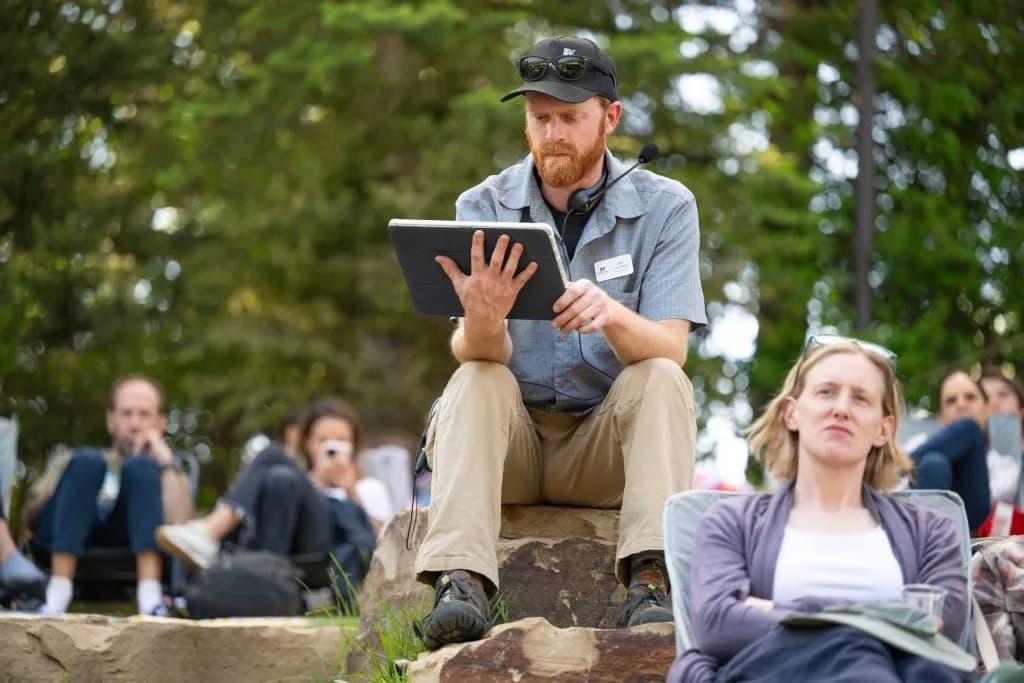
Aspen —“‘It takes a village,’ said Bravo! Vail artistic operations director Elli Monroe. ‘We have a wonderful team.’”
That’s the sound of success, usually. But standing there long enough in Vail during July and August, you realize that “a village” is actually a logistical labyrinth involving 650 musicians, semi-trucks full of strings and woodwinds, and pianos that weigh more than a pickup truck.
Bravo! Vail has officially kicked off its 39th season, running from late June through early August. By the time the final curtain falls on the last concert in Vail, locals and visitors alike will have watched three major U.S. orchestras — the New York Philharmonic, The Philadelphia Orchestra, and the Dallas Symphony Orchestra — along with the Academy of St Martin in the Fields.
The Vail Daily reported that coordinating all these moving parts is no small feat. Each musician arrives with a unique schedule, specific instrument needs, and often family in tow. The festival staff doesn’t just book the music; they manage a complex web of availability, rehearsal spaces, and instrument logistics.
Monroe, who has been with the festival since 2008, describes her role as taking “the artistic vision” and making it physically real. It’s not just about who plays what, but where they play it, when the piano is tuned, and whether the stage sets have arrived from abroad.
“Working with partner venues, creating rehearsal schedules, it’s a ton of moving parts,” Monroe said. She noted that schedule planning is uniquely challenging because artist availability must align with personal schedules and the mechanical reality of getting a grand piano from point A to point B.
The piano is a project unto itself. At any given time, Bravo! Vail has seven or eight pianos scattered across different performance locations. They are constantly being shipped and moved.
“We’ll have a performance at Gerald R. Ford Amphitheater on Monday and we need that same piano at the Vilar on Tuesday,” Monroe explained. A grand piano tips roughly 1,300 pounds. To move it, workers tip it on its side onto a dolly and remove the legs. It’s a pie-in-the-sky task, literally and figuratively, happening every day of the summer.
The logistics extend beyond Vail’s town center. Gabriela Jiménez of Sinfónica de Minería was seen performing in Avon, a reminder that the festival’s reach extends to neighboring communities. Meanwhile, piano technician Makia Matsumura works tirelessly at the Ford Amphitheater, ensuring that every note hits the mark.
For the U.S.-based orchestras, travel is somewhat simplified by semi-trucks carrying most instruments. The largest pieces are borrowed from the festival’s own inventory. The Academy of St Martin, arriving from abroad, rents the majority of its instruments and stage sets, adding another layer to the pre-planning that begins about a year and a half before summer arrives.
From 6 a.m. to 10 p.m., the festival staff operates in all-systems-go mode for two months. If you can meticulously pre-plan and communicate, 99% goes as planned. The fires that do break out? They are put out quickly.
Stand there long enough and you might see a piano being loaded onto a dolly at dusk, ready for its next journey. It’s not just music. It’s motion.
Keep up with Aspen
The day's Western Slope news, one email each morning. Free.