Burning Spear Delivers Spiritual Reggae Performance at Aspen's Belly Up
Winston Rodney, known as Burning Spear, delivers a soulful, high-energy performance at Aspen's Belly Up, highlighting the enduring roots of reggae and previewing a busy summer festival circuit including Ziggy Marley and Reggae on the Rocks.
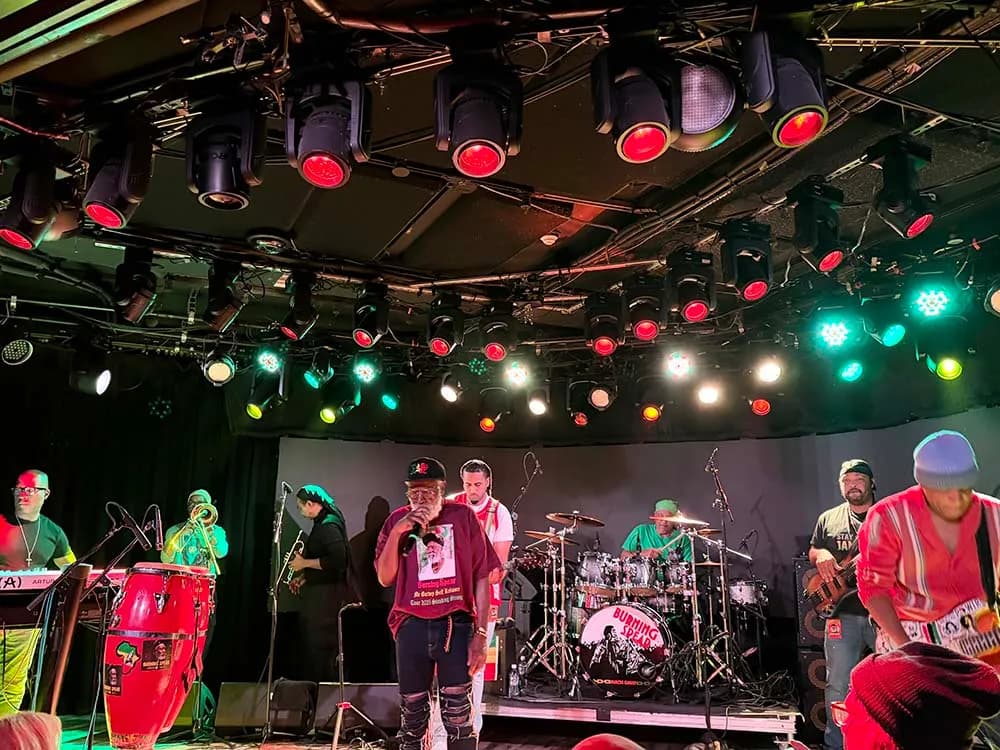
Aspen —The bass line hit first, a low-frequency rumble that seemed to vibrate through the floorboards of the Belly Up and straight into your chest. It was Sunday evening in Aspen, and the air inside the venue was thick with humidity and anticipation. Winston Rodney, known to the world as Burning Spear, stood center stage, delivering a spiritual experience that had been building for over fifty years.
This wasn’t just a concert; it was a validation of a genre that has long since shed its "dub" label in the public eye and reclaimed its roots. As the late Toots Hibbert once sang, "Reggae’s got soul." And on this night, that soul was on full display, delivered by a man who grew up just miles from Bob Marley in St. Ann’s Bay, Jamaica.
The connection between the two legends is often cited, but Rodney’s origin story offers more than just proximity. They were neighbors who encouraged one another, a detail that adds weight to every note Rodney plucks from his guitar. The turnout was strong for a weekday evening, and the energy was infectious. Rodney didn’t just stand still; he danced, moved, and engaged with a band that included horns, keyboards, percussion, and bass, creating a wall of sound that filled the room.
For locals who have followed the genre since the days of cassette tapes in BMWs, this night was a validation of their long-standing devotion. It’s the kind of night that turns casual listeners into lifelong fans. The author of the Aspen Times piece, May Selby, recalls being hooked in middle school when a friend slid a Bob Marley cassette into her mom’s car. That instant click — the drum, the bass, the lyrics — sparked a journey that led to collecting LPs of Peter Tosh and Toots and the Maytals, and eventually running the Reggae Marathon in Negril, Jamaica.
"Reggae’s got soul," Selby writes, noting that the genre carries joy, grief, resistance, and gratitude. Rodney embodied that complexity. He didn’t just play hits; he played history. And for the audience, that history felt immediate.
The momentum isn’t stopping at Belly Up. The summer reggae calendar on the Western Slope and in Denver is shaping up to be a heavy hitter. Just a few weeks after this performance, Ziggy Marley and Stephen Marley take the stage at Red Rocks on June 24, joined by Buju Banton and Karl Denson’s Tiny Universe. The very next night, Ziggy heads to Belly Up for an all-ages show as part of his Brightside Tour.
Then comes the Denver Botanic Gardens on August 11, where Steel Pulse, the band that launched the author’s own live reggae journey in high school, takes the stage. But the real draw for many will be August 22, when Reggae on the Rocks returns to Red Rocks. The lineup is stacked: Rebelution, MAOLI, Skip Marley, Third World, Etana, and Judge Roughneck.
For folks who drive up from Denver or stay local in Aspen, these aren’t just dates on a calendar. They’re opportunities to reconnect with a community that values authenticity over polish. The music has evolved, sure. It’s more polished now, more global. But the core remains. It’s about the rhythm, the message, and the people who keep it alive.
As Selby puts it, there’s all the more reason to celebrate and feel Irie. The question isn’t whether reggae will continue to dominate the summer festival circuit. The question is whether we’re ready for the sheer volume of talent hitting the stage between now and Labor Day.
"Rodney’s still got moves," Selby notes, capturing the image of the elder statesman dancing onstage. It’s a reminder that while the stars change, the music stays the same. It’s grounded, it’s real, and it’s here.
Keep up with Aspen
The day's Western Slope news, one email each morning. Free.