Cañon City's Royal Gorge Bridge Faces Costly Ownership Dispute
A disputed $500,000 intellectual property claim threatens to close Royal Gorge Bridge & Park during its operator transition. The incoming company faces limited site access while the city monitors its annual $3 million revenue stream.
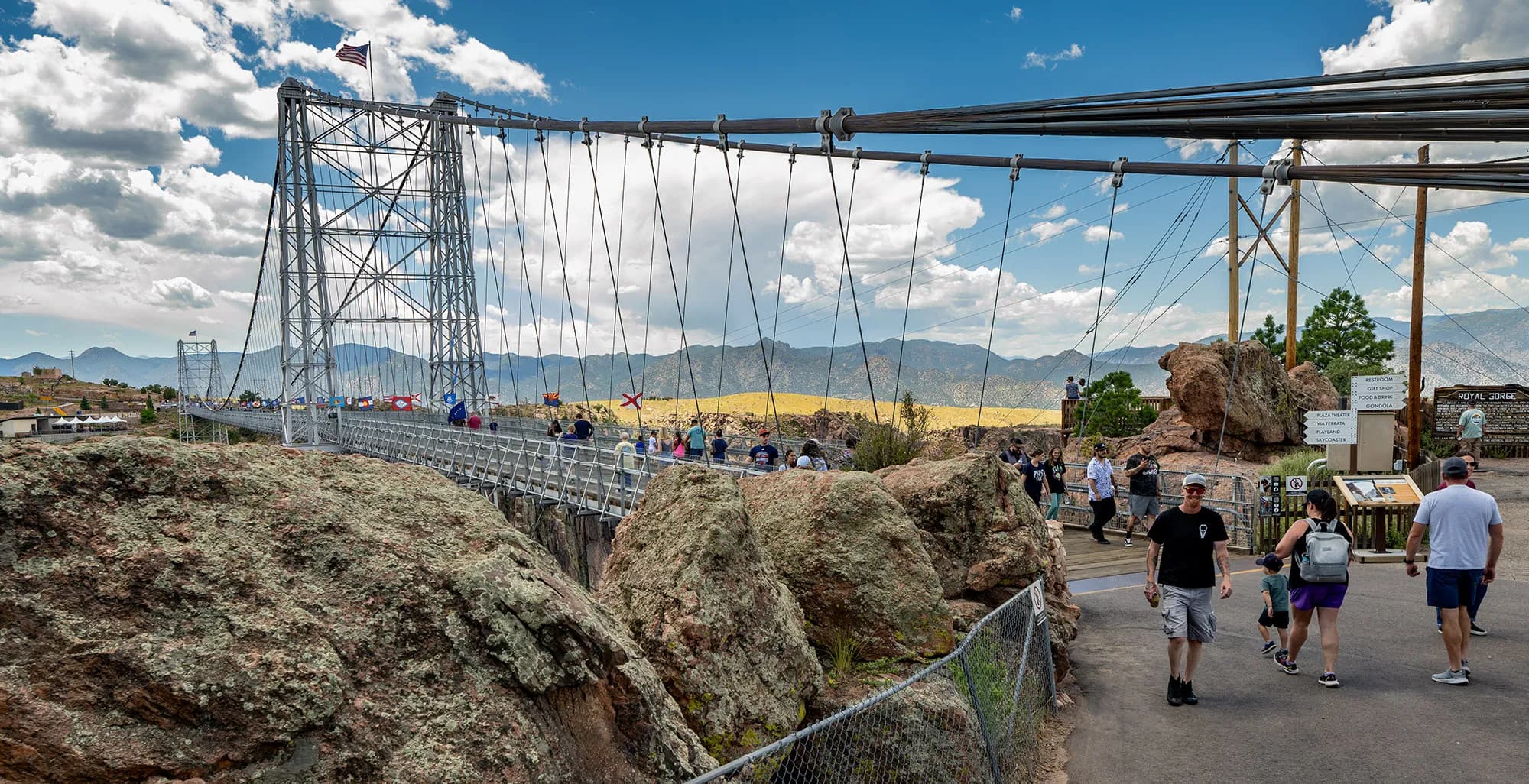
The air in Cañon City is sharp with the scent of pine and impending change. For decades, the Royal Gorge Bridge & Park has operated on a steady, predictable rhythm, a 365-day-a-year institution that anchors the town’s identity and its economy. But this Saturday, as the sun dips below the gorge and the park closes at 5 p.m., that rhythm breaks. One company moves out; another moves in at 12:01 a.m., Sunday, in a transition so fraught with legal friction and logistical uncertainty that it threatens to leave the gates closed when they should be swinging open.
It is a counterintuitive reality for a place that prides itself on being an open, accessible haven. You might expect a seamless handoff between two entities managing the same physical space, but instead, you have a standoff. The Royal Gorge Company of Colorado, the long-time operator that lost its bid to continue running the park for the city, is not leaving quietly. In August, they demanded that Cañon City pay $500,000 for intellectual property, a sum that covers the park name, internet domain names, and social media accounts. It is a digital handshake that has turned into a fistfight, with disputes spreading to the U.S. Patent and Trademark Office where competing applications to trademark "Royal Gorge Bridge & Park" are currently pending.
The friction isn’t just legal; it’s physical and personal. Employees, who are effectively switching bosses overnight, report a lack of direct contact with their new employer. They received offer letters and could respond in writing, but phone calls or personal contact were barred. There is a strange, sterile distance to the process, a bureaucratic wall built between people who will soon be working side by side. Meanwhile, the incoming operator, CMBH Partners LLC, a newly formed entity started by a former Royal Gorge Company employee, has been denied access to the site in the weeks leading up to the transition.
Brent Hargrave of CMBH spoke briefly at an Oct. 19 City Council meeting, telling residents that his company would get the park open as soon as possible but didn’t rule out a closure of a week or two. Speaking to a handful of residents after the meeting, he described it as frustrating that his company could not get access to the site before the start of its contract. In an email sent Thursday, Hargrave stated that CMBH’s goal is to open the park Sunday, though the sentence cuts off in the reporting, leaving a lingering ambiguity about what "devel" might have meant.
City Manager Ryan Stevens says negotiations were ongoing as of Thursday. He declined to detail the specifics but expressed confidence in CMBH’s plan to keep the park running with as little — "if any" — down time as possible. The city owns the park and nets about $3 million a year from it, so the stakes are high for the municipal budget. But there is another layer of tension: who pays for maintenance? Specifically, repairs to the Royal Rush Skycoaster, which was shut down in September after an inspection. That ride hangs suspended over the gorge, a silent witness to the corporate maneuvering below.
If you look closely at the transition, it’s less about who runs the park and more about who controls its identity. The rows of trucks hauling furniture, computers, and T-shirts in and out are just the surface; underneath is a battle over names, domains, and the right to say "we are Royal Gorge." The community is watching. They’ve heard the rumors, seen the closed gates, and felt the uncertainty in their own pockets if they rely on tourism for income.
As the clock ticks toward midnight, the park sits in a limbo of its own making. The bridge stands firm, its steel cables taut against the darkening sky, but the human machinery that keeps it alive is in flux. The smell of wet pavement and cold air will be the first thing visitors notice if they arrive Sunday morning, a sensory reminder that this place is still here, waiting for the lights to come on.
Keep up with the Western Slope
The day's Western Slope news, one email each morning. Free.