Claire Boyle’s Appraisals Explores Debt Pressures on Colorado Farm Couple
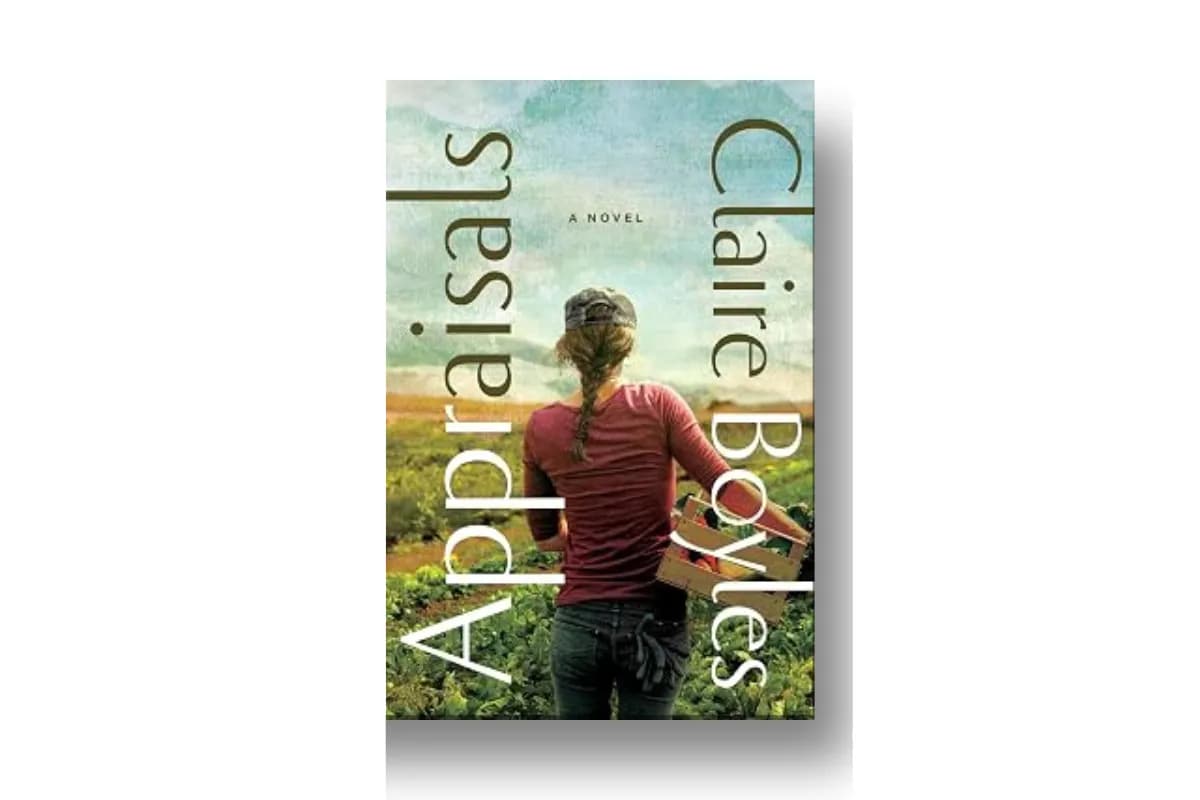
Claire Boyle’s novel Appraisals follows a Colorado farm couple whose marriage strains under 2008 recession debt, as the bank quietly claims ownership of the land they love.
The wind pushes through the burr oaks and American plums, weaving a complicated basketry of branches that offers only moderate protection against the immense, empty sky. Red-tailed hawks perch on the power poles. Bald eagles watch from the same spots, while owls leave their pellets in the field roads below.
In Claire Boyle’s novel Appraisals, this is where Maggie stands in August 2008. She has just taken off her boots on the patio, peeling away socks to let aching feet breathe. Inside, the kitchen smells of cantaloupe funk and bacon grease. Her husband, Fish, is in there making dinner — pork chops from a pig named Hannah Montana, a name their fifteen-year-old daughter Ozzie found mortifyingly childish. Fish grills vegetables and adds fresh raspberries to a chocolate cake he baked from scratch. He used to live on Little Caesars pizza and canned soup, but now he cooks well enough that Maggie stops complaining about the field work.
But outside, the reality is starker. On Google Maps, Rubber Chicken Farm is a rectangle of fifty-some-odd acres stretching from one dirt county road to the next. It is a few miles south of the farm Maggie and her grandmother had lost, twenty miles east of the jagged wall of the Rocky Mountains. The driveway is rutted and dusty despite annual harrowing. They call it theirs. They love it like it is theirs. But really, the bank owns most of it.
The Colorado Sun featured an excerpt from this book in its SunLit series, which pairs excerpts from Colorado books with interviews with their authors. The setting is specific and grounded in the agricultural landscape of the state, yet the tension is universal: a recession testing a marriage.
Maggie and Fish are not just farming; they are surviving. The book captures the quiet, grinding pressure of debt on a rural couple. Fish’s culinary skills are a point of pride and connection, a way to maintain dignity while the financial ground shifts beneath them. He laughs at Maggie’s complaints about cooking in the heat, his goofy, cockeyed smile a shield against the stress. “You can’t preach the importance of food culture to our customers,” he says, “if you’re eating cereal for dinner.” It’s a line that holds the weight of their shared struggle.
The farmhouse itself is a character, built by Fish’s great-grandfather Maximillian back before permits and building inspectors. The back wall leans slightly. A crack in the foundation lets sunlight into the root cellar. There are laundry hookups in the mudroom and three tiny bedrooms. The bathroom is big enough for two people only if one of them is in the shower. These details ground the narrative in physical space, making the abstract threat of foreclosure feel tangible and immediate.
The story doesn’t just ask if they will lose the farm; it asks what happens to a marriage when the land that defines them is no longer truly theirs. The bank’s ownership isn't just a financial fact; it’s a psychological weight that settles into the cracks of the foundation.
As the heat sets in after noon, Maggie steps inside to escape the sun. The scent of raspberry jelly glows from the counter in half-pint glass jars, a small, ruby-jeweled victory against the gray threat of the economy. The wind continues to push through the trees, weaving and unwinding the branches in a complicated dance of protection and exposure.
Keep up with the Western Slope
The day's Western Slope news, one email each morning. Free.