Colorado and Utah Bet on Rail to Solve I-70 Bottleneck for 2034 Olympics
Utah and Colorado plan a joint rail line to ease the I-70 congestion for the 2034 Winter Olympics, but critics question who pays for the infrastructure and if it will truly solve the century-old traffic nightmare.
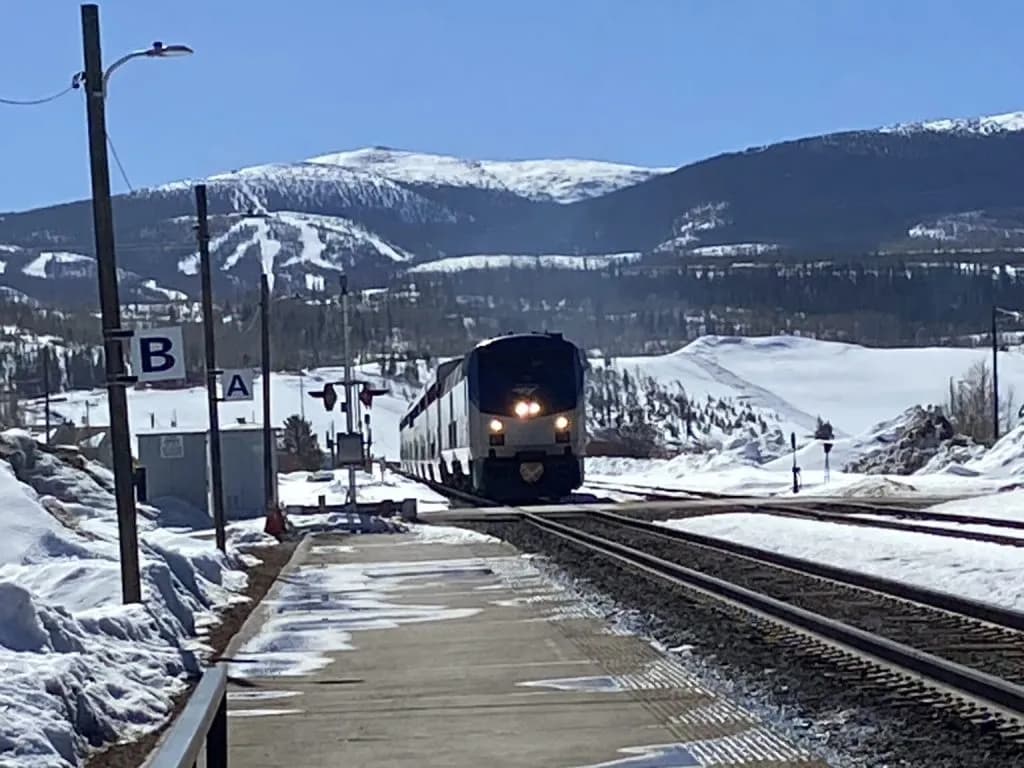
Glenwood Springs —A $50 billion price tag. That’s what Russia burned through for the 2014 Sochi Winter Olympics, including a $9 billion high-speed rail and road link from the coast to the slopes.
Now, Utah and Colorado are joining forces to build ski trains for the 2034 Games, betting that a century-old infrastructure nightmare can be solved with a rail line instead of more asphalt. The premise is seductive: connect Denver to the mountains, ease the I-70 bottleneck, and let the Olympics pay the bill.
It’s a classic political pivot. Former Gov. Dick Lamm, the man who famously led the charge to send the 1976 Winter Olympics back to Squaw Valley, did a 180 in 2014. He told the Post Independent that he wouldn’t oppose a Colorado bid if it meant federal dollars could fix the Interstate 70 choke point between Denver and the state’s mountain resorts.
“We have a bottleneck in Interstate 70 going up to the mountains; it can’t be expanded,” Lamm said. “Just simply the Balkanized nature of the Olympics promised all kinds of logistical problems, but we are a much more sophisticated state at this time. It’s an expense problem, but I think we can engineer our way around that bottleneck.”
Lamm’s fear was that weak zoning laws and ignored environmental regulations would leave taxpayers holding the bag. He was right. Denver-area voters backed the bid, then rejected it, becoming the only city to ever decline the Olympics after being selected. The IOC learned its lesson with the Sochi spending spree, adopting Olympic Agenda 2020 to emphasize existing venues and scaled-back costs. Utah landed the 2034 Games in 2018, largely by promising to reuse venues from the 2002 Winter Olympics.
But let’s look at the local reality for folks in Eagle County. Kathy Heicher, president of the Eagle County Historical Society and a longtime local journalist, remembers landing at the Eagle Valley Enterprise as a 22-year-old graduate of Colorado State University. She heard about the 1976 bid, the enigmatic Lamm, and the movement to reject public funding. She wrote an editorial arguing for it.
“Boom, in the door comes Arnold Nottingham, who was one of the key figures,” Heicher recalled.
The irony is thick. Beaver Creek, now a staple of World Cup ski races every December, didn’t even open for another five years after those 1976 Games would have been held. It stands as a model of high-quality mountain-resort development, not a failed Olympic experiment. Yet, the push for rail is back, driven by the same snarled winter traffic that has plagued I-70 for decades.
The current plan isn’t just about getting skiers up the mountain. It’s about solving a logistical nightmare that costs the state billions in lost productivity and congestion. But here’s the catch: the sources don’t mention who pays for the rail if the federal government pulls its weight. They don’t detail the local tax impact for residents in Vail, Avon, or Eagle. They just say “Utah passenger rail advocates join Colorado.”
That’s the gap. We’re being sold a vision of seamless travel and Olympic glory. We’re not being told that building a rail line through the Rockies is harder than building one through the flatlands of Utah. We’re not being told that the $9 billion Sochi rail was merely the start of the cost overrun.
The bottom line? Locals are being asked to bet on a rail solution for a problem that’s currently solved by driving your own car. The cost will be high. The timeline is tight. And if history is any guide, the “sophisticated” engineering Lamm talked about in 2014 might just end up costing us another $50 billion in the end.
Keep up with Glenwood Springs
The day's Western Slope news, one email each morning. Free.


Battle Mountain Huskies Defeat Glenwood Springs to Secure Playoff Host

Pueblo Teacher Challenges Silent Incumbent in Colorado Education Race