Colorado Bears Drive Bear Conflict Fines to $5,000 Under New Law
Colorado Parks and Wildlife logged over 6,000 bear incidents this year, prompting House Bill 1342 to raise maximum fines for attracting bears to $5,000.
Colorado Parks and Wildlife is drowning in bear reports.
Through Aug. 13, the agency logged 6,129 sightings and conflicts statewide. That is nearly double the number from the same period last year. It already surpasses the total of 5,299 incidents recorded for all of 2025.
The numbers are climbing because the bears are hungry.
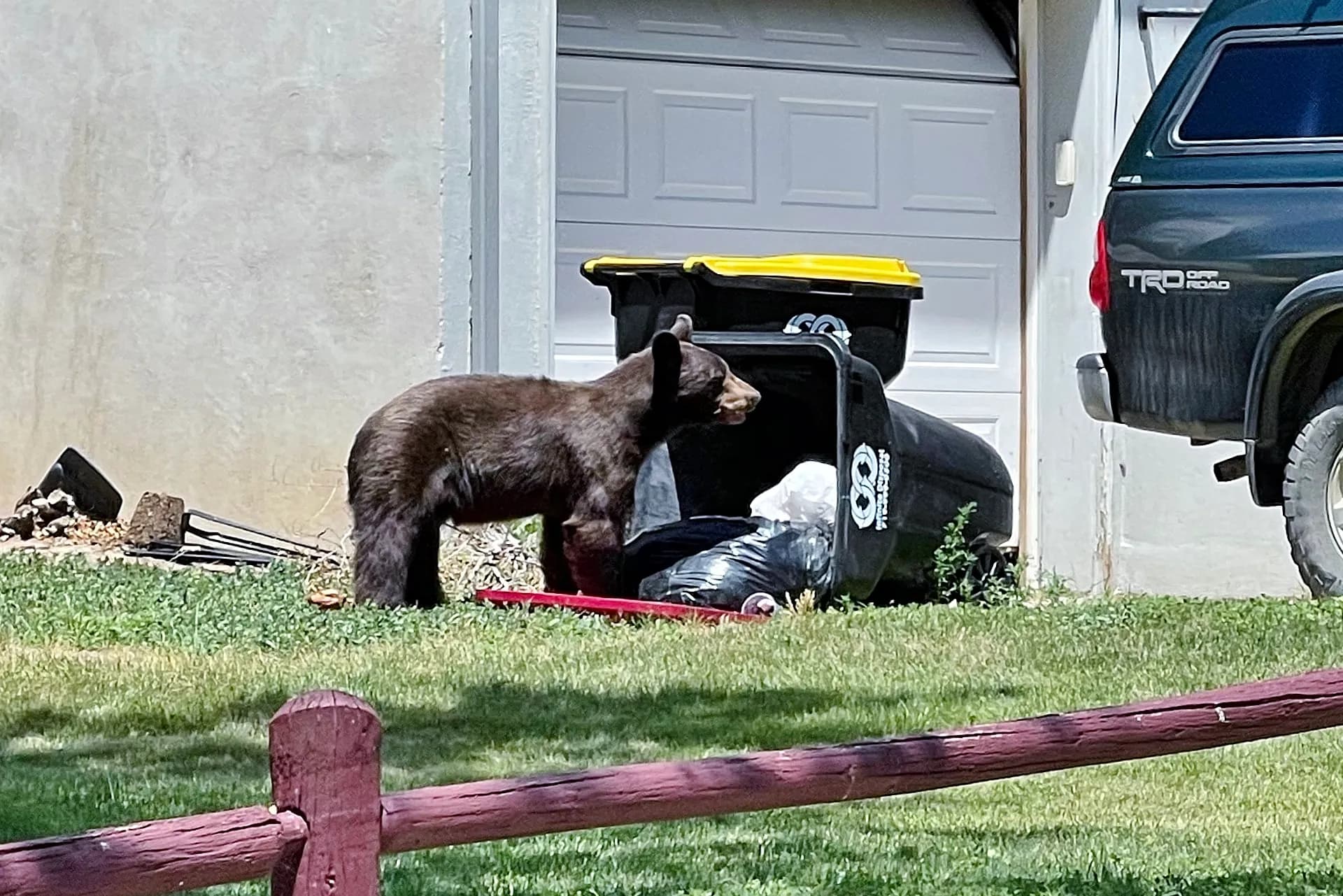
Low winter snowpack, drought, and wildfires have stripped the landscape. Berries, acorns, and grasses are scarce. When the natural buffet dries up, bears turn to what’s easy. Trash. Birdseed. Pet food. Leftover barbecue.
The situation will worsen before it gets better. Bears are entering hyperphagia. They spend up to 20 hours a day searching for food right now. They need fat reserves to survive the winter denning period.
This is the danger zone. Nearly half of all bear incidents in 2025 happened in August, September, and October. More than 57% of reports involved trash. Another 16% tied to birdfeeders, grills, and coolers.
Wildlife managers know the pattern. A bear finds an easy meal. It returns. It loses its wariness. What starts with a tipped garbage can ends with a bear in the living room.
To fight this, the state changed the rules.
House Bill 1342 took effect Wednesday. It makes it easier to ticket people who leave out food or garbage that attracts bears. The law, signed by Gov. Jared Polis earlier this year, shifts the standard from “intentionally” to “knowingly.”
Officers no longer have to prove you meant to attract a bear. They just have to show you knowingly left out edible waste in a way that would reasonably attract one.
The penalties are steeper, too. First-time offenders can still get a warning, but the requirement is gone. For a third offense or higher, the maximum fine jumps to $5,000 from $2,000.
CPW says enforcement is only one piece of the puzzle. They are urging residents to secure garbage, recycling, and compost cans. Remove bird feeders. Clear the pet food bowls.
But the law changes how officers view the offender. It’s not just about intent anymore. It’s about knowledge. If you leave the grill out, and a bear shows up, you’re on the hook.
The math doesn’t lie. The animals are adapting. The food sources are shifting. And now, the penalty for ignoring that reality is real money.
Feinsinger wrote in the Colorado Sun that the agency relocated 68 bears due to conflict in 2025. They killed 98. Those are the bears that didn’t just take a snack. Those are the ones that became problems.
The law is a tool. It’s not a silver bullet. But it puts more pressure on the folks leaving the easy meals out there.
Read that again. It’s not about intent. It’s about what you know.
If you leave the birdseed out in a drought year, and a bear eats it, you didn’t have to plan it. You just had to know it was there.
The fines go up to $5,000. That hurts.
The wildlife is still hungry. The drought isn’t breaking. And now, every tipped trash can is a potential ticket.
Keep up with the Western Slope
The day's Western Slope news, one email each morning. Free.

Twin Lakes Releases 2,500 Acre-Feet to Save Upper Arkansas River

Glenwood Springs Housing Costs and Artificial Sweetener Health Risks Explained