Colorado Bids Colorado Springs for New US Space Academy
Gov. Jared Polis announced Colorado will bid to host the new US Space Academy in Colorado Springs, citing aerospace expertise and proximity to space.
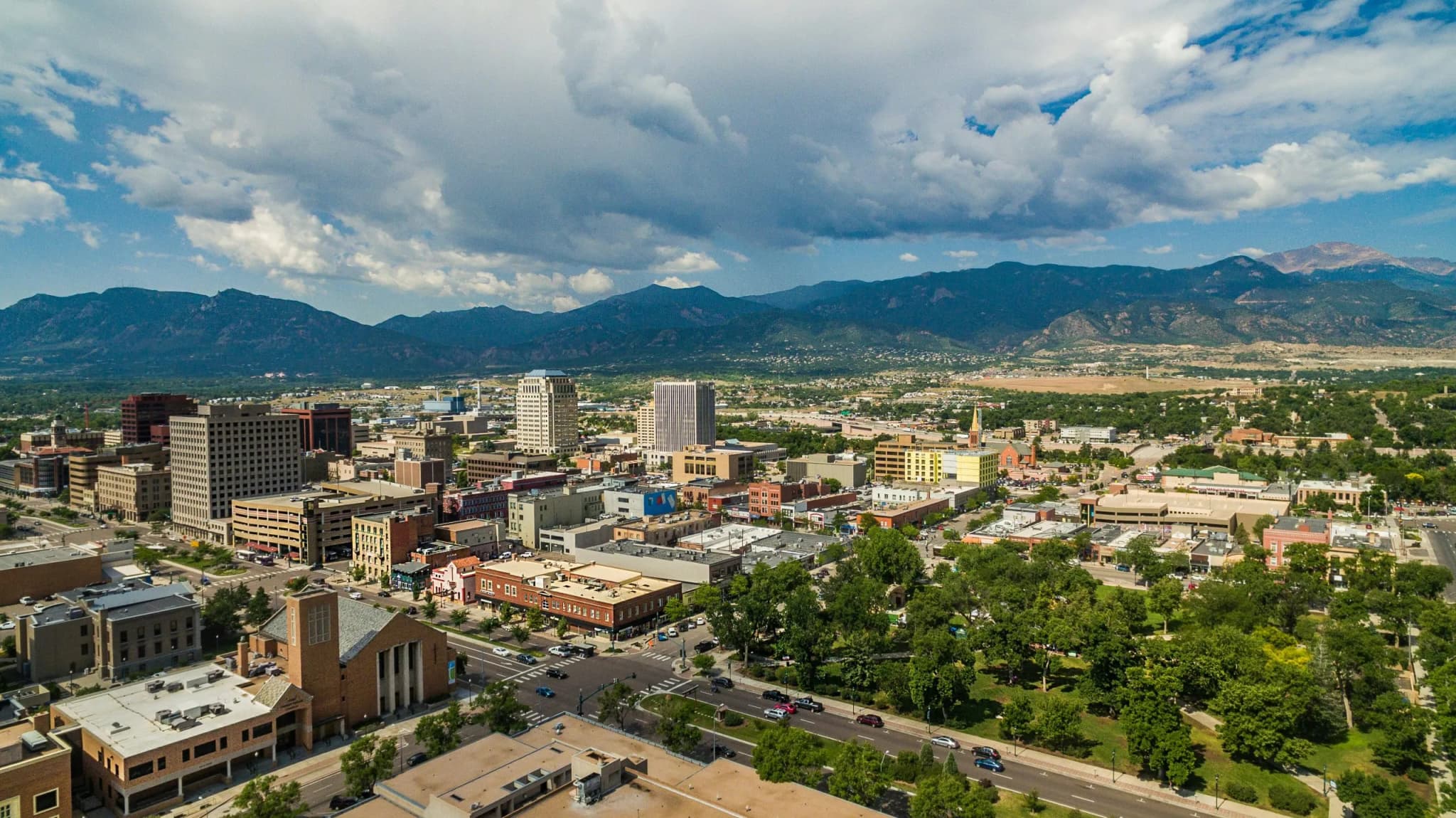
The wind howls off the Rockies, carrying dust and cold air into the streets of Colorado Springs. It’s a city that has spent decades trying to shake its military identity, yet here it is again, raising a white flag for federal attention. Gov. Jared Polis announced Friday that Colorado intends to bid on the site of the newly proposed United States Space Academy. The target location? Colorado Springs.
President Donald Trump announced the academy in August. He said it would be led by NASA and designed to train the next generation of space leaders. The details are still fuzzy, but the stakes are high. States are jockeying for position to house the institution and reap the economic boons that come with it.
Polis’s pitch is simple: proximity. “Colorado has the talent, innovation, and aerospace expertise to train the next generation of American space leaders, and we are a mile closer to space,” Polis said in a news release Friday. He argued that the state is uniquely qualified to provide students with education and hands-on experience leading to good-paying, life-long careers.
The proposed federal academy won’t be as traditional as West Point or Annapolis. Some graduates will go into the Space Force, the youngest branch of the U.S. Armed Forces. Others will likely head to NASA or the civilian sector. The Trump administration’s August proclamation stated the goal is to prepare future “astronauts, scientists, engineers, operators, entrepreneurs, civil servants, and warfighters.”
The administration established a commission chaired by NASA Administrator Jared Isaacman to outline the details. That means coming up with recommendations for organizational structure, curriculum, degree programs, and service obligations for graduates. It also includes the process for finding the academy’s permanent home.
The requirements are specific. The new home must be larger than 300 acres. It needs to support 1,200 undergraduate students by the fall 2031 academic term. It must also be able to expand to about 4,000 students and include academic, student life, and research facilities. The site needs space for sports, cafeterias, and secure technical facilities.
Colorado claims it has a shot at being the academy’s new home, according to the Polis administration and the Colorado Space Coalition. The coalition is a public-private-education-industry group that aims to strengthen the state’s position as a leader in space innovation.
“We have the full package to be ready to welcome students,” Polis told The Colorado Sun.
But is that enough? The race is highly competitive. Other states are not standing still. They have their own aerospace industries, their own political leverage, and their own arguments for why they are the logical choice. The White House has not ruled out any location, but it has set a high bar for the physical plant.
The bid from Colorado rests heavily on its existing infrastructure and workforce. The state points to its history in aerospace and defense as proof of concept. However, the commission is still working on the specifics. Funding mechanisms are undefined. Degree structures are unconfirmed. The very nature of the academy is in development.
Polis’s statement leans on the phrase “we are a mile closer to space.” That is a geographic fact, not an argument for educational superiority. Being near the sky does not automatically make a state better at training engineers or warfighters. It is a catchy line for a press release, but it does not address the complex logistics of building a massive federal campus from scratch.
The administration wants this done by 2031. That is a tight timeline for a project of this scale. The commission, led by Isaacman, will have to move quickly to recommend a site and a structure. States that cannot meet the 300-acre minimum or the expansion capacity will be eliminated early.
Colorado’s bid is a gamble. It relies on the assumption that proximity and existing talent outweigh the advantages of other contenders who may have more political capital in Washington or larger available land parcels. The Polis administration is betting that the commission will value hands-on experience and industry proximity over other factors.
The short version: Colorado wants in. Whether it gets in is another matter entirely. The state has the talent, according to its own governor. It has the coalition behind it. But it also has a mountain of competition and a federal government that is still figuring out what this academy actually is.
The wind in Colorado Springs is cold, but the political temperature is rising. The next few months will determine if this bid is a serious contender or just another press release that fades into the background. The commission’s recommendations will be the real test. Until then, the state is holding its breath, hoping that “a mile closer to space” is enough to win a federal campus.
Keep up with the Western Slope
The day's Western Slope news, one email each morning. Free.