Colorado Launches Fat Marmot Week To Save Gothic Science
Colorado launches Fat Marmot Week Monday, inviting residents to vote for their favorite alpine resident while highlighting the urgent need to protect long-term scientific research in Gothic.
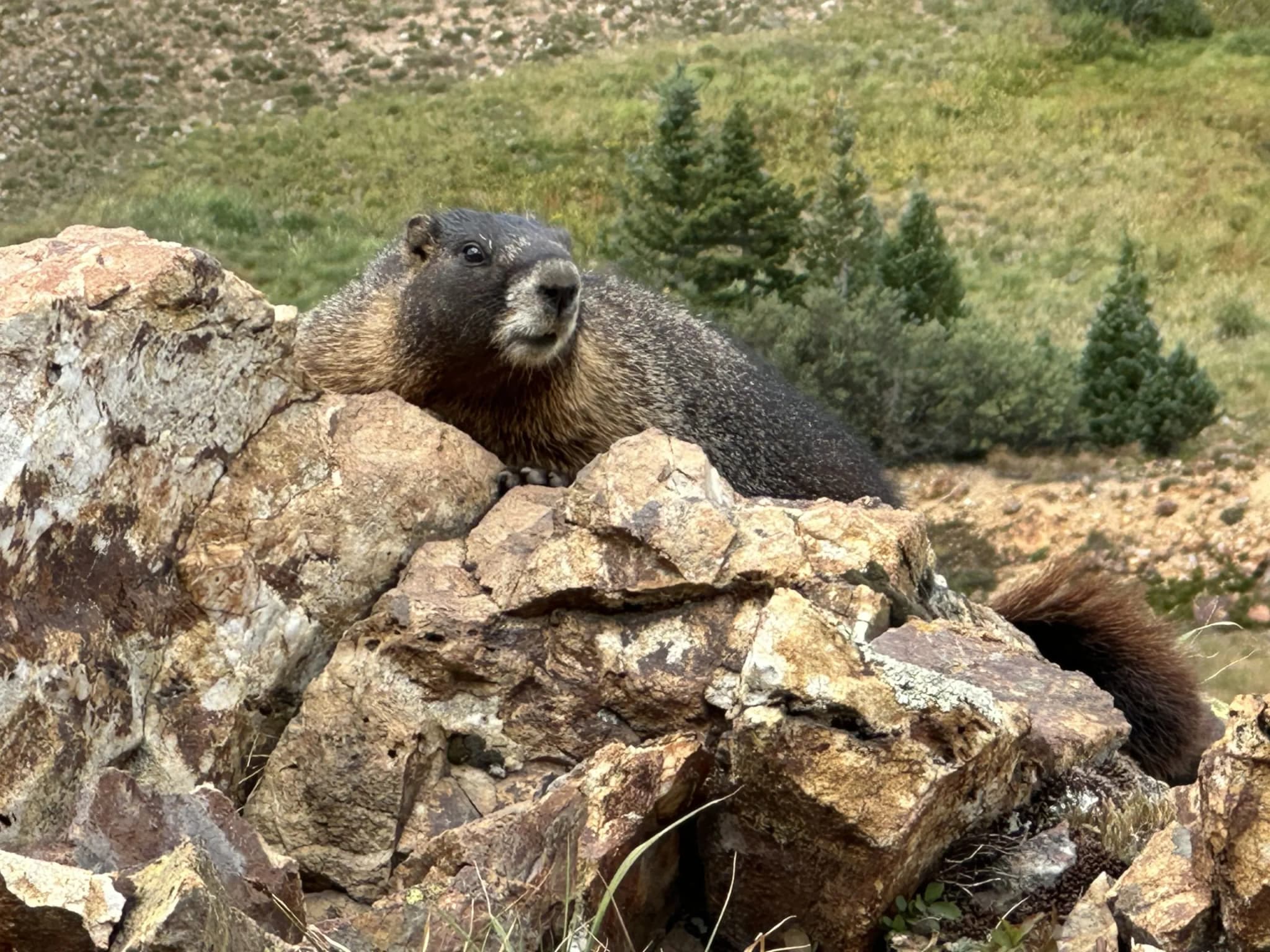
On a warm August afternoon in Gothic, the air hangs still and heavy, thick with the scent of dried sage and sun-baked stone. Near the rocky outcrops surrounding the Rocky Mountain Biological Laboratory, a yellow-bellied marmot lounges atop a boulder, its fur a tawny gold against the grey granite. It looks up at the passing humans, registers their attention with a tilt of its head, and then returns to the singular task of existing — until the hunger strikes again.
This scene captures the essence of what Colorado is celebrating starting Monday: Fat Marmot Week. As the Colorado Sun reports, the state has spent much of this summer discussing bears that aren’t getting enough to eat, but now the spotlight shifts to an animal that has made eating its entire personality. The premise is deceptively simple. You meet eight of Colorado’s chunkiest alpine residents, and you vote for the marmot you like best. It is a light-hearted competition, yes, but it serves a dual purpose. It is a celebration of these tubby, toothy high-country mammals, and simultaneously a call to action to protect the science that helps us understand them.
If you look closely at the history of this research, you realize the stakes are higher than a voting contest suggests. For more than 65 years, scientists with the Marmot Project at the Rocky Mountain Biological Laboratory in Gothic have been following generations of yellow-bellied marmots. They have created one of the world’s longest-running studies of individually marked mammals. Along the way, these animals have helped researchers understand everything from social behavior to the ways a changing climate is reshaping life in Colorado’s high country. There’s a warmth to that continuity, a sense that the mountain has been listening for decades.
But this year, both the marmots and the scientists studying them have found themselves in a precarious position. The marmots themselves are fascinating creatures. Anyone who has spent much time above treeline or wandering through Colorado’s alpine and subalpine country has probably encountered one. They are a chunky creature that looks vaguely like a beaver crossed with a house cat, perched on a rock, sunning itself, munching on vegetation, or issuing a sharp whistle to warn its pals of danger. Colorado’s marmots are yellow-bellied marmots, one of six species of marmot found in North America. They are the largest member of the squirrel family and the largest of the true hibernators.
Unlike bears, which enter a state of torpor, marmots sleep hard all winter. They snuggle into burrows sometime in October and spend six or seven months underground. When they wake up in April or May, their sole purpose is turning as much vegetation as possible into enough fat to survive the next winter’s slumber. Marmots are vegans, after all. Their entire biological imperative in the spring and summer is to bulk up. This is why Fat Marmot Week makes so much sense. It is a visual representation of their survival strategy.
The voting process allows folks around here to connect with these animals in a personal way. You are not just looking at data points; you are looking at individuals. Each marmot has a distinct personality, a distinct face, a distinct way of holding itself. When you choose your favorite, you are making a statement about what you value in these creatures. Is it their roundness? Their expression? Their posture? Whatever it is, it creates a bond between the observer and the observed.
This connection is vital because the science behind it is under threat. The Rocky Mountain Biological Laboratory in Gothic conducts long-term research into plants and animals. The work includes monitoring populations, tracking health, and understanding ecosystem dynamics. Without this long-term data, we lose the baseline. We lose the ability to see trends. We lose the ability to predict impacts. We lose the ability to manage wisely.
The marmots are resilient, but they are not invincible. Climate change is altering their habitat. Snowpack is changing. Growing seasons are shifting. Food availability is fluctuating. These changes stress the system. The marmots adapt, but adaptation has limits. The scientists studying them are the ones who can see those limits forming. They are the ones who can say, "Here is where the pressure is building." They are the ones who can recommend where to intervene.
That is why supporting the research matters. It is not just about saving one species. It is about preserving the knowledge of how the high country works. It is about maintaining the thread of understanding that has been woven over sixty-five years. It is about ensuring that the next generation of scientists can pick up where the current ones leave off, with the same depth of insight.
As you vote in Fat Marmot Week, think about the marmot you chose. Think about why you chose it. Think about the rock it sat on. Think about the sun on its fur. Think about the whistle it might give. Think about the burrow it will return to in October. Think about the six or seven months it will spend underground, dreaming its slow dreams. Think about the April morning it will emerge, blinking in the light, ready to eat.
The marmot on the rock in Gothic did not know it was being watched. It did not know it was being studied. It did not know it was being voted on. It knew only the rock, the sun, the hunger, and the quiet. And in that quiet, there is a kind of dignity. A kind of persistence. A kind of stubbornness that says, "I am here. I am eating. I am surviving."
That is enough. That is more than enough. That is everything.
The sun begins to dip below the ridge, casting long shadows across the laboratory grounds. The marmot has moved, perhaps to a warmer spot, perhaps to a better vantage point. It is gone from the rock, but it is still there. You can feel it. The presence. The weight. The life.
And the week continues. The votes tally. The favorites emerge. The stories spread. The connections deepen. The science advances. The marmots persist.
In the end, it is not about who wins. It is about who we choose to see. Who we choose to care for. Who we choose to remember.
The marmot on the rock in Gothic. The one that looked up. The one that went back to doing nothing. The one that was absolutely nothing. The one that was everything.
It is still there. In the quiet. In the sun. In the hunger. In the survival.
And so are we.
Keep up with the Western Slope
The day's Western Slope news, one email each morning. Free.