Eagle County Activates $14 Million Geothermal System
Eagle County flips the switch on a new $14 million geothermal system, replacing the old boiler to slash greenhouse gas emissions by 142 metric tons annually and secure long-term energy stability.
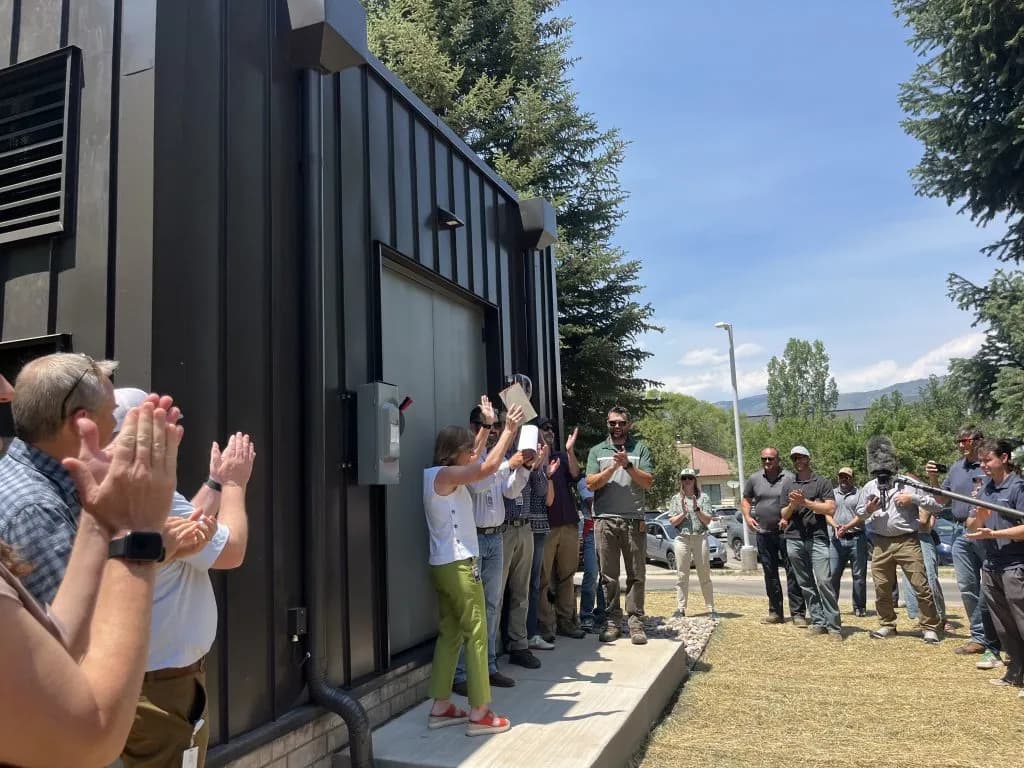
Aspen —The air in the lobby of the Eagle County building feels different now. It’s not just the temperature; it’s the quiet hum of a machine that has replaced the clanking, sputtering boiler that used to define the building’s winter routine. Just below the concrete floor, 66 boreholes drill 506 feet into the earth, tapping into a thermal reservoir that has been sitting there, waiting to be used.
On June 25, Eagle County flipped the switch on this new $14 million geothermal system, moving from a celebration of construction to the reality of operation. The boiler is dead. The new system is live. And for a county trying to slash its greenhouse gas emissions by 50% by 2030 and 100% by 2050, this isn’t just an upgrade. It’s a foundational shift in how the government heats and cools its own offices.
“The question is whether this scale of investment translates to long-term reliability for the taxpayer,” I asked Jesse Meryhew, Eagle County’s director of facilities. He didn’t hesitate. He pointed to the mechanics of the thing itself.
“These systems operate at incredibly high efficiencies by moving heat, rather than burning fuel to create it,” Meryhew said. He explained that the ground source heat pumps don’t generate heat using electricity in the traditional sense. They use electricity to move heat. For every kilowatt of electricity consumed, the system transfers three to five kilowatts of thermal energy from the ground. That makes the heat pumps 300% to 500% more efficient than conventional systems.
“We’re extremely efficient, there’s cost savings in our utility bills, and the simplicity of the system makes it easier for our team to work on this system, to maintain the system, and it’s a very durable system,” he said.
The setup is vertical, a dense network of high-density polyethylene piping circulating a mixture of water and antifreeze. In winter, the fluid absorbs natural heat from the earth and carries it up to five heat pumps, which distribute warmth throughout the building. In summer, the loop reverses. The system pulls heat out of the building and dumps it back underground. It’s a closed loop. It’s simple. It’s been running since March 31, and according to Meryhew, it’s operating well.
But efficiency is only half the story. The other half is the carbon footprint.
Kate Kirkman, the county climate programs coordinator, noted that utility costs are hard to pin down exactly because future weather conditions are unknown. A mild winter changes the equation. But the environmental impact is quantifiable. The system is expected to reduce greenhouse gas emissions by 142 metric tons of carbon dioxide a year. To put that in perspective for folks who drive the I-70 corridor, that’s equivalent to taking about 33 cars off the road.
Matt Scherr, who was present for the unveiling, sees this as more than just a facility upgrade for the county building. He calls it a demonstration project.
“We felt that it was our role to be a leader in this space to show what can happen with geothermal, why it’s better not just from an environmental perspective,” Scherr said.
The crowd at the event included grant-givers, county employees, and project workers. They weren’t just there to cut a ribbon; they were there to witness the physical manifestation of a policy goal. The boiler that failed us is gone. The earth is doing the work now.
As for the future, the county isn’t just looking at the next fiscal year. They’re looking at the next few decades of energy independence.
“This is about stability,” Meryhew said. “We’re locking in our energy costs for the long haul, and we’re reducing our reliance on volatile fossil fuel markets. It’s a durable system. It’s a smart system. And it’s just getting started.”
Keep up with Aspen
The day's Western Slope news, one email each morning. Free.
Aspen Housing Authority Seeks $590K Office Upgrade Amid Cramped Conditions

Vail Secures Water Rights for 37-Unit Montelisse Condo Project
Moffat County Commissioners Weigh Data Center Moratorium Amid Transparency Claims

Aspen Skiing Company hosts 10th annual Stars Above astronomy night

Aspen Animal Hospital Clinical Leader Dr. Anne Cooley Navigates WellHaven Ownership Shift