Eagle County Candidates Reject Vacancy Tax and Breckenridge Cap
Eagle County commissioner candidates Kathleen Brendza and Wendy Sacks opposed a vacancy tax and Breckenridge-style short-term rental caps, favoring market-driven solutions and voluntary fire mitigation rules.
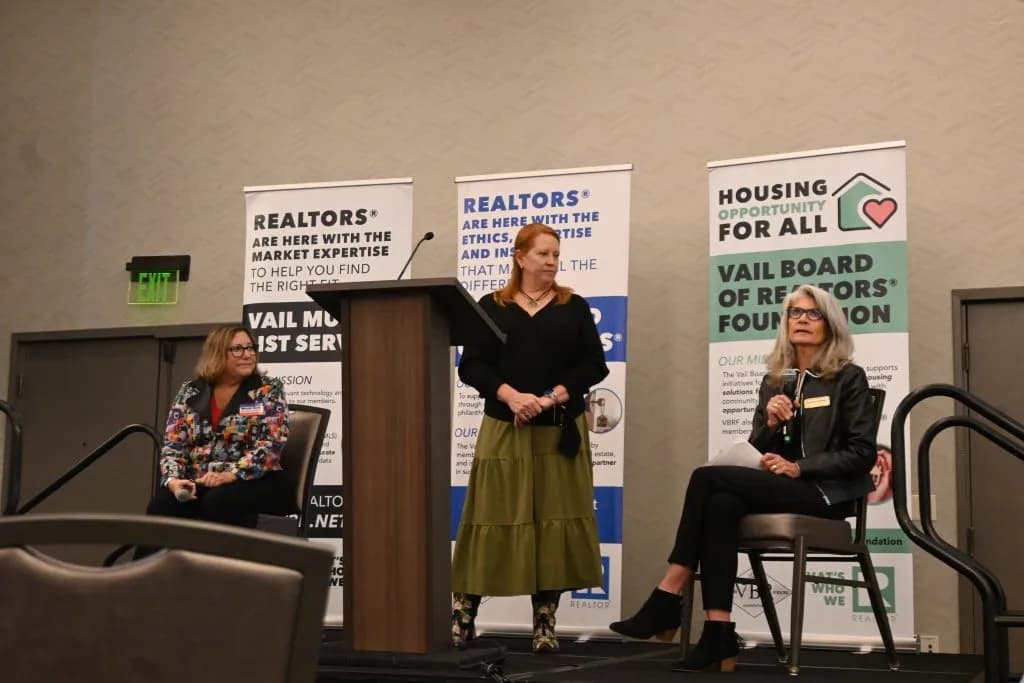
Aspen —The Vail Board of Realtors hosted a Q&A on Wednesday with two Eagle County commissioner candidates: Democrat Kathleen Brendza and Republican Wendy Sacks. The meeting took place during the board’s general membership session, where agents pressed both candidates on regulations that directly impact their livelihoods.
Both candidates are longtime locals who have watched the housing market shift across the county for decades. Sacks has held a real estate license for more than 30 years, while Brendza works as a court-appointed parent coordinator. Their responses to the board’s questions revealed distinct approaches to regulation, even when they agreed on the final outcome.
The first major topic was short-term rentals and second-home ownership. The Vail group pointed to Summit County, specifically the town of Breckenridge, which established a cap on the number of short-term rental licenses allowed within its limits. Brendza argued that the county needs to collect data before pursuing any new ordinance. Sacks took a different angle, stating that the county should "let adults be adults" and avoid overregulation. Neither candidate backed a hard cap like Breckenridge’s, but both signaled a preference for market-driven solutions over strict numerical limits.
A proposed vacancy tax also drew immediate opposition from both candidates. The idea would see local communities tax empty homes, a policy often championed by housing advocates to force second-home owners into the rental market. Brendza and Sacks both opposed the measure, recognizing that second-home owners contribute to the local economy. Sacks warned that such a tax could push people away entirely, which would discourage buyers and hurt real estate agents.
The candidates aligned more closely on the formation of a regional housing authority. The town of Avon and Eagle County government have been exploring this entity to plan, finance, construct, and operate housing across the county. Both Brendza and Sacks agreed that creating this separate government body would be beneficial for the community. However, their conditions for support differed. Brendza wants to see measurable mandates demonstrated before asking the public for another funding source. Sacks hopes that no new taxes come with it, preferring a reallocation of existing money toward helping people.
Sacks noted that consistency in local government policy would help people looking to buy houses. "As far as local government, if there is some consistency, I think that would be helpful for people looking to buy houses," she said.
The final area of focus was fire mitigation, specifically the "Fire Free Five" regulations in Vail. These rules require a 5-foot-wide zone of noncombustible landscaping around all buildings to prevent ember-based fires from igniting trees, dead leaves, wood mulch, and shrubs. The town of Vail is looking to make these restrictions mandatory with a three-year compliance phase before enforcement. The local industry group expressed a preference for the regulations to remain voluntary. Both Brendza and Sacks agreed that one size doesn’t fit all, advocating for the rules to stay voluntary rather than mandatory.
For context, these debates happen in a county where housing affordability is the primary driver of political discourse. The Vail association represents agents who sell and rent properties in a market that is both expensive and highly regulated. The candidates’ willingness to engage with the industry on specific technical issues — like fire zones and vacancy taxes — signals that the next county commission will be closely watched by those who profit from or live in the housing stock.
The practical impact for locals is a potential shift toward voluntary compliance on fire safety and data-driven approaches to short-term rentals. If the regional housing authority moves forward, it will likely rely on existing funds rather than new taxes, according to both candidates. For buyers and sellers in Eagle County, the next two years will determine whether the county adopts a hands-off approach to second homes or begins collecting the data Brendza requested. The market will tell us which path actually works when the ballots are counted.
Keep up with Aspen
The day's Western Slope news, one email each morning. Free.