Eagle River Anglers Warn of Shrinking Fishing Window Amid Low Water
Guides warn that the Eagle River's prime fishing window is closing as low flows and rising temperatures threaten trout health, urging anglers to fish fast-water pockets now.
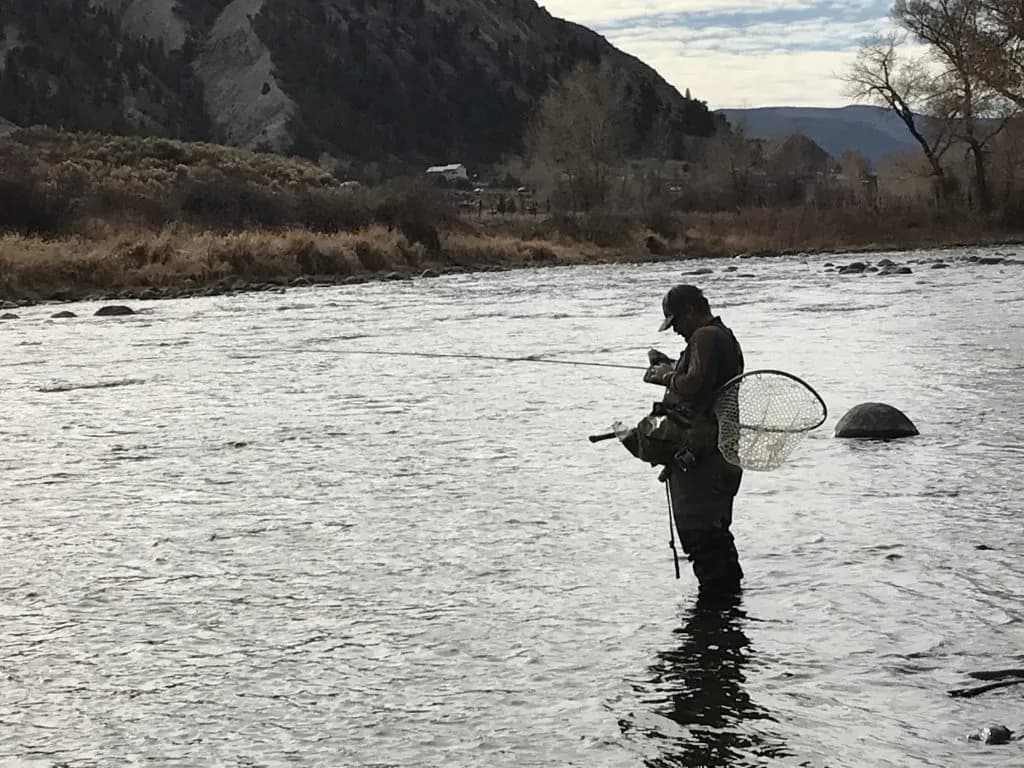
Aspen —The Eagle River is fishing like a champion. It’s the kind of summer anglers dream about — rich insect hatches, healthy fish, and water moving fast enough to keep the trout cool. But if you’re standing in the river right now, you’re also standing in a shrinking window. The water is low. The heat is coming. And the clock is ticking on what might be the last good stretch of fishing before the river turns sluggish and warm.
It’s a paradox that’s got locals and outfitters alike keeping a close eye on the sky. We’re seeing record-breaking reports, but the conditions that make them possible are also the ones that could spell trouble by next month.
“The Eagle has been awesome while we still have decent water coming from the river,” said Harlan Kimball, marketing manager at Cutthroat Anglers. “But in the next couple of weeks it’s going to be low and hot, and we probably won’t be able to fish it.”
Kimball isn’t just guessing. He’s looking at the numbers, and they’re stark. This time of year, the river typically sees between 3,000 and 5,000 cubic feet per second (CFS) of flow. This year? It’s sitting at a mere 1,000 CFS. That’s a fraction of the usual volume, driven by lower-than-average snowmelt runoff. When you strip away that volume, you strip away the buffer. The water warms up faster. It moves slower. And eventually, it gets too hot for the fish to handle.
Matt Fletcher, a longtime guide with Colorado River Outfitters, says the fish are adapting, but they’re relying on specific pockets of fast-moving water to survive the drop.
“That’s where they’re living, and that’s where they’re going to feed, and so that’s where you want to fish for them, in the fast, fast water,” Fletcher said. He notes that these turbulent areas bring oxygen to the fish, which they miss out on when levels lower. “All of them seem to be pretty happy and healthy.”
And they are. The recent quality report from Colorado River Outfitters gave the river a 9 out of 10. It’s not just that the fish are there; it’s that they’re eating. Bob Nock, owner of Eagle River Anglers, says the insect hatches are strong — a direct result of the drought conditions creating favorable timing for species like caddies, tricos, and yellow sallies.
“The hatches are strong, which is a really good indicator there’s food for the fish to eat, so that’s a good thing; the fish are really healthy,” Nock said.
But here’s the catch: once water temperatures hit 68 degrees, the stress on the fish spikes. That’s the threshold where taking them out of the water for a photo or a catch-and-release can turn into a death sentence. With the waterway currently running low and warm, that 68-degree mark is closer than most folks realize.
So, is this a fluke? Or is the river going to bounce back?
Nock and his colleagues are holding onto hope. They’re looking at the forecast for mid-July, watching for two things: rain and a potential shift to wetter El Niño conditions. If the skies open up, the river could recover. If not, the fishing pause will be long and hot.
“The rain could save us but it’s definitely possible it could get ugly because of the low water levels and higher temperature,” Nock said.
For now, the advice from the guides is simple: take advantage of the window. The river is offering a rare treat, a high-quality fishery in low, fast water; but it’s fragile. As Kimball put it, the pockets of high, fast-flowing water are disappearing. Once they’re gone, the Eagle will likely settle into a slow, warm slump that makes fishing difficult, if not impossible, for weeks.
“We’re optimistic around here,” Nock said. “If we get that, all could be just fine.”
It’s a gamble. You can stand in the river today and feel the excitement of a perfect hatch, or you can wait and hope the monsoon season delivers the rescue the river needs. But as Fletcher warns, you have to fish the fast water now, because once the heat sets in, the fish will retreat, and the river will change.
Keep up with Aspen
The day's Western Slope news, one email each morning. Free.