Eagle's Hydroponic Farm Saves Water Amid Colorado Drought
Eagle's Buttercrunch Farm utilizes hydroponic systems to conserve water and produce year-round crops, offering a scalable solution for Colorado's ongoing drought challenges.
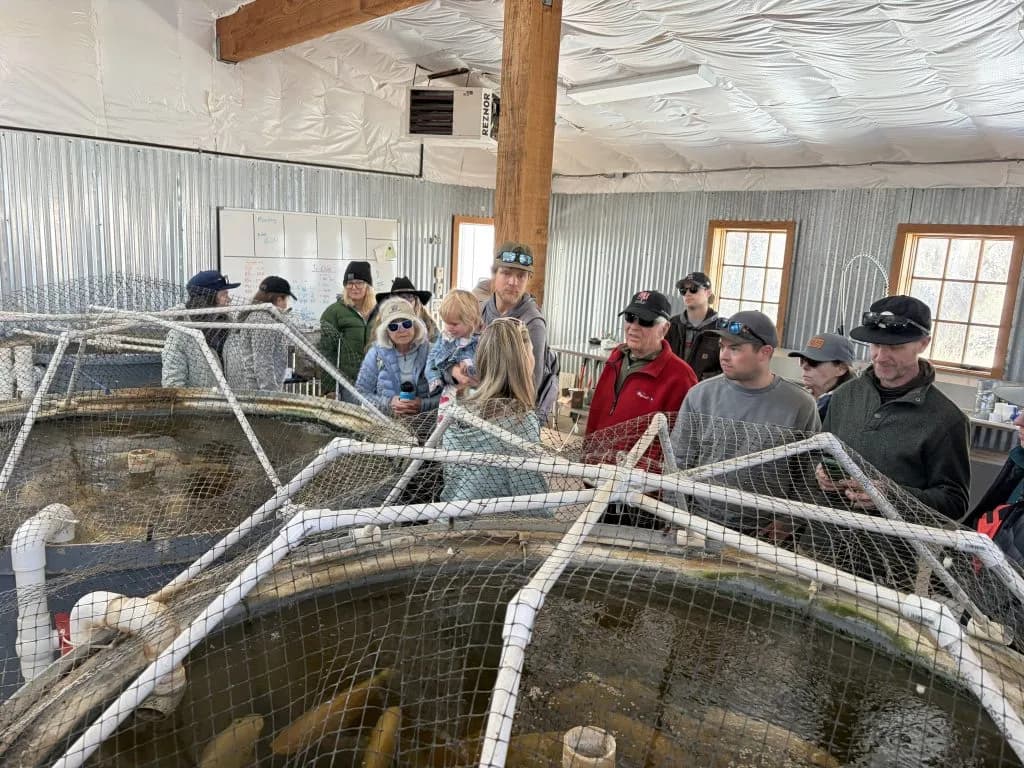
Aspen —The wind howls off the Elk Mountains, rattling the corrugated metal of a greenhouse in Eagle. Inside, the air is thick with humidity and the low hum of pumps. It is July, but the frost on the ground outside doesn’t matter. The plants here don’t care about the season. They don’t need soil. They just need water and nutrients, delivered directly to their roots.
This is Buttercrunch Farm. And it is a blueprint for how Colorado might survive its next drought.
Hydroponics isn’t new. The Hanging Gardens of Babylon used it. American soldiers ate it in the Pacific during World War II. But as one of the driest years in recorded history settles over the state, the technique is gaining serious traction. It’s not a trend anymore. It’s a survival strategy.
The math is simple. Traditional farming bleeds water into the ground, the air, and the soil. Hydroponics traps it. The water goes straight to the plant. No waste. Studies show these systems use nearly 10 times less water than soil-based growing. For a state where every drop counts, that efficiency is the difference between a harvest and a loss.
Buttercrunch Farm in Eagle is putting this to work right now. The setup is specific. A 40-by-80-foot greenhouse houses the plants. Three troughs, each 8 by 62 feet, hold the crops. Above them, a two-story system grows seedlings and microgreens in 180 square feet of vertical space.
Connected to the greenhouse is the fish barn. This is aquaponics. The fish provide the nutrients. The plants filter the water. It’s a closed loop. Four 500-gallon tanks feed a three-tiered filtration system. Waste from the fish becomes food for the greens. The cycle repeats.
The benefit for locals is twofold. First, water conservation. Second, consistency. Eagle County has a short growing season. The climate is unpredictable. High elevation kills tender crops. A greenhouse doesn’t care about a late spring frost. It produces year-round.
Buttercrunch sells primarily to local restaurants. They supply the community. They don’t just export; they feed the neighbors.
The scale of potential is massive. Look at &Ever Farm in Kuwait. It’s a 200,000-square-foot hydroponic facility in the Persian Gulf. It produces 3.7 million pounds of produce annually. That’s enough to feed a significant portion of the Kuwaiti market. It’s not just a hobby farm. It’s an industrial solution to a geographic problem.
Colorado’s problem is similar. We have limited water. We have short seasons. We have high elevation. Hydroponics addresses all three.
The technology allows for vertical stacking. You can grow more in less space. You can control the environment. You can eliminate the risk of degrading soil health. The system is scalable. It’s reliable.
Yet, the transition isn’t automatic. It requires capital. It requires knowledge. It requires a shift in how we view agriculture. We’ve spent centuries digging into the earth. Now, we’re looking up.
The short version: Hydroponics uses less water. It produces more food. It works in Eagle County. It functions in Kuwait. It thrives in the Pacific Theater. The question isn’t if it works. The question is whether we’re willing to adapt fast enough to make it matter.
The wind still blows outside. The pumps still hum inside. The water stays in the system. That’s the point.
Keep up with Aspen
The day's Western Slope news, one email each morning. Free.