Fed Holds Rates at 3.9% Amid Inflation Concerns
The Federal Reserve held its key rate at 3.9%, betting that its previous aggressive hike is cooling inflation. Analysts warn the battle is far from over, with high odds of another increase soon.
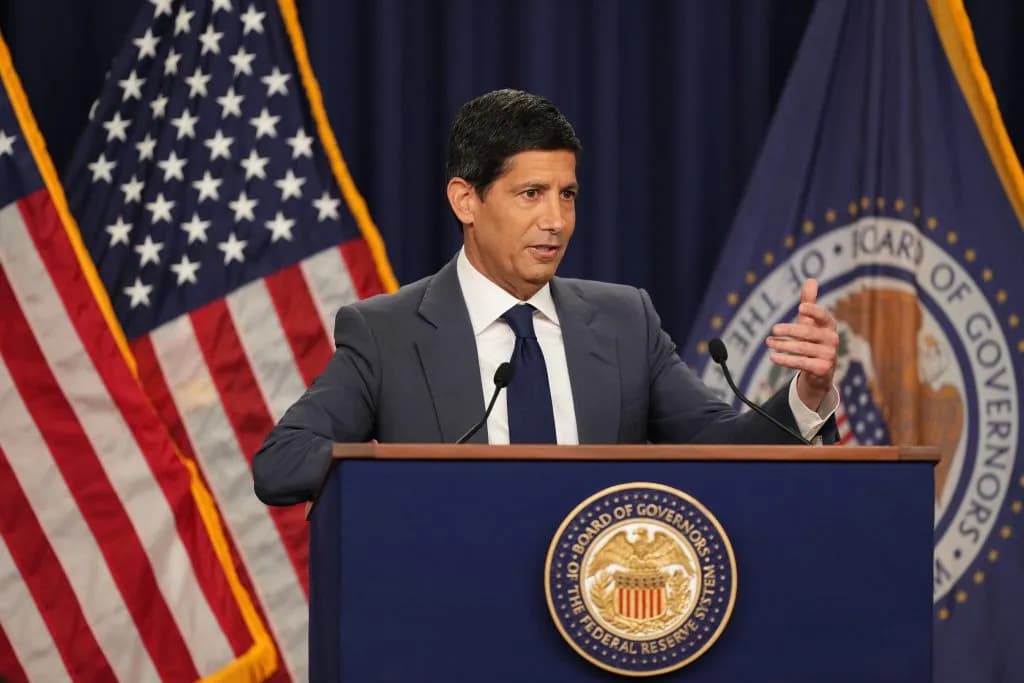
Aspen —The silence in Washington on Wednesday was loud. It wasn’t the quiet of a room where nothing is happening; it was the heavy, suspended breath of an institution that just refused to blink. The Federal Reserve kept its key rate unchanged at about 3.9%, a decision that feels less like a pause and more like a deliberate, stubborn stand in the face of a reality many folks around here are feeling in their grocery receipts.
It is easy to look at that 3.9% figure and assume the battle against inflation is over, or perhaps even lost. But that take misses the texture of what actually happened. The Fed didn’t hold steady because prices stopped climbing; they held steady because the last move was so aggressive it’s still settling into the bones of the economy. Last month, the central bank raised its benchmark rate by a quarter-point for the first time in three years, defying President Donald Trump’s demands for cuts. That was a shock to the system. This week, they are waiting to see if the shock works.
Chairman Kevin Warsh made it clear that politics played no role in the decision, a statement he delivered just six days before a midterm election where cost of living is the dominant theme. “I just spent two days with my colleagues upstairs,” Warsh said at a news conference following the announcement. “I didn’t hear an utterance about politics.” He pointed to energy prices moving higher again in recent weeks, noting that the Fed’s job is to ensure those relative price changes don’t broaden out across the entire economy. It is a nuanced distinction, but one that matters when you’re watching gas prices spike on I-70 or seeing the cost of lumber jump for a home renovation.
If you look closely at the market reaction, the story isn’t one of complacency. Wall Street investors now see the odds of another quarter-point increase at the next meeting, Dec. 8-9, at nearly 85%, according to CME Fedwatch. Michael Reynolds, vice president for investment strategy at Glenmede, a wealth advisory firm, told the Vail Daily that it’s likely going to take one more hike from the Fed to get interest rates into restrictive territory. He argued that as large tech firms rely more on borrowing to build data centers, higher rates will have a greater ability to cool that specific investment surge.
This is where the story gets complicated for people in the valley who are betting on the local economy’s next growth spire. The rapid buildout of artificial intelligence infrastructure is a force pushing up prices that may not be easily tamed by higher interest rates alone. Warsh noted the “overwhelming consensus” among Fed officials is that what they’ve done is starting to work some, pointing out that credit conditions tightened for some businesses and households. But Diane Swonk, chief economist at KPMG, offered a sharper warning in a note to clients: “Don’t mistake a pause for a truce; the battle against inflation is far from over.”
The Fed’s statement itself was brief, noting that “inflation remains elevated” and that holding off on a rate increase allows for the accumulation of more information. It is a classic central bank hedge, but it carries weight when you consider the ripple effects on local mortgages and business loans. The decision to hold is not a signal that things are fine; it is a signal that the Fed is betting on its previous aggression to do the heavy lifting.
As the week winds down, the air in Denver and across the West feels different than it did a month ago. There is a tension in the financial news, a sense that the next few weeks will decide whether this pause becomes a plateau or just a brief rest before another climb. The numbers are static, but the pressure is not. You can feel it in the tightness of credit lines and the hesitation in new construction permits. The Fed is watching, waiting for the dust to settle, but they have their hands on the lever, ready to push again if the heat doesn’t break.
Keep up with Aspen
The day's Western Slope news, one email each morning. Free.