Forest Service Leaves Independence Pass Wreck Exposed
The Forest Service prioritizes budget and staffing constraints over cleaning up a fragmented 1968 plane wreck exposed by an avalanche on Independence Pass.
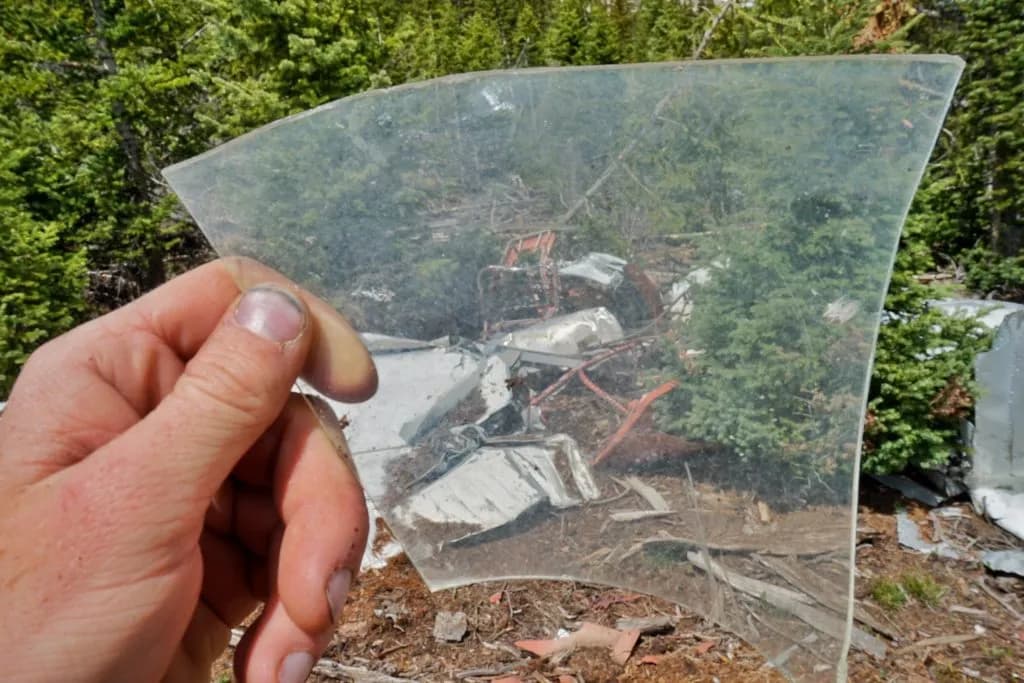
Glenwood Springs —The wind on Independence Pass doesn’t just blow; it scours. It strips the paint from the rusted fuselage of a Cessna that has been sitting in the subalpine trees above Independence Ghost Town for nearly six decades, turning a single crash into thousands of sharp, glittering fragments. You can see it from Highway 82 if you look closely, a jagged scar hidden by the larch and fir, slowly deteriorating into the earth. It’s a quiet, persistent decay, but it’s one that the U.S. Forest Service says it’s in no hurry to fix.
The wreck, the remains of a small aircraft that crashed in the winter of 1968 killing the pilot and three passengers, was left behind when their bodies were recovered. For years, it was just another piece of local history, obscured by the canopy. Then, in 2019, a record-breaking avalanche cycle swept down the slope, exposing the remains and putting the site back on the radar of the Independence Pass Foundation and the Forest Service. Now, the plane is broken apart, its metal and glass scattered across the avalanche path, creating a cleanup job that is as dangerous as it is tedious.
Karin Teague, the foundation’s executive director, sees the stagnation as a symptom of broader federal fatigue. She points to staffing and budget cuts as the primary reason the cleanup has slipped down the priority list, comparing it to the slow grind of maintaining the pass’s bathrooms. “I’m not even sure that project should be on the list anymore, as it’s become pretty low priority, especially in light of the situation with the Forest Service having lost so much staff and so much funding under the current administration,” Teague said.
The challenge isn’t just the age of the plane; it’s the terrain and the regulations. David Boyd, the Forest Service’s public affairs officer for the White River National Forest, noted that the crash site sits in a wilderness area. That designation means little to no use of motorized equipment, forcing crews to rely on helicopters or manpower to remove the material after it’s broken down. “We might do (the cleanup) in the future, but it is not a priority for the White River National Forest, especially given that it would require professional removal,” Boyd wrote in an email.
Teague isn’t arguing that the plane is a ticking time bomb. She notes that it’s not leaking fuel and poses little environmental risk, with animals already using the site. But she believes the precedent set by other wrecks on the pass should apply. A similar crew used helicopters to remove a plane from Midway Basin several years ago, a method the Forest Service prefers when possible. This one, however, is so old and so fragmented that it will require a lot of work on the ground to bundle it all up.
For locals who drive past the site every day, the delay feels less like a logistical puzzle and more like a neglect of stewardship. The plane is no longer a single, identifiable object but a field of debris, waiting for a budget or a crew that hasn’t shown up yet. It sits there, rusting in the thin air, while the rest of the world moves on.
The larch trees turn gold every October, framing the wreckage in a way that makes it almost picturesque, if you ignore the sharp edges of the metal and the silence of the trees above.
Keep up with Glenwood Springs
The day's Western Slope news, one email each morning. Free.



Glenwood Petition Accuses CPW of Using Taxpayer Funds to Influence Amendment 83

Rifle Propane Driver Turns Lunch Runs Into Leadville Gold