Garfield County Stage 2 Fire Restrictions Begin Friday at 1 a.m.
Stage 2 fire restrictions take effect Friday at 1 a.m. across Garfield County and the White River National Forest due to the Dry Creek Fire, banning charcoal in the forest and limiting permits for undeveloped areas.
Glenwood Springs —“Dragging trailer chains, parking in dry grass, even setting hot equipment down in dry vegetation can start fires right now.”
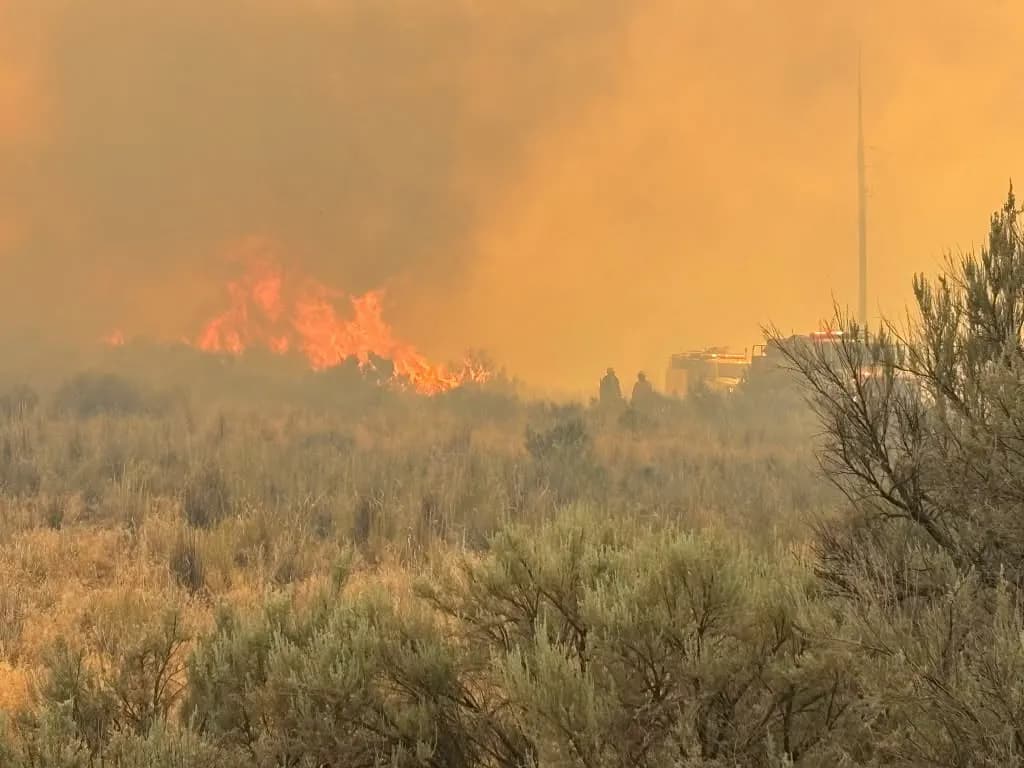
That’s Alicia Bell-Sheeter, White River National Forest Deputy Forest Supervisor, telling you why you can’t just toss your charcoal grill on the back porch and call it a day. Stage 2 fire restrictions kick in across Garfield County and the White River National Forest at 1 a.m. on Friday, June 26. The trigger? Hot, dry, windy conditions that are currently fueling the Dry Creek Fire, a 315-acre blaze burning south of Rifle.
Let’s be clear about what this means for your Friday night cookout. The restrictions apply to all of Garfield County, covering lands managed by the Sheriff’s Office, the Bureau of Land Management, the U.S. Forest Service, and all seven local fire districts. If you’re planning to fire up the Weber, you need to know the difference between developed and undeveloped areas, because the rules change depending on where you park your truck.
Cooking fires are still allowed, but they require caution. Your cooking device must be clean and in proper working order. Gas grills? You’re good to go without a permit. Charcoal and other solid-fuel grills are allowed without a permit, but only in developed areas. If you head out to a remote spot in the hills for a picnic, you’re looking at needing a permit from the local fire department to light that charcoal. Smoking is permitted in developed areas. In undeveloped areas, you can only smoke if you’re inside an enclosed vehicle or a building. No standing in a field with a cigarette while the wind picks up.
The White River National Forest is stricter. No campfires. No charcoal. Anywhere. This includes developed campgrounds and picnic areas. You want to sit by a fire pit in the forest? You’re out of luck.
The forest service isn’t just banning fires for the sake of bureaucracy. They’re dealing with stretched resources. Current active wildfires across Colorado have already drained available assets, affecting necessary responses from all parties. The Dry Creek Fire is the immediate context here. It’s 315 acres and growing. When the dry creek bed is burning, the margin for error disappears.
For equipment operators, the rules get technical. Welding and spark-emitting cutting are allowed in developed areas, but you need to take extreme caution. In undeveloped areas, industrial welding is allowed but may require a permit. It must happen in a cleared area of at least 10 feet in diameter with a designated lookout. You also need Class A fire extinguishing capabilities readily available. If you’re running a chain saw or a generator without a spark-arresting device, you’re prohibited from using it. If your equipment does have a spark-arresting device, you need Class A fire extinguishing capabilities and a round-point shovel at least 36 inches long. Tractors and mowers must be operated with extreme caution, paying close attention to dry weeds and grass that are susceptible to ignition.
The bottom line for locals is simple: the window for open flames is closing. If you’re in the White River National Forest, your charcoal stays in the cooler. If you’re in Garfield County, your gas grill is your best friend, but your charcoal needs a permit if you’re not in a designated developed area. The cost of non-compliance isn’t just a fine; it’s the potential for your fire to join the Dry Creek Fire, further straining the resources already stretched thin by the current blaze.
Keep up with Glenwood Springs
The day's Western Slope news, one email each morning. Free.
Aspen Housing Authority Seeks $590K Office Upgrade Amid Cramped Conditions
Vail Secures Water Rights for 37-Unit Montelisse Condo Project
Moffat County Commissioners Weigh Data Center Moratorium Amid Transparency Claims
White River National Forest Proposes New Management Zones at Sweetwater Lake
Bennet and Hurd Introduce Bipartisan Bill to Block Mid-Continent Quarry Expansion