Golden Gate Canyon Earns Colorado's First Urban Dark Sky Status
Golden Gate Canyon State Park became Colorado's first Urban Night Sky Place after Gilpin County adopted new lighting ordinances to reduce glare near Denver.
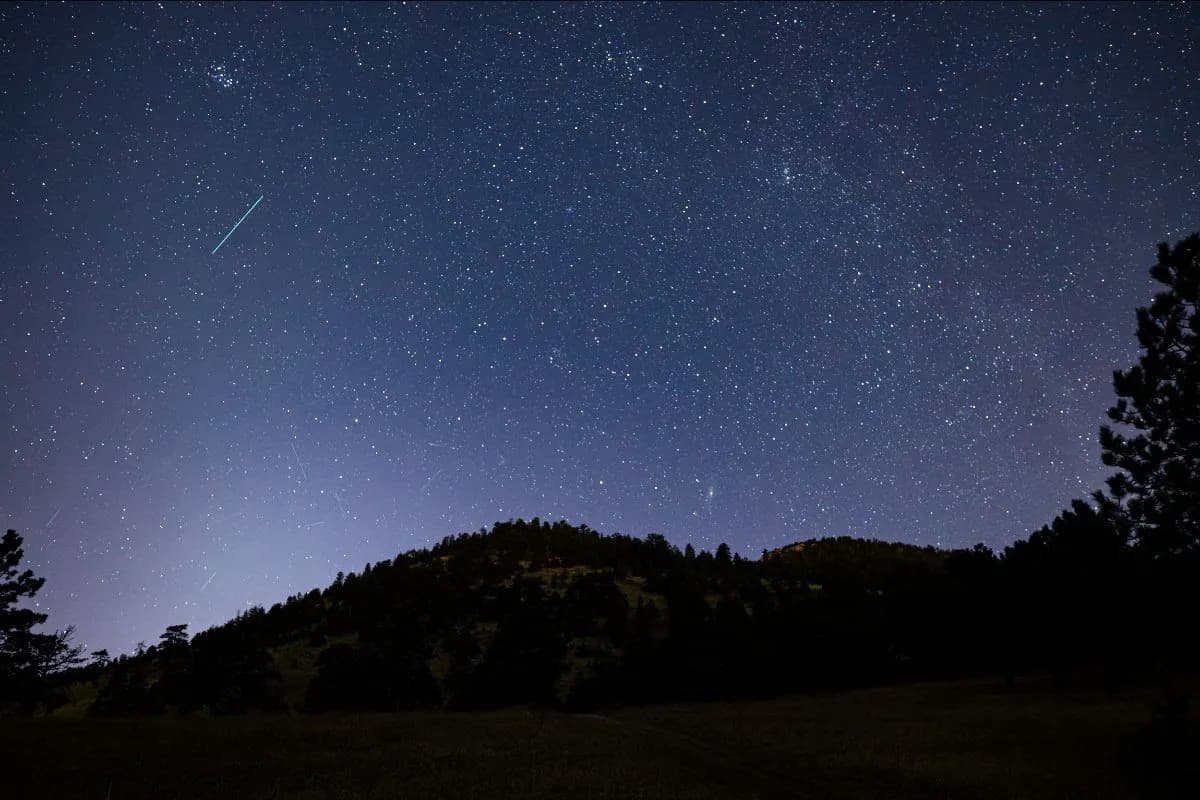
The air in Gilpin County drops sharply as the sun dips behind the Sawatch range, turning the shadows long and blue. From Panorama Point at Golden Gate Canyon State Park, the horizon is no longer a wash of orange haze but a deep, velvety black. The Milky Way stretches across the firmament, not as a faint smear, but as a textured, glowing river of dust and light. You can feel the cold bite on your cheeks, but the visual reward is immediate and stark against the usual glow of the Front Range.
For years, that view was a memory rather than a reality for Carolyn Collins Peterson. Growing up in Boulder, she watched the stars twinkle throughout her childhood nights, a sight that eventually steered her toward researching comets in graduate school and creating astronomy shows for planetariums. But as artificial light crept into her life, even in the quieter corners of Gilpin County, the glare snuffed out that twinkle. Now, living a mile from the park boundary, Peterson sees the stars again. She takes a special joy in sitting on her deck at night, watching the galaxy unfold above her head.
This recovery of the night sky is not accidental; it is the result of a specific certification. In September, DarkSky International designated Golden Gate Canyon State Park as an Urban Night Sky Place. According to the Colorado Sun, this makes Golden Gate the first location anywhere in Colorado to receive that specific distinction. It is a different tier than the DarkSky Park designation earned by Jackson Lake State Park in 2020, which holds stricter standards for darker skies near the tiny town of Orchard. Golden Gate’s proximity to Denver makes it a unique fit for the Urban Night Sky designation, which honors places that mitigate light pollution despite being adjacent to major metropolitan areas.
The certification reflects a deliberate shift in how the park and the surrounding county manage outdoor lighting. Peterson, who serves as a DarkSky ambassador, worked directly with Gilpin County to draft a light ordinance. This regulation governs outdoor lighting by preventing "light trespass" — those random rays that spill onto neighboring properties — and requires shields over outdoor lights. It also mandates warmer light temperatures, since harsh blue light is a major polluter of the night sky, and requires permits for commercial spaces.
"There are some areas where they have to have a little bit of lighting," Peterson told the Colorado Sun. "But they’ve done quite a bit to mitigate it. It’s better than it used to be."
The effort is visible from the park itself. Panorama Point offers a vantage point that blocks much of the light spilling over from Denver, allowing visitors to make out the Milky Way with clarity. Peterson wrote a letter supporting the park’s designation, noting that while the park is near a major city, its management has reclaimed a significant portion of the darkness. "The night sky belongs to everyone," she said. "We should all be able to see it."
Most patrons of nearby Jackson Lake State Park hadn’t even heard of a dark sky certification before, suggesting that this awareness is still spreading through the community. But for folks who drive up from Denver or live in the valley, the change is tangible. The sky isn’t just darker; it’s more complex, layered with the faint, structural beauty of the galaxy that was once lost to the glow of streetlights.
As you stand on the deck or at the overlook, the silence is heavy with the absence of hum. The only sound is the wind moving through the pines, and above you, the stars burn with a quiet, persistent intensity that feels like it has been waiting for us to look up.
Keep up with the Western Slope
The day's Western Slope news, one email each morning. Free.