IOC Keeps Parallel Giant Slalom in Alpes 2030 with Mixed Team Event
The International Olympic Committee confirmed parallel giant slalom remains in the Alpes 2030 Winter Games, adding a mixed team event to boost popularity and secure athlete funding after fears of elimination.
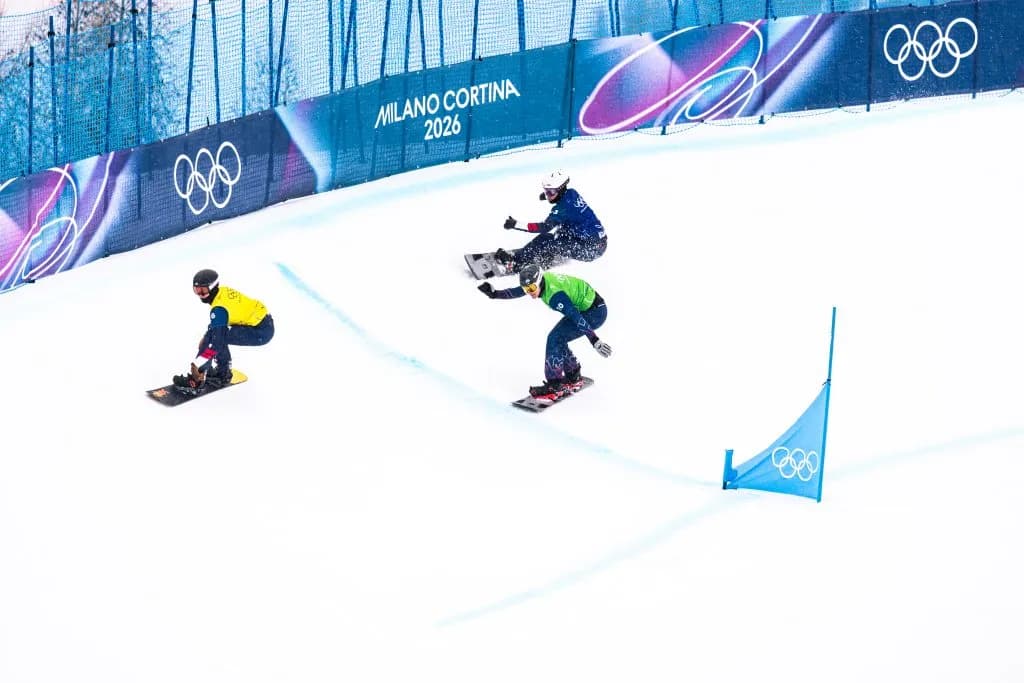
Steamboat Springs —The wind off the Continental Divide doesn’t care about your Olympic hopes. It just cuts through your parka, indifferent to whether the International Olympic Committee (IOC) decides to keep your livelihood or cut the funding. But for parallel giant slalom athletes, that indifference just turned into a lifeline.
The IOC announced Tuesday that parallel giant slalom is staying in the Winter Games for Alpes 2030, and it’s actually getting bigger. They’re adding a mixed team event. For context, this wasn’t a guaranteed victory. Officials and athletes were sweating bullets, fearing the discipline would be axed entirely. Instead, they got an expansion.
“The IOC Executive Board noted that PGS — as part of the discipline of snowboard — had demonstrated significant improvement since Beijing 2022 across a number of popularity indicators,” the IOC news release read. The catch? The events won’t have a standalone field of play. They’ll share the stage with other snowboard disciplines. It’s a compromise, but it’s a win.
Let’s look at the numbers, or at least the qualitative metrics the IOC used. They looked at broadcast coverage, digital media, ticketing, and press in over 50 markets. They didn’t release the raw data, but they said the indicators improved. That’s bureaucratic speak for “people watched it, and they liked what they saw.”
Locally, the stakes feel higher than just global metrics. Cody Winters, who represented the U.S. in parallel giant slalom at the Milan Cortina games, placed 21st. He’s seen the disparity firsthand. Alpine snowboarding isn’t the big-money draw in the U.S. like halfpipe or big air. It’s a European and Asian obsession.
“If you go to Europe or Asia, the TVs are playing Alpine snowboarding religiously,” Winters said. “There is a much bigger emphasis on the discipline, and better funding than in the United States.”
That global popularity is what saved it here. The IOC also highlighted that the upcoming games will be gender-neutral, but Winters pointed out that alpine snowboarding has been leading the charge on parity for years.
“It’s interesting because alpine snowboarding has been gender neutral for quite some time,” Winters said. “The men and women get paid the same, and utilize the same courses.”
For the athletes on the ground, the relief is palpable. Walker Overstake, a 2030 hopeful, was on edge. He and Winters were waiting for the axe to fall. When it didn’t, the anxiety broke.
“I’m very relieved there is a future to the sport,” Overstake said. “When something you’ve worked your whole life for is threatened, it creates anxiety.”
The financial implications are real. The Olympics are a massive marketing engine. Adding a mixed team event means more exposure, which translates to more potential funding for the athletes. It’s not just about glory; it’s about whether you can afford to train next year.
“If it got cut, a lot of athletes would stop competing,” Winters said. “It would have spelled the beginning of the end of our sport.”
Winters and Iris Pflum competed in Milan. They finished 21st and 30th. They didn’t win medals, but they kept the sport alive. Now, with the mixed team event added, there’s another path to the podium and another slice of the sponsorship pie.
The decision was made following the IOC’s Executive Board meeting. It’s a retention, not a revolution. The sport stays, it gets slightly more complex with the mixed team addition, and the athletes get to keep their careers. For the folks watching from the sidelines in Steamboat or further up the valley, it means one less variable in the equation of local sports funding. The sport stays. The athletes stay. The anxiety lifts.
Keep up with Steamboat Springs
The day's Western Slope news, one email each morning. Free.