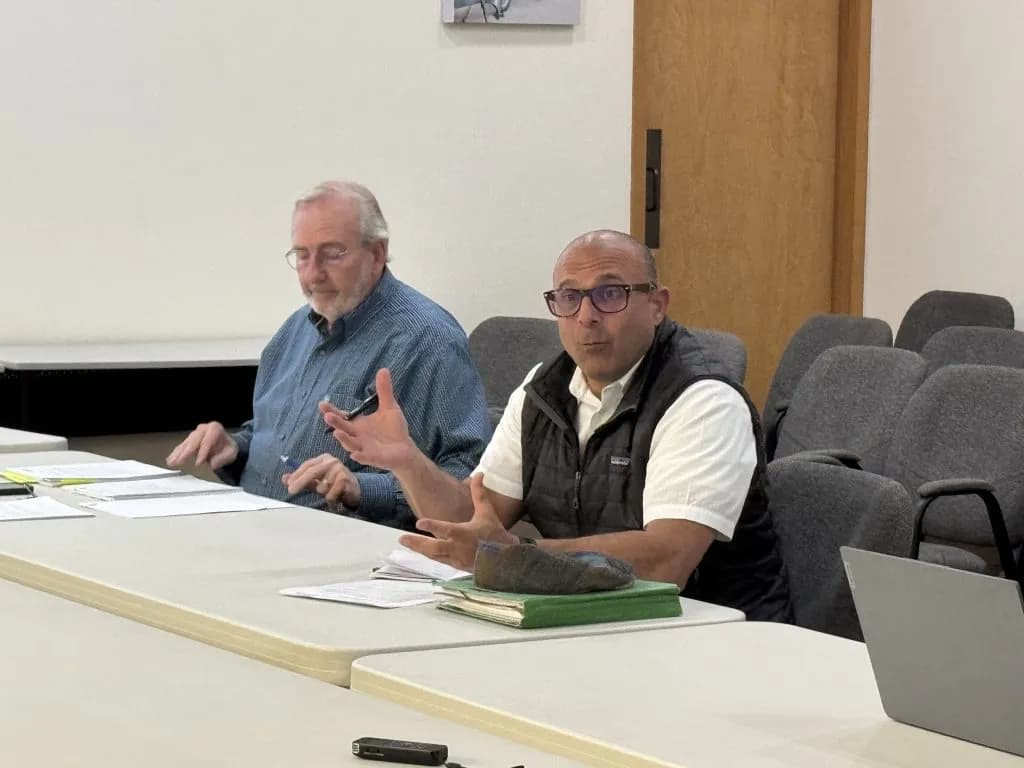
Jared Weiser Leans on AG Record to Win Colorado Governor’s Mansion
Former Colorado Attorney General Jared Weiser leverages his 65 lawsuits against the Trump administration and rural outreach to pivot from legal defense to executive governance in his bid for the governor's mansion.

Steamboat Springs —“Get to know people in every corner of our state – their hopes and challenges – both helped me know what to fight for, and to know who I am fighting for.”
That’s the advice former Governor Roy Romer gave Jared Weiser when he first ran for elected office, a directive that still echoes in the way the current attorney general positions himself for the governor’s mansion. It’s a simple instruction, really: go to the counties. But in a state as vast and varied as Colorado, that advice carries weight. It means you’ve stood in the drafty halls of county courthouses in the north, you’ve listened to farmers in the san juan basin worry about water rights, and you’ve sat in living rooms in the valley where the light hits the dust motes just so at dusk.
Weiser is using that history to argue that he isn’t just a politician waiting for a promotion, but a seasoned operator who has already done the work. He’s spent the last eight years focused on Colorado, not Washington. That distinction matters here, on the ground, where the difference between a policy written in D.C. and one enforced by a local attorney general is the difference between keeping the lights on and watching the power flicker out.
The numbers he cites aren’t abstract; they’re the bedrock of his campaign pitch. He leads an office of over 700 people, including more than 400 lawyers, managing a $150 million budget. That’s not just administrative overhead. That’s a machine built to fight. And he’s been fighting. He’s sued the Trump administration 65 times. Sixty-five. That’s a staggering volume of legal briefs, a multitude of courtrooms, and endless hours spent ensuring that federal actions don’t just roll over local interests. He’s protected firefighters who lost their jobs right before fire season, defended $1.2 billion in federal funding, and kept food assistance flowing for 600,000 Coloradans.
If you look closely, the pattern is clear. He’s not just reacting; he’s building a record of defense. And now, he’s pivoting to offense. As a governor, he promises to build more affordable housing, launch “Primary Care for All” to fix rural healthcare, and improve workforce training. It’s a familiar progressive playbook, but the execution is where the texture comes in. Can a system that’s broken in the cities actually be fixed in the rural counties? Weiser thinks so, arguing that his experience represents every level of government, from county commissioner to state legislator.
There’s a warmth to his narrative, rooted in his family’s story. His mother was born in a Nazi concentration camp on April 13, 1945, liberated just five days later. That’s not a trivia point; it’s a foundational mythos for a first-generation American who clerked for Ruth Bader Ginsburg and worked in the White House for Barack Obama. It gives his political ambition a moral weight, a sense that he’s fighting for the freedom and opportunity his family crossed an ocean to find.
But let’s be honest about the rough edges. Taking on Big Pharma, Big Tech, and the Trump administration is easier when you’re the attorney general than when you’re the governor trying to get things done. The machinery of government is different. One is about litigation and defense; the other is about execution and compromise. Weiser claims he’s prepared, that he’s already collaborated with agencies and leaders every day. But can he translate that legal aggression into legislative will? That’s the question locals are asking as they weigh their options.
The support he cites — from current and former officials across the spectrum — is a strong signal, but it’s not a guarantee. In a state that’s increasingly polarized, the ability to unify is just as important as the ability to fight. Weiser is betting that his record of defending Colorado’s interests, from water to mental health, will translate into a mandate to fix affordability and healthcare. It’s a big bet. And like any good bet, it depends on whether the house is rigged or if the odds are truly in Colorado’s favor.
Outside the campaign office, the air is crisp, carrying the scent of pine and distant rain. It’s the kind of weather that makes you want to stay inside, wrapped in a blanket, watching the storm roll in over the mountains. But for Weiser, and for anyone running for governor, it’s the kind of weather that reminds you why you’re out there in the first place. To protect the view, to protect the water, to protect the people who live under it.
Keep up with Steamboat Springs
The day's Western Slope news, one email each morning. Free.




Moffat County Fair Awards Crown Winners in Horse Show and Crafts

Leela Bridgewater and Corgi Freya Win Routt County Fair 4-H Dog Show