Ken Salazar Argues Colorado Border Shaped His Ancestors
Former Senator Ken Salazar releases a memoir arguing that the Colorado border physically shaped his ancestors' lives, challenging modern immigration narratives.
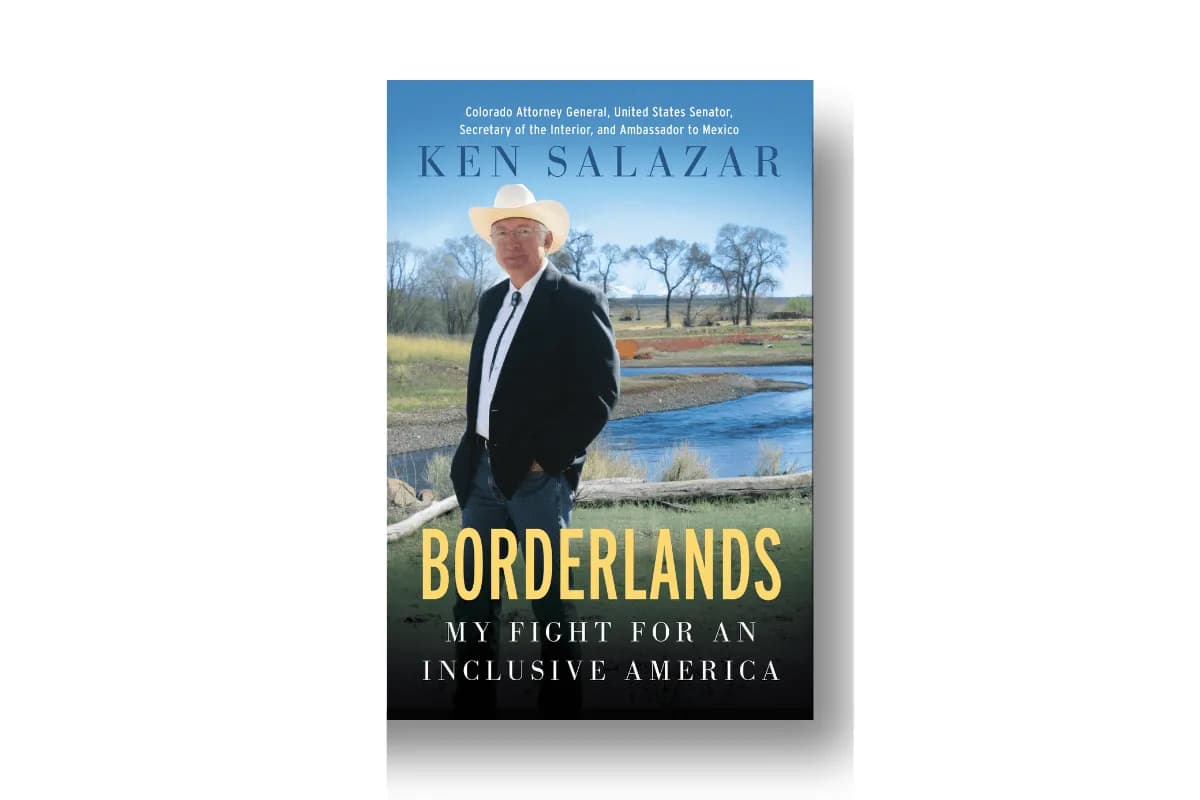
“My ancestors didn’t cross the border. The border crossed them.”
That line, written by former U.S. Secretary of the Interior and Colorado Senator Ken Salazar in his new book, “Borderlands: My Fight for an Inclusive America,” lands with a weight that few policy debates can match. It is a simple sentence, but it reframes the entire conversation about immigration in this state. Salazar isn’t talking about a line drawn on a map; he is talking about the land itself, and how it reshaped the people who lived on it.
The book is an excerpt from a series featured by The Colorado Sun and Colorado Humanities & Center For The Book, part of their “SunLit” initiative. Salazar uses the text to pull readers into his own history, specifically his time growing up in a rural farming and ranching family in Colorado’s San Luis Valley. He asks the reader to hop into his pickup truck and take a ride through what he calls “my very own corner of Colorado’s San Luis Valley.”
The tour starts at the Ohkay Ranch. Salazar describes his home as an adobe single-story house with foot-thick walls, a Spanish tile roof, and arched windows. It sits surrounded by a patchwork of cattle, hay, and alfalfa fields. Some are irrigated by ditches; others use scaffold sprinklers that sweep water from a deep aquifer, creating 130-acre circles visible only from high overhead. The landscape is defined by water and labor, a detail that matters when discussing the region’s identity.
From his kitchen table, Salazar watches Los Cerritos, a rise of rounded desert rock formations and mountaintops to the south. To the east are Los Rincones, “the corners,” where he grew up in the 1950s and 1960s. This is significant because Salazar notes it was the first non-Native settlement in Colorado, home to his ancestors since the 1850s. The Valley sits right against the Continental Divide, flanked by the snowcapped San Juan Mountains to the west and the Sangre de Cristo Mountains to the east. Between those ranges lies the world Salazar describes as his foundation for hope.
The drive continues west to Manassa, a town with a population of 961 and the birthplace of heavyweight champion Jack Dempsey. Salazar acknowledges that Manassa is now a struggling place, with only one gas station and shuttered storefronts. He compares it to much of the rest of rural America he has traveled through, noting that for a child in the mid-20th century, it was the big city. It is where he first went to school.
The question is whether a book about the past can inform the future of American politics. With midterms approaching and 2028 on the horizon, Salazar argues that now is the moment to build a new blueprint for American life. He insists that we cannot understand or shape what comes next without first reckoning with the past and the present. The book traces his personal journey, shaped by faith, family, and hard work, exploring how identity and heritage were long denied or overlooked.
Salazar frames this not as a partisan argument, but as an obligation to something larger than oneself. He speaks of what a land-rooted, multigenerational family teaches you about stewardship and belonging. For readers in the valley, this is a recognition of their own history that has often been ignored by national narratives. It is a reminder that the border isn’t just a line on a map; it’s a force that shaped the community, the landscape, and the people who call this place home.
In the end, Salazar offers a forward-looking vision that insists on honesty about the chaos at the border. He believes that understanding the land and the people who have stewarded it is the only way to build a future that works for everyone.
“We cannot understand or shape what comes next without first reckoning with the past and the present,” Salazar wrote.
Keep up with the Western Slope
The day's Western Slope news, one email each morning. Free.