Low Snowpack Stresses Routt County Ranchers and Hay Yields
Reduced snowpack and diminished runoff are stressing Routt County ranchers, threatening hay yields and forcing increased costs for hauling water to livestock.
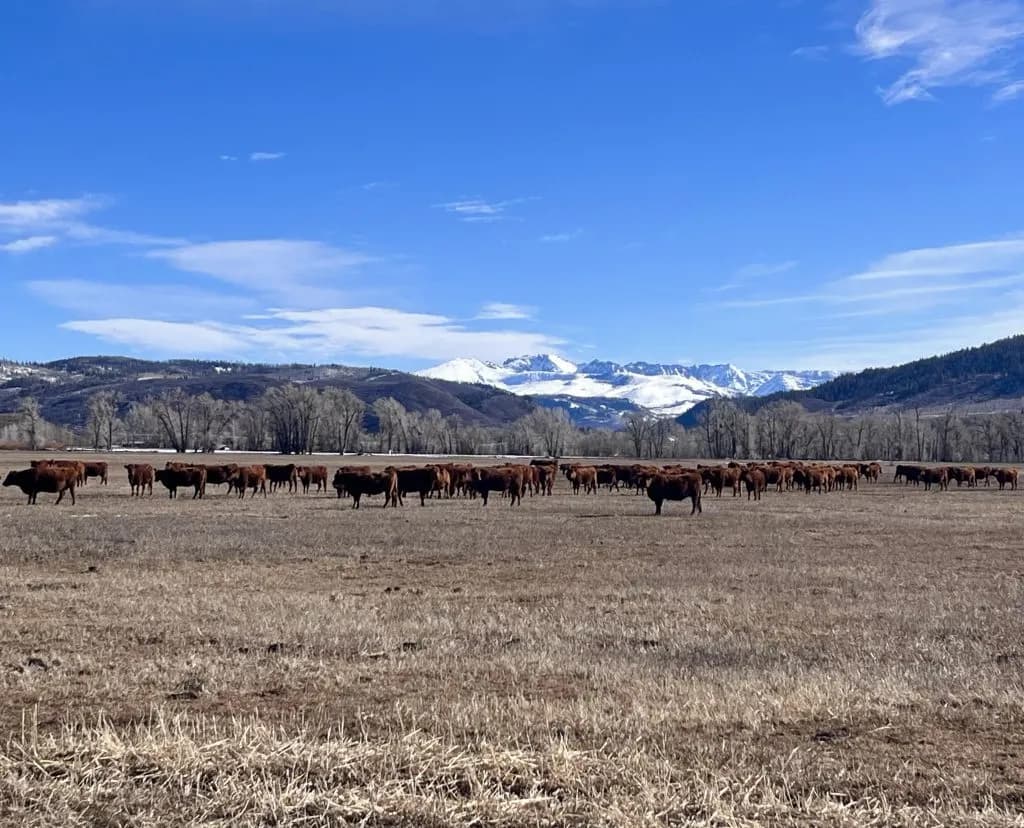
Steamboat Springs —The grass in the meadow is waking up two weeks early. It’s a subtle shift, barely noticeable to the casual driver on Highway 40, but for the folks managing the land, it’s a disruption of the calendar they’ve relied on for generations. Jay Fetcher has been tracking snowmelt dates for his family’s ranch in North Routt County for 75 years. He’s seen the extremes. He’s seen the droughts. But this year, the dryland hay broke dormancy early, and the cutting crews are already in the fields.
It’s not a catastrophe. Not yet. But it’s a stress test for a community that lives and dies by the weather.
The consensus among local experts is that this season will be below average, but manageable. Todd Hagenbuch, the county director and agriculture agent for the Colorado State University Routt County Extension, notes that recent rains have done a better job than expected for dryland pastures. “People with dry land probably can expect some reduced yields,” Hagenbuch says, “but I will say that the rains we’ve gotten over the last couple weeks have brought on grasses in dry land and pasture situation areas better than I would have anticipated.”
That’s a relief. Reduced yields mean less hay to sell, sure, but it doesn’t mean empty barns. The real worry is the water infrastructure itself. CJ Mucklow, who previously held Hagenbuch’s position, paints a stark picture of what’s normal versus what’s happening now. Typical dryland hay yields about a ton to the acre. Irrigated hay? Two tons. This year, Mucklow expects both numbers to drop significantly. “It’s not great, but it’s OK,” she says.
But “OK” is a relative term when you’re looking at the ditches. The low snowpack is hitting irrigated hay the hardest because the runoff — the very thing that fills the ditches, creeks, and streams — is diminished. The water delivery system in South Routt is more complex than in North Routt, with far fewer ditches to work with in the north. That complexity matters. If the water isn’t there, the hay doesn’t grow, no matter how hard you work it.
Fetcher, whose family bought the ranch in 1949 when he was just a toddler, has a different story. His water right along the Elk River is “pretty good.” He grows only native hay through irrigation, with no dryland crops to worry about. He’s confident in the consistency of his environment. “I’m very grateful for this place, mainly because of how kind of stable the environment is from a ranching standpoint,” Fetcher says. “We always get snow, and we always have green grass, so it’s kind of more easy to manage.”
Stability is a luxury not everyone has. The second big concern isn’t just the hay; it’s the cattle. Snow runoff usually fills the ponds and streams where animals drink. This year, those bodies of water are empty or nearly so. Ranchers who don’t have reliable irrigation or deep ponds are now hauling water in for their livestock. It’s a logistical headache and a cost increase that eats into margins.
“That’s the big issue is adequate water for livestock,” Hagenbuch says. “And it will be all [day long].”
Picture a rancher standing by a dry creek bed, watching the dust kick up from a truck hauling water from a distant source. That’s the reality for many in the valley right now. It’s not a crisis that shuts down the economy, but it’s a reminder that the old rhythms are breaking. The hay will be cut. The cattle will eat. But the margin for error has shrunk, and the snowpack is the only thing keeping the whole thing from falling apart.
Keep up with Steamboat Springs
The day's Western Slope news, one email each morning. Free.


Moffat County Fair Awards Crown Winners in Horse Show and Crafts
Leela Bridgewater and Corgi Freya Win Routt County Fair 4-H Dog Show