MacArthur Fellow Michelle Dorrance Brings Tap Dance to Vail
MacArthur Fellow Michelle Dorrance brings her Chicago-based troupe to the Vail Mountain School Theatre for an Aug. 10 premiere featuring a dialogue on fusing Irish step and American tap.
Aspen —What does it cost a local community to host a MacArthur Fellow who treats tap dance like a conversation between centuries?
That’s the question hanging in the air at the Vail Mountain School Theatre this Monday. It’s not just about ticket prices or parking permits. It’s about what happens when the rigid, percussive geometry of Irish step dance collides with the loose, syncopated soul of American tap. Damian Woetzel, standing at the helm of NOW: Premieres, has spent two decades building a stage for these unlikely marriages. The 20th season is closing out with a partnership that feels less like a standard recital and more like a collision of worlds.
At 7 p.m. on August 10, the spotlight hits Michelle Dorrance. She’s not just another choreographer. The New Yorker calls her “one of the most imaginative tap choreographers working today.” She’s also a MacArthur Fellow, a title that suggests she’s solving problems no one else sees. But here in Vail, the story is simpler: she’s bringing the Chicago-based troupe to the valley.
The group has spent 35 years fusing Irish step dance with tap and contemporary movement. They don’t just wear the shoes; they rewrite the rules of how those shoes sound. Dorrance has choreographed multiple pieces for them, pushing the boundaries of what percussive dance can be. Now, she’s doing it again for the Aug. 10 premiere.
But the real work happens before the curtain rises. At 10:30 a.m. Monday, the Vail Mountain School Theatre opens its doors for Conversations on Dance. This isn’t a lecture. It’s a dialogue. Dorrance will sit with members of the company to talk about how this collaboration began. They’ll discuss the friction and the flow of working across two distinct movement traditions. What are they creating at the dance festival? How does a tap dancer from Chapel Hill, North Carolina, speak the same language as a troupe rooted in Irish tradition?
The audience gets to ask, too. An open Q&A follows the conversation, and the whole thing will be released on the same day at conversationsondancepod.com. You can listen to it while you’re stuck in traffic on I-70, or while you’re waiting for your coffee.
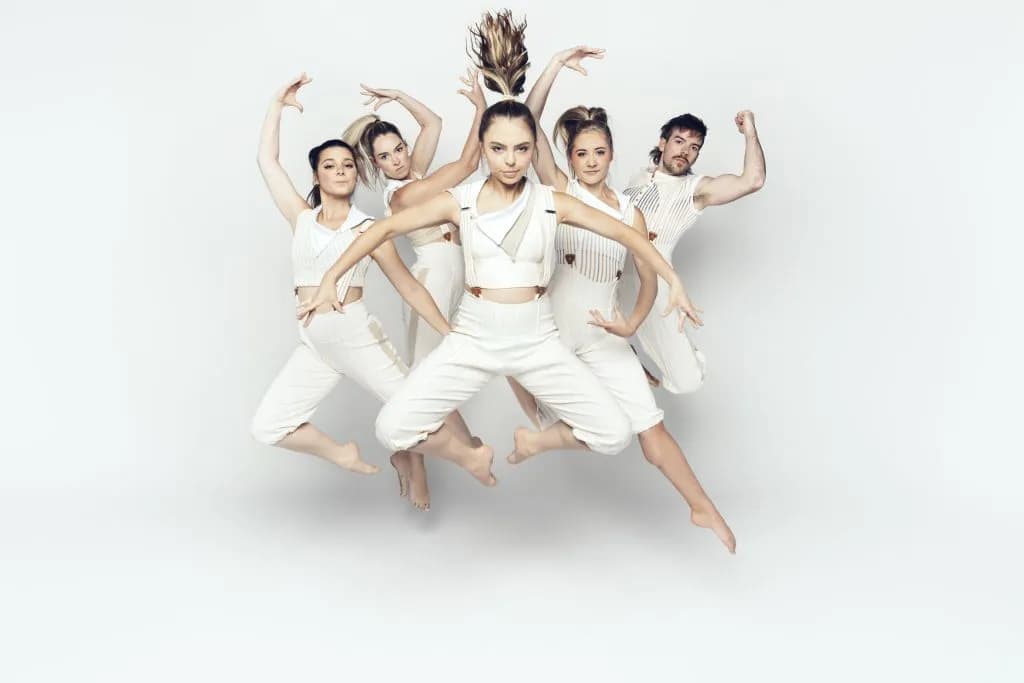
Dorrance isn’t working alone. She’ll partner with Chelsea Hoy, the associate artistic director of Trinity Irish Dance Company. The resulting piece features artists from the group, tap dancers, and stars from New York City Ballet. Tiler Peck is among them. The cast list reads like a who’s who of American dance: Alesandra Doughty, Maggie Doyle, Erin Gradus, Sierra McNall, Sydney Niewiedzial, Aaron Wolf, Margaret Nowakowski, and Marissa Wurster. Lois Greenfield captured them in a courtesy photo that probably hangs in a gallery somewhere, but here, they’re just people preparing to make noise.
Dorrance views her work not as invention, but as inheritance. She grew up studying dance in her mom’s Ballet School of Chapel Hill. Her mother, M’Liss Gary, was an “incredibly musical” professional ballet dancer. From the get-go, Dorrance and her mom recognized that she was heading down a specific path. She studied with masters of the jazz era.
“I am one of many tap dancers of my generation that were so uniquely exposed to our elders who were the last legends and tradition bearers of the jazz generation,” Dorrance said. “That legacy encompasses so many different kinds of artists that were in their 70s, 80s and 90s when we were preteens, teenagers and in our early 20s. We were steeped in their stories, in their teachings.”
She sees every notable artist as creating something unique unto themselves. It’s the nature of tap dance. Every artist is their own stylist. Yet, it is her comprehensive understanding of the Black American art form — as well as classical ballet — that allows her to integrate traditional forms with modern styles. She doesn’t just move; she remembers.
The Vail Daily reported the details of the event, but the story is in the room. It’s in the sound of a shoe hitting wood. It’s in the silence before the first beat. Stand there long enough and you realize this isn’t just entertainment. It’s a negotiation between history and now.
The theater seats are filling up. The podcast downloads are ticking over. And somewhere in the back of the room, a dancer is adjusting her shoe laces, preparing to make the floor speak.
Keep up with Aspen
The day's Western Slope news, one email each morning. Free.