Mark A. Johnson Explores Bacon's Cultural History at The Bookworm of Edwards
Author Mark A. Johnson discusses the social and cultural history of bacon, from religious taboo to modern obsession, at The Bookworm of Edwards on June 24.
Aspen —Can you really trace the soul of American culture through a strip of cured pork belly?
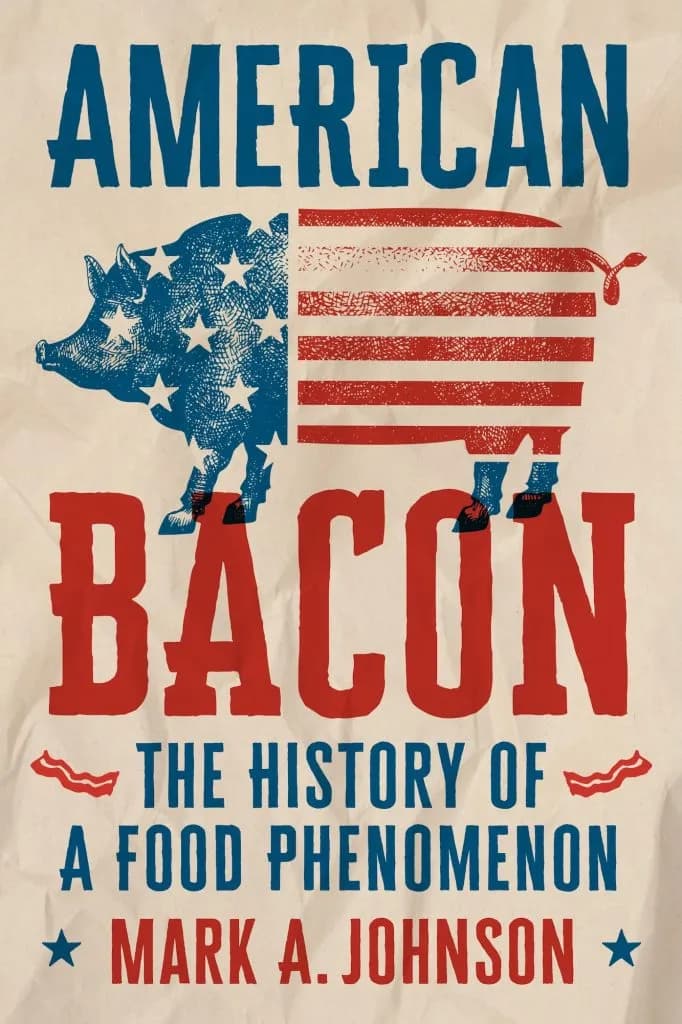
It’s a question that feels slightly absurd until you sit down with Mark A. Johnson, who has spent years peeling back the layers of a food we’ve all eaten but few have truly studied. On June 24 at 6 p.m., Johnson will be at The Bookworm of Edwards to answer that question, and perhaps a few others you didn’t know you had, as he explores the unique social and cultural history of bacon. It’s not just a breakfast staple or a barbecue garnish; it is a mirror reflecting the changing values of a nation, a history that stretches back to the very first domesticated pigs and forward into the twenty-first century’s culinary obsession.
The timing feels deliberate, doesn’t it? With the 250th anniversary of the United States approaching, most of us will be attending parades, grilling hot dogs, and reading about the Founding Fathers. But Johnson, an author and professor, wants to talk about something far more visceral. He argues that bacon’s journey from religious taboo to cultural powerhouse tells us more about who we are than any political document could. You can feel the weight of that history in the way Johnson describes the rapid shifts in perception. By the 1980s and 1990s, bacon was practically exiled from the diet of the healthy. One scientist labeled it the “most dangerous food in the supermarket,” while another dismissed it as “not even a food” but rather a “fat-laden, nitrate-ridden, carcinogenic thing.” It was the dietary villain of the era, a reputation so entrenched that it shaped how people bought and cooked their meat.
Yet, flip the clock forward just a few decades, and the narrative flips entirely. Johnson recalls a barbecue pitmaster telling him that by the early 2000s, pork bellies had become so valuable that butchers began altering the way they broke down hog carcasses to maximize the belly yield. That is a remarkably fast change for a product that is thousands of years old. It wasn’t marketing alone that drove this shift; it was a fundamental change in how we value the animal, how we prioritize flavor over fear.
The history goes deeper than modern dietary fads. Bacon was originally any pork that was salted, cured, and smoked to survive the winter and spring, a crucial source of fat, salt, and flavor for humble meals. It’s easier, Johnson notes, to say what isn’t bacon, especially when you consider that many cultures never ate pork at all. We’ve projected so much of ourselves onto pigs — giving them voices in cartoons, assigning them vices like greediness and dirtiness, and virtues like intelligence. But the science of the past was just as strange as the mythology. During the Civil War, doctors worried that bacon, considered a “heat-generating agent” due to ancient ideas about humors and biles, would be unsuitable for Northern men fighting in the hot Southern climate. A century later, Iowa shoppers still hesitated to eat bacon in the summer, fearing it was too heavy to digest in the heat.
If you look closely, you see that these aren’t just old wives’ tales; they are windows into how recently we’ve changed our minds. Some of these ideas lingered in the American imagination long after the science had moved on. The Bookworm of Edwards will be the place where this story unfolds, not as a dry lecture, but as a conversation about why we eat what we eat. It’s a reminder that our food is never just food — it’s history, science, and culture all fried together.
The air in Edwards will likely carry the scent of old paper and coffee as Johnson prepares to speak, but for those who listen closely, you can almost taste the salt on the air, the weight of centuries of curing, smoking, and eating, all condensed into a single evening of storytelling.
Keep up with Aspen
The day's Western Slope news, one email each morning. Free.