Martha Graham Dance Company Celebrates 100th Year at Vail Amphitheater
The Martha Graham Dance Company marks its centenary with performances at the Vail Dance Festival, honoring the choreographer’s legacy at the amphitheater where President Ford named her a national treasure.
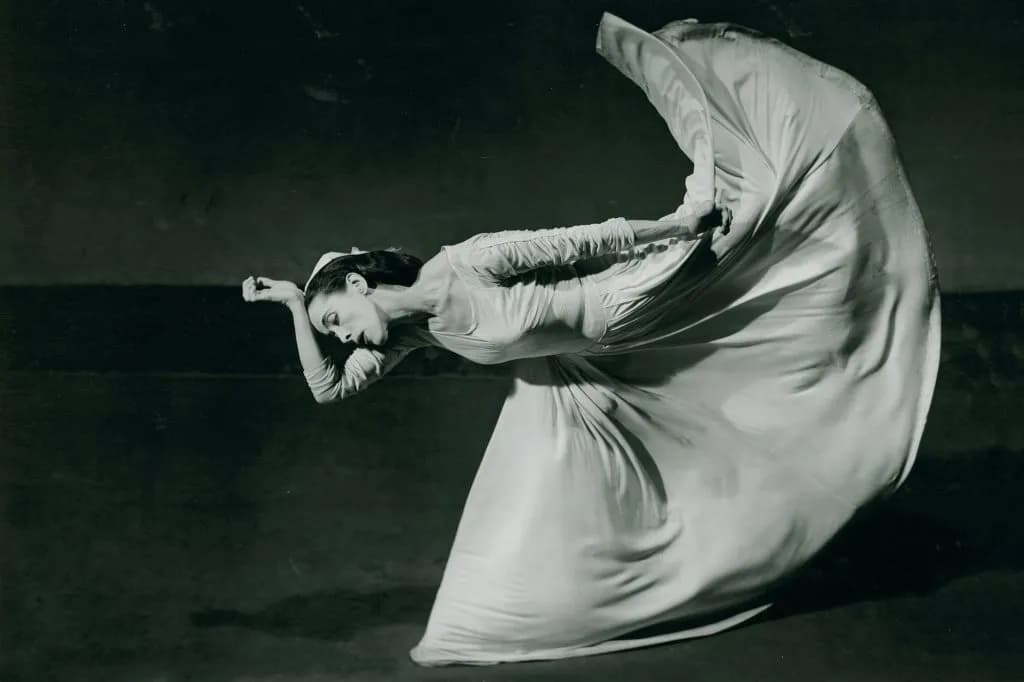
Aspen —It is easy to look at a centenary celebration and see only nostalgia, a soft-focus retrospective of past glories. But standing in the cool evening air at Gerald R. Ford Amphitheater, you can feel something sharper, more muscular, vibrating through the floorboards as Martha Graham Dance Company prepares to mark its 100th year. This isn’t merely a party for the oldest dance company in the nation; it is an assertion that the physical vocabulary Graham forged a century ago remains urgently relevant to how we move through our own lives, from the Vail valley to the rest of the country.
The timing feels almost predestined, doesn’t it? As the United States turns 250 and Colorado celebrates its 150th, with Route 66 and the Blues Highway also hitting their own century marks, Martha Graham’s milestone arrives with a quiet but profound weight. The company opens the Vail Dance Festival on July 31 and presents a full evening of works on August 1, performing in the very space where President Gerald R. Ford declared her a “national treasure” exactly 50 years prior. She was the first dancer and choreographer to receive the Presidential Medal of Freedom, followed by the National Medal of Arts in 1985 from President Ronald Reagan. To perform there now is to stand on ground that has been consecrated by history, yet the work itself refuses to stay in the museum.
What Graham did was not just innovate; she redefined the body’s relationship to emotion. Janet Eilber, who has served as the company’s artistic director since 2005, explains that Graham “put human beings on stage.” Before her, dance was often escapist entertainment — flowers, swans, and gods from other cultures. Graham wanted to represent the human struggle, the issues present in our lives between the world wars. She studied how we hold ourselves when unhappy or ecstatic, searching for a physicality that mirrored those internal states.
“It’s a very gutsy physicality driven by the weight, the core of the body, the leveraging against the floor,” Eilber noted. “And at the same time, it’s a very intimate expression of emotion.”
This pairing of physicality and revealing emotion is one of her greatest discoveries. She rediscovered the body, finding an impulse in the center of the torso connected to breath — a contraction and release that characterizes her movement vocabulary. It was a shift as significant as women’s right to vote or the advent of the internet, changing not just how we perceive art, but how humans perceive themselves. While ballet showcased a weightless illusion and fairytales, Graham ushered in grounded, weighted movement and raw emotion. She drew inspiration from Greek mythology like ballet did, but she grounded it in the here and now.
Named Dancer of the Century by TIME and one of the female Icons of the Century by People magazine, her impact ranks with Picasso, Stravinsky, and Frank Lloyd Wright. When you watch the dancers now, you see that same contrarian spirit, the refusal to float away into abstraction. They are rooted, heavy with meaning, breathing out their stories in the mountain air. As the lights dim over Vail, you can almost hear that contraction, that deep exhale from the core, echoing through a century of change.
Keep up with Aspen
The day's Western Slope news, one email each morning. Free.