McGill Study Confirms Aspen Stands Act as Effective Fire Barriers
A new McGill University study confirms that aspen stands act as effective fire barriers, slowing wildfire progression and reducing burn severity compared to surrounding conifer forests.
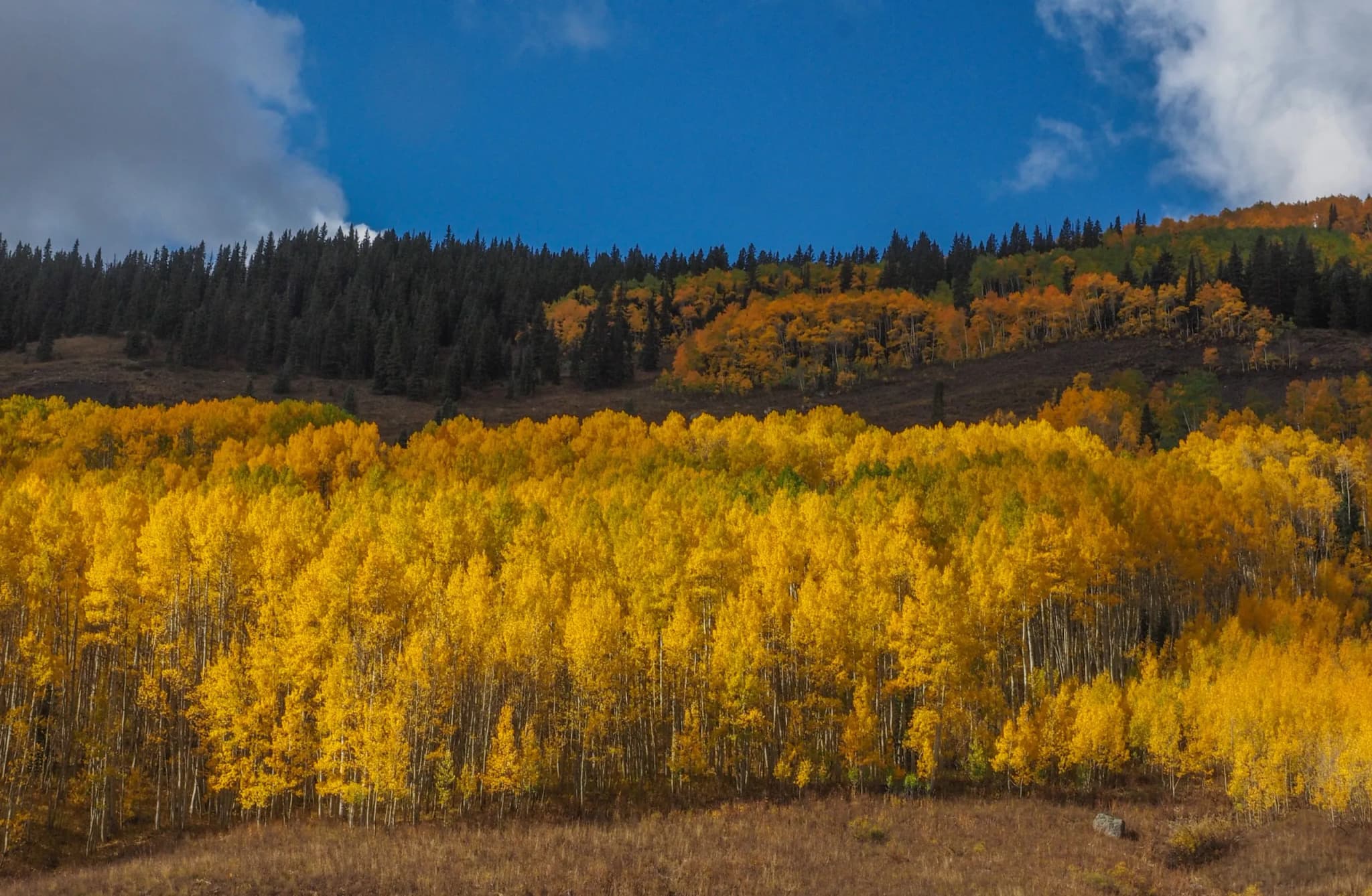
Aspen —A new study from McGill University confirms what Colorado foresters have long suspected: aspen stands act as effective fire barriers, slowing or even stopping wildfire progression. The research, published in Forest Ecology and Management, analyzed nearly 80% of Canada’s aspen forests across four ecozones. It found that while aspen can burn, they do so at a lower severity than surrounding conifer stands.
The findings reinforce local efforts to diversify tree populations after decades of pine beetle infestations, drought, and blowdowns have left many forests vulnerable.
“It’s something that we’ve known all along,” said Aaron Green, associate director of the Colorado State Forest Service. “The idea that there’s a ton of value in having kind of a diversity or a heterogeneity in stand structure to keep disturbances small is something that we’ve understood for a long time. But it’s good to see research that kind of confirms some of that, for sure.”
Previous studies were limited by their scope, looking at local or regional aspen stands. The McGill team utilized better remote sensor networks to capture data on a much larger scale. Their results indicate that aspen continues to act as a barrier even during hot, dry days in spring and summer — conditions that typically encourage high-severity fire spread.
For Colorado, this data supports a strategic shift in land management. State forester Matt McCombs has emphasized that long-term plans must promote growth in tree species at higher elevations. These trees provide shade, which slows the melting of snowpack — a critical resource as climate change alters precipitation patterns.
The biological lifecycle of aspen plays a key role in this dynamic. When wildfires clear out older conifers, aspen are often the first to return, particularly in moister areas of the terrain. They grow quickly but have a relatively short lifespan of 100 to 120 years. Eventually, conifer seedlings like Douglas fir overtake them. Douglas firs can live 500 to 1,000 years, creating a long-term forest structure.
Flavie Pelletier, the lead author of the McGill study and a recent Ph.D. graduate, noted that aspen is not a 100% effective fire deterrent. However, compared with other species, it remains a superior choice for planting around communities and critical infrastructure.
The practical implication for locals is clear. Relying on aspen stands near residential areas and key infrastructure provides a natural buffer that buys time for firefighters. It reduces the likelihood of catastrophic, high-severity burns in those specific zones. This isn't a total shield against fire, but it is a statistically significant reduction in risk.
For homeowners and emergency planners, the cost-benefit analysis favors maintaining or planting aspen mixes alongside conifers. It leverages a natural, self-renewing firebreak rather than relying solely on mechanical clearing or artificial barriers. The data from Canada translates directly to the Western Slope’s need for resilient, diverse forest structures that can withstand increasing fire frequency.
Keep up with Aspen
The day's Western Slope news, one email each morning. Free.