Murdock Farmers and Sierra Club Unite Against Data Centers
Farmers and environmentalists in Murdock, Nebraska, formed an unlikely alliance to halt AI data center expansion, citing threats to farmland and water supplies.
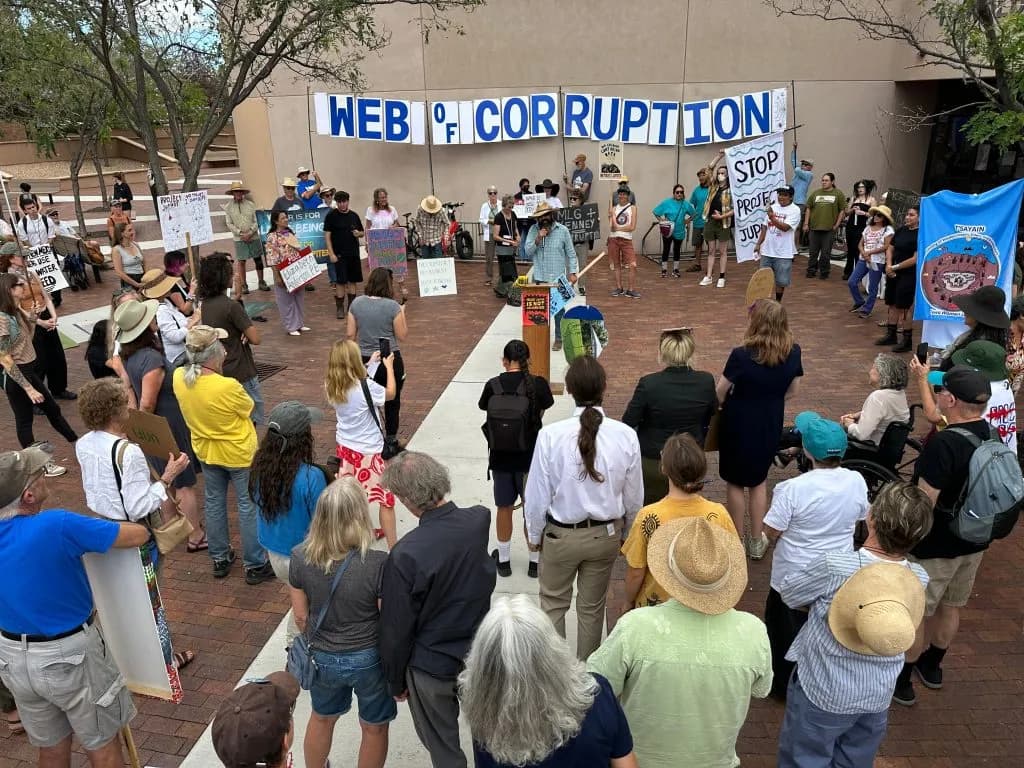
Aspen —On a quiet evening in Murdock, Nebraska, the firehouse doors swung open to a room packed shoulder-to-shoulder. Outside, the flat expanse of Cass County stretched under a darkening sky, dotted with the silhouettes of grain bins and farmsteads. Inside, the air hummed with a tension that had nothing to do with flames.
This was not a standard political rally. There were no red hats, no blue sashes, and no shouting matches between opposing candidates. Instead, the room was filled by an unlikely coalition: conservative farmers standing side-by-side with members of the state Sierra Club chapter, both united in their opposition to the rapid expansion of artificial intelligence data centers.
The question is whether this grassroots resistance can outpace the corporate machinery driving the tech boom. To hear them tell it, the threat isn’t just environmental; it’s existential for small-town America.
Judy Stroy, a fifth-generation Nebraska farmer, stood before the crowd. Her family’s history is written in the soil of the fields just outside town, where her late husband grew corn and soybeans, and where her son continues the work today. For Stroy, the encroachment of data centers represents a direct assault on the agricultural heritage that defines the region.
“The amount of ground that’s getting gobbled up every year, our food source is in trouble,” Stroy said, her voice steady but urgent. She looked out at the mixed audience of farmers, environmentalists, and local residents. “That should scare everyone.”
Her concern is grounded in specific local developments. Recently, Cass County officials approved a 12-month moratorium on data center development, a pause intended to allow the community to breathe and assess the impact. This decision directly affects the plans of energy company Tenaska, which has been exploring the feasibility of developing power generation to serve large loads.
Tenaska spokesperson Leighton Elise Eusebio stated that the company has been looking at options for over 1,300 acres of land along Highway 75, south of the nearby villages of Murray and Beaver Lake. Activists in the room feared this would pave the way for a massive data center accompanied by its own natural gas power plant.
“We believe there are opportunities to work with public power, communities and other stakeholders to develop power generation that will benefit Nebraskans,” Eusebio said in a statement provided to the press.
While supporters of the projects, including President Donald Trump and certain union leaders, argue that the infrastructure brings a jobs and economic bonanza while helping the U.S. thwart China in the geopolitical race for technological supremacy, the locals in Murdock saw something different. They saw dwindling farmland, declining water supplies, and rising electricity bills. They saw massive corporations reshaping their small town into just another node in a national network of computing warehouses.
The debate around data center projects is one of the rare modern issues to cut across party lines, demographics, and geography. It spans from Republican-dominated Nebraska, Texas, and Wyoming to swing-state Pennsylvania and Democratic-leaning New Mexico. But in Murdock, the partisan divide dissolved under the weight of shared local concerns.
As the meeting wound down, the sense was that the battle had just begun. The mid-term elections loomed, forcing national, state, and local elected officials to adapt to a shifting political landscape. But for the people in the valley, the stakes were immediate and tangible.
Stroy remained near the front of the room as the crowd began to filter out. She watched the mix of faces — farmers in work boots, environmentalists in jackets, and neighbors who simply wanted to keep their community intact. She knew the fight wasn’t over, but she also knew they weren’t fighting alone.
“People think this is a big-city issue,” Stroy said, turning to a reporter. “But it’s happening right here, in our backyard. And if we don’t stand up now, we won’t have a choice later.”
Keep up with Aspen
The day's Western Slope news, one email each morning. Free.