Nederland's Eldora Deal Stalls as $225M Debt Burden Spooks Lenders
Lenders are questioning whether a town of 1,500 can service $225 million in debt for the Eldora acquisition. Residents urge trustees to abandon the stalling deal, while officials warn walking away costs $2.5 million.
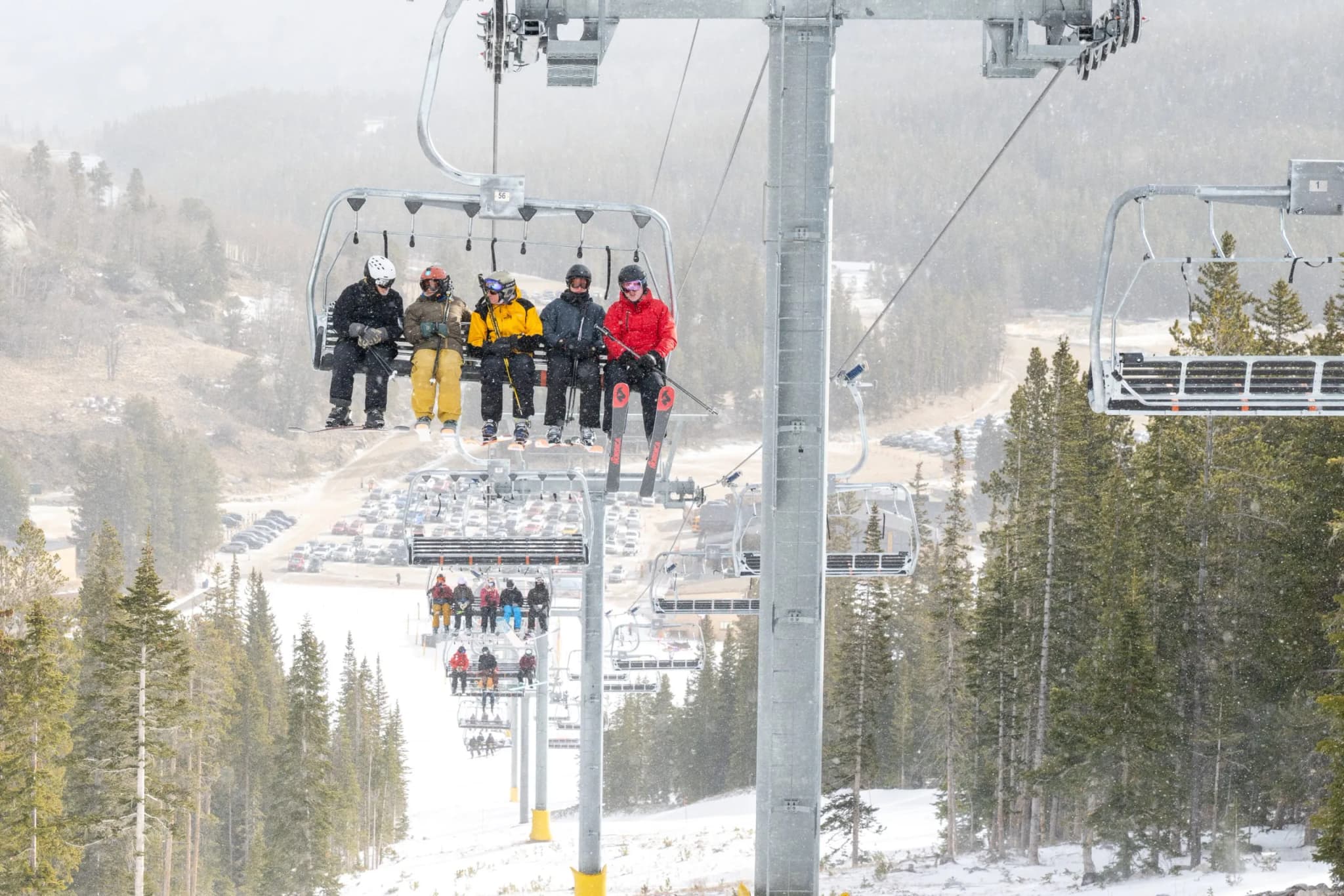
The Town of Nederland wants to borrow $225 million. The town has a population of 1,500.
That is the central arithmetic problem facing residents in Boulder County right now. The local government is attempting to purchase Eldora ski area from resort operator Powdr for $120 million, with an additional estimated $100 million or more required for capital projects and reserves. On paper, the plan involves establishing an enterprise fund — a government-run business — where revenues from the ski lift and mountain operations would pay down the debt. In practice, lenders are looking at that spreadsheet and asking hard questions.
Interest rates have climbed since the initial approval in January, and prospective creditors are questioning whether a town this size can actually handle that debt burden. The deal is stalling not because of a lack of political will, but because the math isn't holding up under current market conditions.
Tuesday night at a town council meeting, residents made their frustration explicit. Dallas Masters, a former Nederland trustee and aerospace engineer who uses artificial intelligence tools in his daily work, took the microphone to deliver a blunt assessment. He said he used AI to comb through every detail of the sale from its inception and found that the reassurances offered by town leaders cannot be made.
“I ask you to please be honest with the fact that you’ve put a $2.5 million bet on a roulette wheel,” Masters told the trustees. “The end result, if we don’t actually do this deal, is potentially a $1.9 million deficit in the general fund.”
Masters argued that pulling out of the deal now would leave the town with a significant hole in its general fund, a risk he called unprecedented for a municipality of this scale. About a dozen other residents joined him in urging the board to abandon the acquisition, arguing that the financial risk diverts money and attention from core municipal responsibilities like roads, water, and emergency services.
The board of trustees defended the yearslong effort, citing a lack of transparency forced by the deal's structure. Trustee Billy Giblin acknowledged that operating in the dark has been uncomfortable for everyone involved, but he argued that abandoning the deal now would waste the capital already spent.
“I can’t blame you all for feeling highly distrustful of us,” Giblin said. “Having to operate in the dark has not been something that I’ve enjoyed or I don’t think any of us have enjoyed. It doesn’t feel right and it has to be the way we’ve had to operate because we want this to succeed.”
Giblin insisted that the town’s leaders possess information they cannot yet share publicly and that the investment would be recouped if the acquisition closes. However, he conceded a key point: pulling the plug now would effectively flush $2.5 million down the toilet.
That $2.5 million figure is critical context. It represents money already invested in the deal that would be lost if the purchase falls through. Meanwhile, Mayor Nichole Sterling noted on Sept. 30 that a primary challenge is giving bond investors confidence that the bonds will be repaid. To prove viability, the town has been asking for $20 million in donations.
Let’s do the math on that ask. The town is seeking $20 million in donations to help secure financing for a debt load that could reach $225 million. That is roughly 9% of the total potential debt burden, and it comes from a tax base that supports a town of 1,500 people.
The deal is now approaching its two-year mark. The town approved the $120 million purchase and up to $225 million in bonded debt in January. Since then, the financial landscape has shifted against them. Lenders are skeptical. Residents are angry. And the town is left holding a $2.5 million investment that it says cannot be recovered if the deal collapses, while simultaneously facing a potential $1.9 million deficit in its general fund if it walks away.
Nederland is trying to buy a major ski resort with the financial leverage of a small mountain town. The gap between those two realities is where the $225 million debt lives, and right now, nobody in the room seems to have a clean answer for how it gets paid back.
Keep up with the Western Slope
The day's Western Slope news, one email each morning. Free.