Oman and Iran Agree on Temporary Strait of Hormuz Route
Oman and Iran agreed on a temporary navigational corridor through the Strait of Hormuz after a tanker engine failure highlighted the waterway's fragility.
Aspen —The engine of the oil tanker died with a shudder that likely rattled every window in Muscat. It was Monday night, off the eastern coast of Oman, when a strike disabled the vessel’s propulsion. The British military’s United Kingdom Maritime Trade Organization reported that all crew were safe, and there were no immediate signs of an oil slick spreading across the water. But the silence that followed was louder than the explosion.
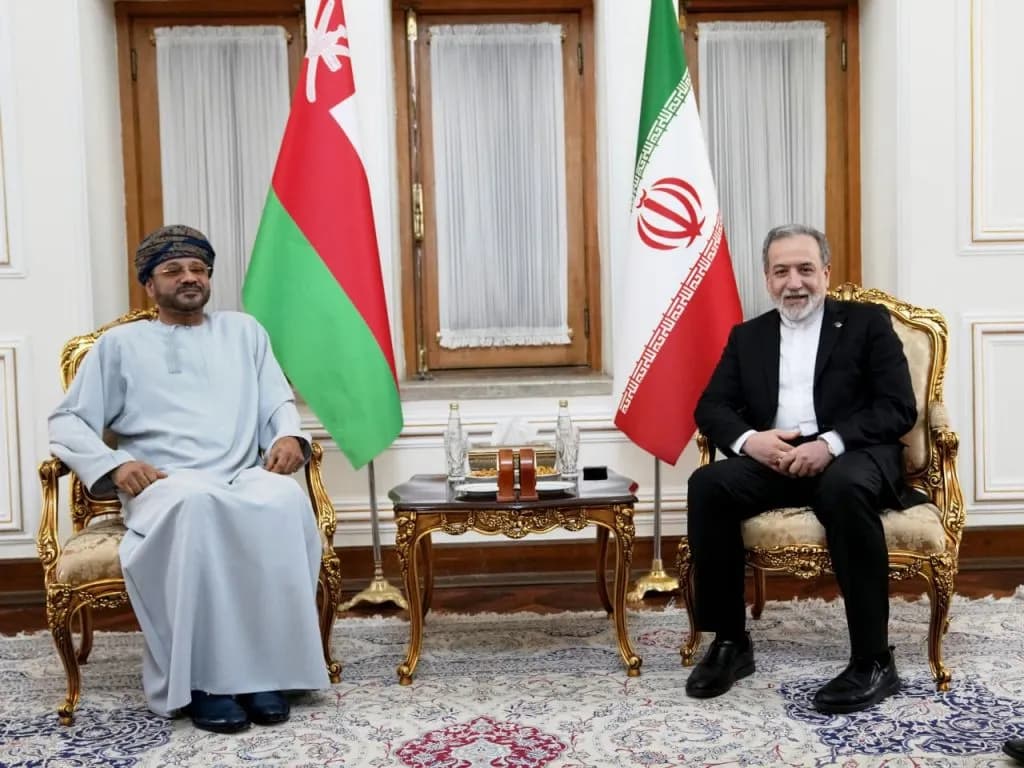
That quiet, broken by a single disabled ship, set the stage for Tuesday’s meeting in Tehran. Omani Foreign Minister Badr al-Busaid sat down with his Iranian counterpart, Abbas Araghchi. They weren't there to shake hands; they were there to negotiate a way through the chokepoint that has kept global trade on its knees for nearly six months.
The Strait of Hormuz is a narrow slice of water, but it holds the weight of the world’s energy supply. Before the United States and Israel attacked Iran on Feb. 28, about a fifth of the world’s traded oil flowed through it. Now, it is largely shut down. The waterway sits on opposite sides of the globe’s most critical maritime artery, and right now, it is a minefield — literally.
A joint statement from the two governments outlined a "phased approach." The framework includes a “joint temporary navigational corridor” and a shared effort to clear mines from the waterway. It’s a pragmatic, if fragile, solution. Iranian Deputy Foreign Minister Kazem Gharibabadi told state TV that the two countries had reached an understanding on a temporary route. Traffic into the Persian Gulf from the Gulf of Oman would pass entirely through Iranian waters. The outbound route would split, passing partly through Iran and partly through Oman’s territorial waters.
They plan to hold negotiations over the next 30 to 60 days to "reach an understanding on a new permanent and sustainable route."
It’s a deal that makes logistical sense for the two nations sharing the strait. It may not make sense to Washington. U.S. President Donald Trump threatened last week to bomb Oman if it “gets in the way” of American efforts to reopen the strait. It’s unclear whether the U.S. will accept this emerging arrangement, or if it will simply treat the new corridor as another target for its blockade of Iranian ports. The U.S. has already fired on vessels transiting the area, and Iran periodically fires at ships to enforce its own control.
Meanwhile, a delegation from Pakistan left Tehran on Tuesday after talks focused on reviving negotiations to end the broader Iran-U.S. conflict, according to the Pakistani military. The diplomatic machinery is grinding, slowly and loudly, trying to find a path through a region that has become increasingly unpredictable.
For folks in the valley, this isn’t just abstract geopolitics. It’s the price at the pump, the cost of heating your home in February, and the stability of the global economy that dictates what you pay for groceries. When a tanker loses its engine off Oman, it’s a reminder that the supply chain is only as strong as the narrowest point in its path.
The tanker’s crew is safe, for now. The engine is dead, but the ship is still floating. It sits in the water, waiting for a tow or a decision from capitals thousands of miles away. The sea around it is calm, but the currents beneath are shifting fast.
Keep up with Aspen
The day's Western Slope news, one email each morning. Free.