Oregon and Washington Wildfire Smoke Blankets Western Slope
A thick haze from Oregon and Washington wildfires drifts south, prompting the state to expand its Air Quality Health Advisory to include Rifle, Vail, and Aspen as visibility drops and particle pollution rises.
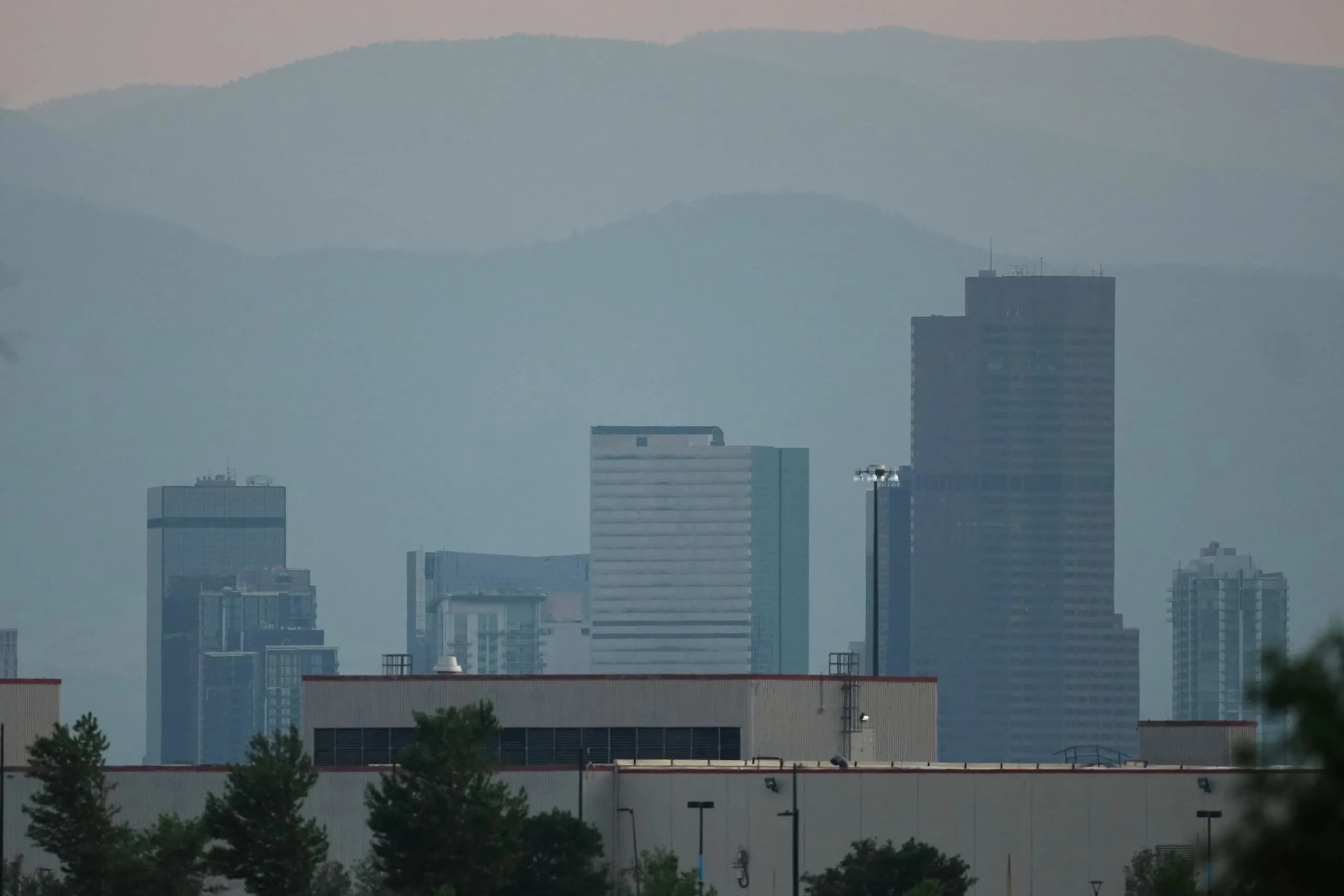
A thick, yellow-brown haze hangs over the high desert near Glenwood Springs, muting the jagged silhouette of the Rocky Mountains. It’s not fog. The air tastes like ash, and visibility drops to a few miles along Highway 82 as trucks rumble past with their lights on, despite it being mid-afternoon.
This is the new normal for Western Slope locals this August. The Colorado Department of Public Health and Environment has expanded its Air Quality Health Advisory to include Rifle, Vail, and Aspen. The culprit is a massive plume of smoke drifting south from wildfires in Oregon and Washington, compounded by moisture trapped above the state. On paper, this is a weather event. In practice, it’s a logistical headache for anyone with respiratory issues or outdoor plans.
The state’s “Smoke Blog” confirmed Tuesday that the advisory covers more than just the Front Range. While Greeley and Fort Collins brace for increased particle pollution, folks in the valleys are dealing with moderate to heavy smoke. The health department notes that a cold front pushing toward northeastern Colorado will likely transport more smoke from Wyoming and western Nebraska. This means the air quality in our towns isn’t static; it’s rapidly changing as weather systems shift.
Chris Bianchi, a meteorologist with 9News, highlighted this morning that smoke is coming from two distinct sources: the Widemouth 2 fire in Utah and the larger Pacific Northwest blazes. Air quality is currently moderate, but Bianchi warned it will likely worsen by afternoon. This isn’t just about looking at a smoky sky. The Colorado air quality page indicates that fine particulate concentrations are reaching the “Unhealthy for Sensitive Groups” category in the northern Front Range. Ozone levels could also hit that same unhealthy threshold for sensitive groups during Tuesday’s afternoon and evening hours.
Let’s do the math on what this means for daily life. If you’re sensitive to smoke, staying indoors with windows closed is non-negotiable when the Air Quality Index (AQI) spikes. For those who work outdoors or commute long distances, the visibility reduction adds time to your drive and stress to your lungs. The state’s upper-level winds are expected to continue transporting smoke into Colorado over the next few days, so this isn’t a one-day event.
Michael Booth, The Sun’s environment writer and co-author of the weekly climate newsletter The Temperature, reported that the combination of Pacific Northwest smoke and local moisture is creating a distinct, hazy atmosphere. It’s cool enough to wear a jacket, but the air feels heavy. This is different from the dry heat of July. It’s a persistent, clinging haze that obscures views and impacts air quality readings across the board.
The expansion of the advisory is significant because it acknowledges that smoke doesn’t respect county lines. Rifle, Vail, Aspen, Breckenridge, Fairplay, Cañon City, Colorado Springs, and Pueblo are all named. If you live in any of these communities, or if you’re commuting through them on I-70 or Highway 6, your air quality is no longer just a local concern. It’s part of a broader regional pattern.
For locals, the bottom line is simple: monitor the AQI daily, especially if you have asthma or heart conditions. Keep windows closed during peak afternoon ozone hours. And expect the sky to remain a murky gray for at least another 48 hours until that cold front fully pushes through and clears the air.
Keep up with the Western Slope
The day's Western Slope news, one email each morning. Free.