Parachute Couple Trains Mustangs Using Rare Vaquero Style
Parachute couple Shane and Renae Bartosiewicz apply rare vaquero techniques to train mustangs for the Meeker Mustang Makeover, blending wild instinct with traditional ranching skills.
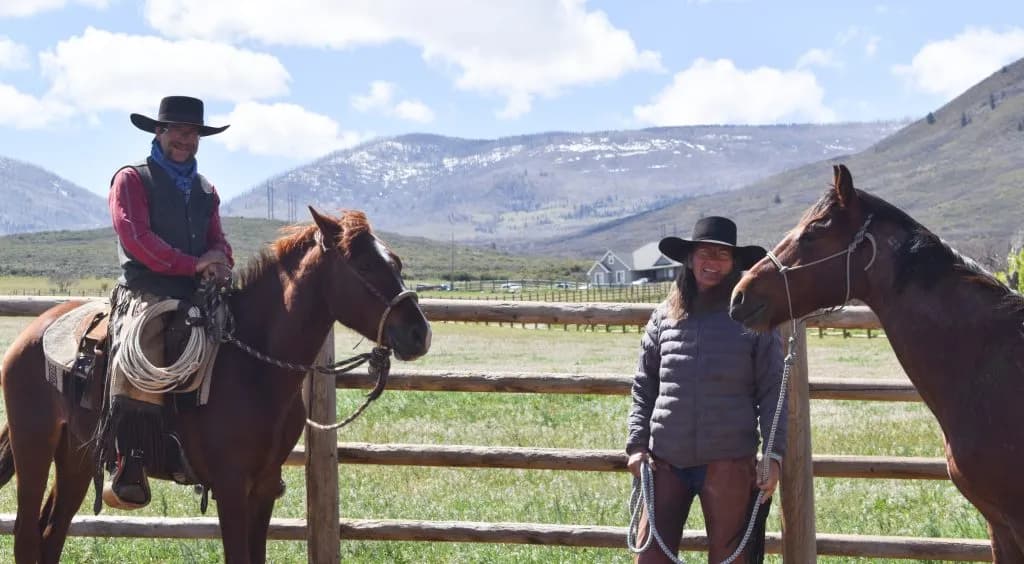
Glenwood Springs —Renae Bartosiewicz won a saddle at a mustang event seven years ago, a prize she still uses, and Shane Bartosiewicz let her win it because, as he joked, she needed it. That moment at the event is where the couple met, a serendipitous collision of two people who had been riding horses since they were too young to remember. Now, living in Parachute after moving from Crawford last November, they are bringing that deep-seated ranch history to the forefront of local equine culture, specifically through the lens of mustang training.
The Bartosiewiczs recently acquired two mustangs, Cash and Viento, to compete in the Meeker Mustang Makeover, a competition running through September 18 and 19. The event is more than a showcase; it is a functional tool for herd management. The Bureau of Land Management (BLM) rounds up wild horses and burros when their numbers swell beyond what the land can sustainably support. Without intervention, the herds fight over limited resources of food and water, leading to starvation and death. Nonprofits like the Meeker Mustang Makeover step in to train these wild animals, making them viable for auction and dispersal, thereby reducing the pressure on the wild population.
Shane Bartosiewicz, who grew up in Glenwood Springs, and Renae, originally from South Dakota, approach this work with a specific philosophy. They utilize the vaquero style, an older Californio bridling method that is becoming increasingly rare in Colorado and further east. Unlike modern methods that often desensitize horses to pressure, the vaquero style relies on the animal’s natural instincts.
“It’s easier training a mustang because they still have their instincts,” Renae said. “They move away from pressure because they were living in the herd, and they move around a lot.”
This approach yields a different kind of ride. Shane describes the result as functionally perfect, comparing the difference between a horse trained in this style and one trained conventionally to the distinction between a Ferrari and an old pickup truck. The goal is smoothness, a quality Renae says they have achieved with other mustangs they trained themselves. Currently, Renae is working with Cash, a younger mustang, to saddle and ride him, while Viento is also in training.
The couple’s life in Parachute is as textured as their training methods. They live on a ranch with seven horses, nine dogs, and a herd of cattle that includes two longhorns, all set against a broad view of the Roan Plateau. The reality of ranch life isn't always romantic; Shane recently rode one of their longhorns into Silt for hay, and the bull’s horns nearly stopped him at the doorway. The animal got one horn in, shifted, got both in, and then got stuck.
“I thought I should get him out of there before this gets real expensive,” Shane said.
They married three years after meeting, on horseback, and have settled into the valley with a focus on preserving these traditional skills. The Meeker Mustang Makeover begins in April and runs through mid-September, offering locals a chance to see how wild herds are tamed and integrated back into the economy. For the Bartosiewiczs, it’s not just about competition; it’s about sustainability, instinct, and the quiet, rhythmic work of bridging the gap between wild and domestic.
The sun dips low over the Roan Plateau, casting long shadows across the Parachute valley, where the dust of the training ring settles slowly on the backs of horses that once roamed free.
Keep up with Glenwood Springs
The day's Western Slope news, one email each morning. Free.