Pope Leo XIV Condemns Machismo During Lima Homecoming
Pope Leo XIV addressed 40,000 in Lima's Plaza Mayor, citing 1,261 femicides since 2016. He urged bishops to confront clergy abuse and machismo during his emotional return.
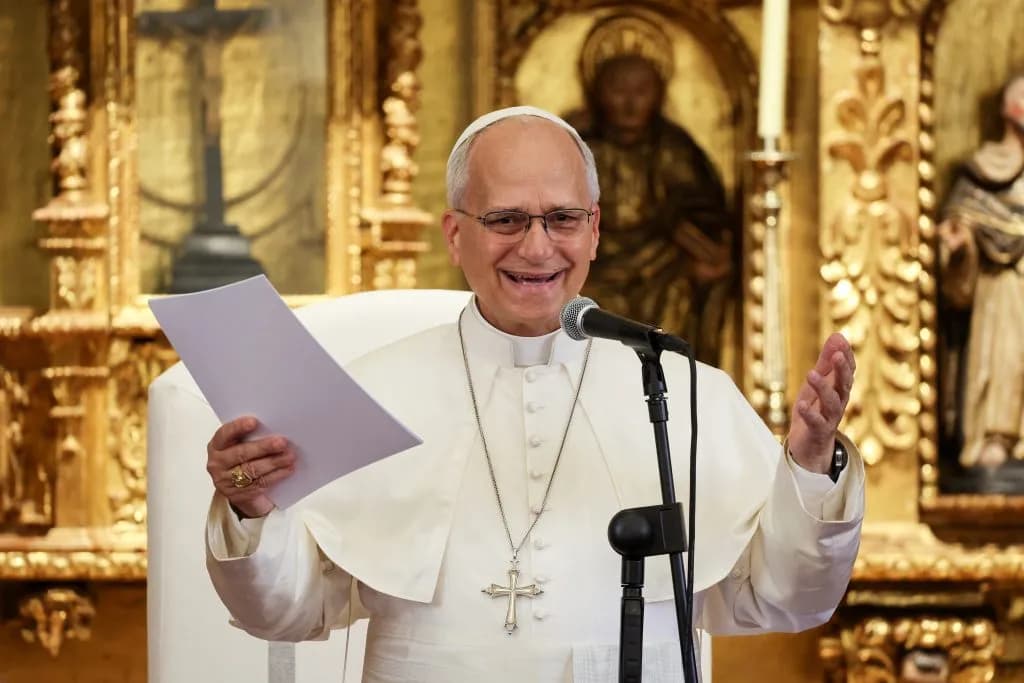
Aspen —The Plaza Mayor in Lima hums with a low, collective vibration. Forty thousand people pack the cobblestones, their voices rising in unison for “Contigo Perú,” a melody that traces the Pacific coast’s history. In the center of this sea of noise stands Pope Leo XIV, his face lit by the midday sun, singing along. He is not just observing; he is participating, his voice blending with the crowd that has waited since 3 a.m. for this moment.
It is a scene of joy, but the mood shifts quickly as Leo turns to address the nation. The Peruvian pope, fresh from an emotional homecoming and a lung cancer surgery last month, moves with surprising energy. He bounds up the steep stairs to meet the bishops, joking that “doubting Thomases” had predicted he wouldn’t make it. But the levity evaporates when he addresses the social fabric of his home country. He points directly at a culture of “machismo” that he argues is warring with Christian teaching.
“It pains us to see that violence against women — who could be our grandmothers, mothers, sisters or daughters — continues to be a reality that wounds all of humanity,” Leo said.
The statement lands with weight because the statistics behind it are stark and local. According to Vail Daily, gender-based violence is an urgent social issue in Peru. The National Institute of Statistics and Informatics recorded 1,261 femicide victims between 2016 and 2024. Leo highlighted that poor, Indigenous, and Afro-Peruvian women are “doubly penalized” by this violence. He demanded they be valued, protected, and respected, framing the issue not just as a social problem but as a theological one: men and women share equal dignity.
This is the part everyone skips past when focusing on the spectacle of a pope returning to his birth country. The crowd in the plaza, including Ángel Esquives, a craftsman from Chiclayo who arrived early to stand near the pontiff, sees a gift from heaven. Zozimo Perez, wearing a self-designed costume he calls “the Inca Warrior” with the pope’s image on his chest, is in tears. For them, this is a homecoming.
But for the bishops Leo met with that morning, the message was more of a marching order. He instructed them to accompany their flocks and respond to victims of clergy sexual abuse with truth and justice. He also met with six survivors, some from a sect-like group that Pope Francis suppressed last year. The hierarchy is being asked to model unity, but the country outside the church walls is asking for protection.
Later that evening, the energy returned to the stadium. Leo joined 60,000 people inside and another 300,000 outside for a vigil, singing “Alma Misionera.” The Vatican estimates the crowds were massive, but the focus of his speech remained grounded in the specific struggles of Peruvian women. He did not offer vague platitudes; he named the violence, named the demographics of those most affected, and called for a change in how society treats its women.
As the sun sets over Lima, the crowd disperses slowly. The echoes of “Contigo Perú” fade into the city’s noise, leaving behind a quiet but urgent call for justice that now sits squarely on the shoulders of the Peruvian church and its people.
Keep up with Aspen
The day's Western Slope news, one email each morning. Free.