Rebel Bread Triples Denver Space to Boost Local Grain Demand
Rebel Bread is tripling its Denver footprint to champion local Colorado grains, partnering with Boulder’s Dry Storage mill. This expansion aims to satisfy rising demand for traceable, high-quality ingredients while offsetting higher flour costs through operational efficiency.
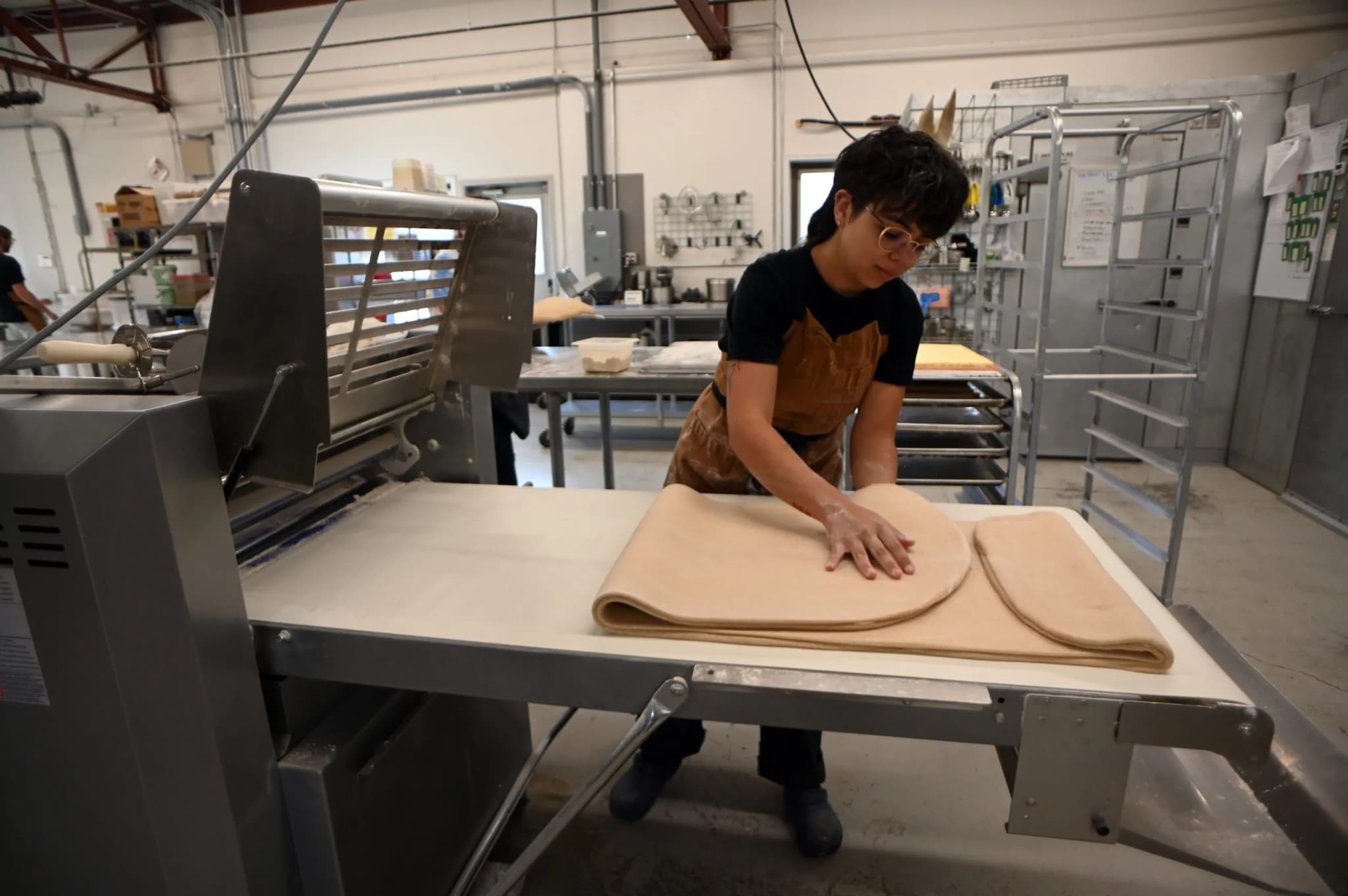
The smell hits you first. It isn’t the sharp, sterile scent of industrial flour dust, but something deeper, earthier, almost like toasted nuts and damp soil. It’s the smell of grain that hasn’t traveled ten thousand miles in a bulk container, but was milled just down the road.
Zach Martinucci knows that smell intimately. Before he founded Bake Fest, before he started Rebel Bread in Denver’s Design District, Martinucci was working with standard commodity flours. He’d learned them in baking school, the same generic ingredients every bakery in the country uses, interchangeable and anonymous. But after attending the Maine Grain Alliance conference in 2022, he saw a different model: producers, bakers, and brewers connected in a tight ecosystem where the source of the flour dictated the taste of the final product.
“It was really inspiring to see the connections that bakers, brewers, distillers have with their source of flour or grain and the effect that it had on the product being so much better and tastier as well as more nutritious, at least for bread,” Martinucci told the Colorado Sun.
That inspiration led to a pivot that has ripple effects across the state’s food system. Rebel Bread began partnering with Dry Storage, a mill in Boulder originally founded in 2019 by chef Kelly Whitaker to showcase local grains. The shift wasn’t just about marketing; it was about flavor and nutrition. But there’s a financial reality to this romance. Local, heirloom flours cost more than commodity wheat.
Martinucci didn’t pass that cost on to his customers. Instead, he leaned into efficiency. As Rebel Bread grew, the business realized savings in operations — savings Martinucci redirected directly into raw ingredients. “We didn’t want people to feel like they had to pay more for something that we just thought was the better option and wanted to make our standard,” he said.
This dynamic is playing out across Colorado as food costs rise statewide. While inflation pressures wallets, local bakers are betting that traceability and quality can sustain premium pricing — or at least justify the cost through operational efficiency. The Colorado Sun notes that these bakers and grain millers are finding strong, increased demand for a bespoke experience that breaks away from the commodity agricultural system.
The growth is tangible. In late 2025, Rebel Bread nearly tripled its footprint in the Denver Design District. The expanded space now includes a full-service cafe, a dedicated teaching kitchen for baking classes, and increased production capacity. Martinucci’s priority is clear: anything new the bakery develops will feature as many single-varietal Colorado grains as possible.
This expansion isn’t happening in a vacuum; it’s fueling the mills that supply them. Dry Storage, which started as a showcase for chef Whitaker’s restaurant Basta, has grown in tandem with its bakery partners. The success of local grain users allows mills to expand their own operations, creating a feedback loop that strengthens the regional food infrastructure.
It’s a system that relies on trust and proximity. When you buy a loaf from Rebel Bread, or visit one of the many local bakeries celebrating at Bake Fest this Saturday, you’re participating in a network that treats grain as a specific ingredient with a history and a place, not just a commodity. The flavor is different, more complex, more alive.
You can taste the difference in the crumb, in the crust, in the way the bread holds together. It’s a subtle shift, but one that changes how we think about what ends up on our plates. And in a state where the distance between farm and table is often just a highway drive, that connection feels less like a luxury and more like a necessity.
The next time you stand in line for a sourdough, look closely at the bag of flour on the shelf behind the counter. If it says “Colorado,” you’re looking at a small, resilient piece of local agriculture that’s choosing to stay home.
Keep up with the Western Slope
The day's Western Slope news, one email each morning. Free.