Rifle Council Votes to Keep Hogback Bus Running Through 2029
Rifle City Council approves a temporary funding package to keep the Hogback bus route running through 2029, avoiding a November 21 service halt as Garfield County reduces its contribution.
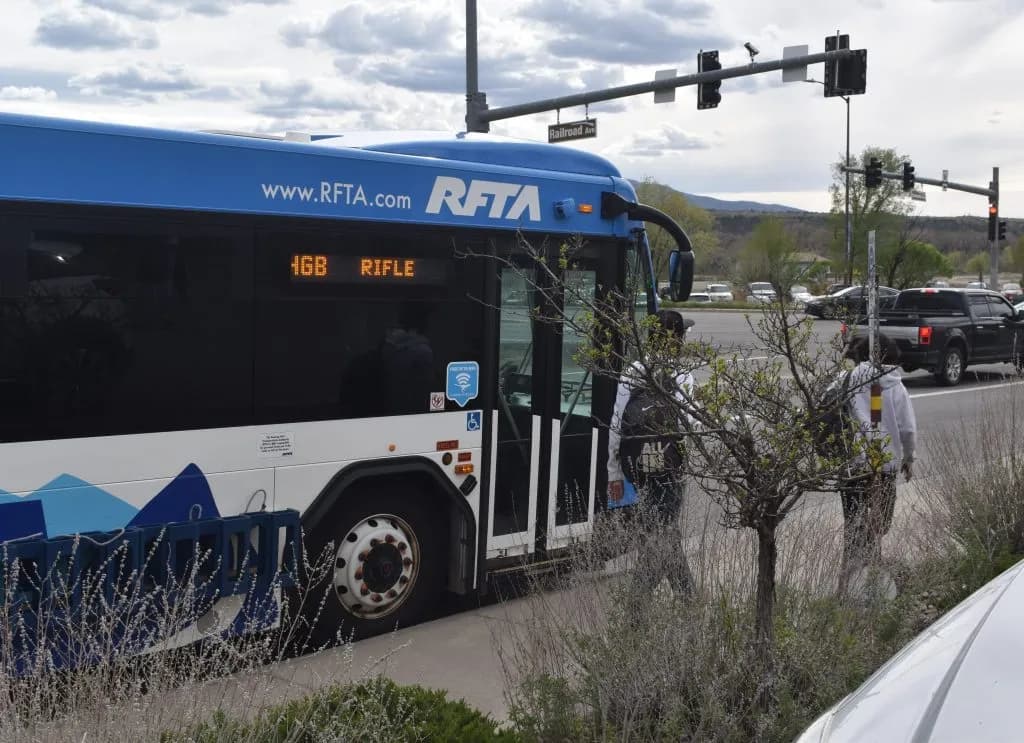
Rifle —“The RFTA has indicated, if there’s not really a funding solution figured out here, they’re looking at a final service day of November 21.”
That’s the deadline. November 21. After that, the bus stops running between New Castle, Silt, and Rifle unless someone writes a check.
Rifle City Council heard the proposal on Wednesday, June 17. The goal is simple: keep the Hogback route alive through 2029. It’s a stopgap. A bandage on a bleeding artery. RFTA CEO Kurt Ravenschlag called it a “runway.” It buys time for local governments to figure out a permanent fix.
But there is no permanent fix yet.
The money has been drying up for years. Garfield County started the route in 2002 with $750,000. That contribution has shrunk. The county plans to cut its share to zero by 2027. They cite financial issues. The short version? They can’t afford it anymore.
Now the burden shifts. Rifle and Silt currently chip in $40,000 each. That’s it. The new proposal asks for more. Much more.
Here is the breakdown for 2027, the first year of the temporary plan:
RFTA covers $575,000. Rifle throws in $80,000. Silt adds $45,000. Garfield County contributes $200,000.
It gets steeper in 2028. RFTA drops slightly to $567,000. Rifle jumps to $100,000. Silt rises to $60,000. County stays flat at $200,000.
By 2029, the costs climb again. RFTA contributes $544,810. Rifle pays $130,000. Silt pays $80,000. County remains at $200,000.
Notice the trend. Costs rise about $25,000 a year. The proposal isn’t sustainable long-term. Ravenschlag made that clear. It’s just a bridge.
The problem isn’t just the price tag. It’s the source. Rifle isn’t a member of RFTA. That means the money doesn’t come from a dedicated transit fund. It comes from general funds. Property tax dollars. Money that could go to roads, parks, or police.
“Rifle is not a member of RFTA and the money Rifle, Silt, and Garfield County contribute comes from their general funds,” Rifle City Manager Patrick Waller said.
Waller and Silt Town Manager Jim Mann worked with Ravenschlag to draft this temporary patch. They needed a solution fast. The county’s notification that they were pulling the plug didn’t give anyone enough time to find a dedicated revenue stream.
“We think we co...” Ravenschlag trailed off in the report, but the implication was clear. They co-created this to buy breathing room.
The workshop discussion was about opportunities. Not guarantees. Nothing conclusive has emerged from those talks yet.
Locals who rely on the Hogback route for commuting to work or school need to know what this means for their daily lives. If the council doesn’t approve this, the service ends. If they do, taxpayers in Rifle and Silt see their general funds drained to subsidize a route that isn’t even part of the core RFTA system.
Garfield County is still in the picture, promising $200,000 for three years. But the county has already said it wants out. Why stay in the hole for three more years?
The numbers don’t lie. The route costs more every year. The contributors are fewer. The timeline is tight.
Ravenschlag put it best. This is a solution to “buy us some time.” But time is running out. November 21 is the cliff.
Read that again. The final service day is set. Unless the city council votes to approve this temporary funding package, the buses stop. No more rides. No more connections. Just a gap in the transportation network that locals have relied on for over two decades.
The question isn’t whether the buses will run. It’s who will pay the premium when the temporary deal expires in 2029. And whether anyone has actually figured out a dedicated source by then.
Waller thinks the general sense is that parties were caught off guard. The county’s exit strategy was abrupt. That lack of warning is why we’re here, scrambling for a short-term fix in June.
It’s a fragile plan. One bad budget year in Silt or Rifle, and the whole thing collapses.
The route began in 2002. It’s been running for 22 years. Now it’s hanging by a thread of general fund dollars and a promise from Garfield County to keep paying its share for three more years.
That’s the reality.
Keep up with Rifle
The day's Western Slope news, one email each morning. Free.